Turkey’s Water Diplomacy (eBook)
184 Seiten
Anthem Press (Verlag)
978-1-78308-812-6 (ISBN)
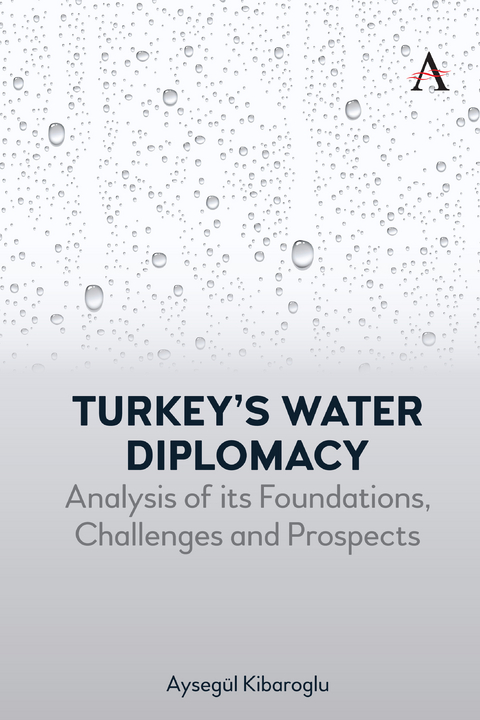
‘Turkey’s Water Diplomacy’ presents the legal and institutional foundations of Turkey’s water diplomacy within its historical and geographical contexts. It analyses the evolving position of Turkey vis-à- vis the international water law. Delineating actors and processes in transboundary water policy-making, ‘Turkey’s Water Diplomacy’ utilizes the Water Diplomacy Framework in making policy-relevant recommendations for tackling future challenges in Turkey’s water diplomacy.
‘Turkey’s Water Diplomacy’ first delineates the institutional and legal foundations of transboundary water policy-making in Turkey. In doing so, major actors of water diplomacy at national, regional and international levels are identified and scrutinized. Specific attention is paid to the evolution of transboundary water politics in the Euphrates–Tigris river basin since Turkish water diplomacy and its basic principles have been largely shaped through practices in this strategically important river basin. Situated at the crossroads of the Middle East, the Caucasus and Europe as the country is, Turkey’s transboundary water policy has also been shaped by geographical determinants. Interestingly, Turkey has reflected her experience in one region (i.e., Europe) on practices in other regions. ‘Turkey’s Water Diplomacy’ analyses how Turkey’s harmonization with the European Union has impacted the transboundary water policy discourses and practices, and how these changes have been reflected in its relations with its Middle Eastern neighbours. A historical account of transboundary water relations in the ET basin is enriched with the analysis of the current state of affairs in the region, such as the Syrian civil war and its repercussions on water issues.
It is striking that Turkey was one of the three countries that rejected the UN Watercourses Convention in 1997. The book elaborates on the reasons why Turkey voted against the UN Watercourses Convention. Yet, since the voting of the convention in 1997, there have been changes in Turkey’s stance vis-à-vis international water law, which the book examines and focuses on.
Turkey’s water diplomacy embodies complex water management problems, which can be best understood as a product of competition, feedback and interconnection among natural and societal variables in a political context. Hence, the book adopts the Water Diplomacy Framework with its key elements in making policy-relevant recommendations specifically for Turkey’s water diplomacy.
‘Turkey’s Water Diplomacy’ delineates the institutional and legal foundations of transboundary water policy-making in Turkey, paying special attention to the evolution of transboundary water politics in the Euphrates–Tigris river basin. The book also analyses how Turkey’s harmonization with the European Union has impacted the transboundary water policy discourses and practices, and how these changes have been reflected in its relations with its Middle Eastern neighbours. Turkey was one of the three countries that rejected the UN Watercourses Convention in 1997. Yet, since the voting of the convention there have been changes in Turkey’s stance vis-à- vis international water law, which the book studies. Turkey’s water diplomacy embodies complex water management problems, which can be best understood as a product of competition, feedback and interconnection among natural and societal variables in a political context. Hence, the book adopts the Water Diplomacy Framework with its key elements in making policy-relevant recommendations specifically for Turkey’s water diplomacy.
Ayşegül Kibaroğlu is professor of international relations at MEF University Istanbul, Turkey, specializing in transboundary water politics, international water law, Turkish water policy, political geography and environmental security.
Acknowledgements; List of Abbreviations; Introduction; 1. Institutional Setting; 2. Water Diplomacy Principles; 3. Turkey’s Evolving Position vis-à-vis International Water Law; 4. The Role of History and Geography in Turkey’s Evolving Water Diplomacy; 5. Analyzing Non- State Actors and Processes in Turkey’s Water Diplomacy Framework; Conclusion; References; Index.
| Erscheint lt. Verlag | 15.2.2021 |
|---|---|
| Reihe/Serie | Anthem Environment and Sustainability Initiative | Science Diplomacy: Managing Food, Energy and Water Sustainably |
| Verlagsort | London |
| Sprache | englisch |
| Themenwelt | Sachbuch/Ratgeber ► Geschichte / Politik ► Politik / Gesellschaft |
| ISBN-10 | 1-78308-812-5 / 1783088125 |
| ISBN-13 | 978-1-78308-812-6 / 9781783088126 |
| Informationen gemäß Produktsicherheitsverordnung (GPSR) | |
| Haben Sie eine Frage zum Produkt? |
 EPUB (Adobe DRM)
Kopierschutz: Adobe-DRM
Adobe-DRM ist ein Kopierschutz, der das eBook vor Mißbrauch schützen soll. Dabei wird das eBook bereits beim Download auf Ihre persönliche Adobe-ID autorisiert. Lesen können Sie das eBook dann nur auf den Geräten, welche ebenfalls auf Ihre Adobe-ID registriert sind.
Details zum Adobe-DRM
Dateiformat: EPUB (Electronic Publication)
EPUB ist ein offener Standard für eBooks und eignet sich besonders zur Darstellung von Belletristik und Sachbüchern. Der Fließtext wird dynamisch an die Display- und Schriftgröße angepasst. Auch für mobile Lesegeräte ist EPUB daher gut geeignet.
Systemvoraussetzungen:
PC/Mac: Mit einem PC oder Mac können Sie dieses eBook lesen. Sie benötigen eine
eReader: Dieses eBook kann mit (fast) allen eBook-Readern gelesen werden. Mit dem amazon-Kindle ist es aber nicht kompatibel.
Smartphone/Tablet: Egal ob Apple oder Android, dieses eBook können Sie lesen. Sie benötigen eine
Geräteliste und zusätzliche Hinweise
Buying eBooks from abroad
For tax law reasons we can sell eBooks just within Germany and Switzerland. Regrettably we cannot fulfill eBook-orders from other countries.
aus dem Bereich