



Epicurean Simplicity
Seiten
2003
Shearwater Books,US (Verlag)
978-1-55963-690-2 (ISBN)
Shearwater Books,US (Verlag)
978-1-55963-690-2 (ISBN)
In this account of a simple life, Stephanie Mills reaches deep into classical sources of pleasure - good food, good health, good friends and particularly the endless delights of the natural world. Her musings about the life she desires led her to the 3rd century Greek philosopher Epicurus.
In this account of a simple life, Stephanie Mills reaches deep into classical sources of pleasure - good food, good health, good friends and particularly the endless delights of the natural world. Her musings about the life she desires - and the life she has created - ultimately led her to the third century Greek philosopher Epicurus, whose philosophy was premised on the trustworthiness of the senses, a philosophy that Mills wholeheartedly embraces. While later centuries have come to associate Epicurus's name with hedonism, Mills discovered that he extolled simplicity and prudence as the surest means to pleasure, and his thinking offers an important philosophical touchstone for the book. As the author explains, one of the primary motivations for her pursuit of simplicity is her concern about the impacts of a consumerist lifestyle on the natural world.
Mills touches on broad range of topics relating to that issue - social justice, biological extinctions, the global economy and also more personal aspects such as friendship, the process of country living, the joys of physical exertion, the challenges of a writer's life and the natural history and seasonal delights of a life lived close to nature. An overarching theme is the destructiveness of consumerism, and how even a simple life affects a wide range of organisms and adds strain to the earth's systems. The author uses her own experience as an entry point to the discussion with a self-effacing humour and lyrical prose that bring big topics to a personal level.
In this account of a simple life, Stephanie Mills reaches deep into classical sources of pleasure - good food, good health, good friends and particularly the endless delights of the natural world. Her musings about the life she desires - and the life she has created - ultimately led her to the third century Greek philosopher Epicurus, whose philosophy was premised on the trustworthiness of the senses, a philosophy that Mills wholeheartedly embraces. While later centuries have come to associate Epicurus's name with hedonism, Mills discovered that he extolled simplicity and prudence as the surest means to pleasure, and his thinking offers an important philosophical touchstone for the book. As the author explains, one of the primary motivations for her pursuit of simplicity is her concern about the impacts of a consumerist lifestyle on the natural world.
Mills touches on broad range of topics relating to that issue - social justice, biological extinctions, the global economy and also more personal aspects such as friendship, the process of country living, the joys of physical exertion, the challenges of a writer's life and the natural history and seasonal delights of a life lived close to nature. An overarching theme is the destructiveness of consumerism, and how even a simple life affects a wide range of organisms and adds strain to the earth's systems. The author uses her own experience as an entry point to the discussion with a self-effacing humour and lyrical prose that bring big topics to a personal level.
Stephanie Mills has been engaged in the ecology movement for more than thirty years, and in 1996 was named by Utne Reader as one of the world's leading visionaries. Her books include Whatever Happened to Ecology? (Sierra Club Books, 1989), In Service of the Wild (Beacon Press, 1995), and Turning Away from Technology (Sierra Club Books, 1997). A prolific writer and speaker on issues of ecology and social change, Mills lives in the Great Lakes Bioregion in the Upper Midwest.
| Erscheint lt. Verlag | 1.5.2003 |
|---|---|
| Verlagsort | Washington |
| Sprache | englisch |
| Maße | 147 x 216 mm |
| Themenwelt | Literatur ► Biografien / Erfahrungsberichte |
| Sachbuch/Ratgeber ► Geschichte / Politik | |
| Reisen ► Bildbände | |
| Geisteswissenschaften ► Philosophie ► Philosophie Altertum / Antike | |
| ISBN-10 | 1-55963-690-4 / 1559636904 |
| ISBN-13 | 978-1-55963-690-2 / 9781559636902 |
| Zustand | Neuware |
| Informationen gemäß Produktsicherheitsverordnung (GPSR) | |
| Haben Sie eine Frage zum Produkt? |
Mehr entdecken
aus dem Bereich

aus dem Bereich
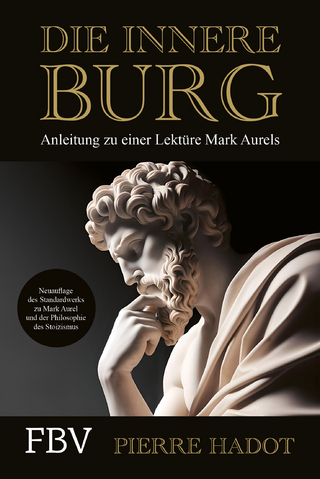
Anleitung zu einer Lektüre Mark Aurels
Buch | Hardcover (2025)
FinanzBuch Verlag
CHF 27,95


