


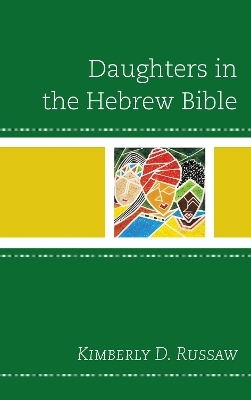
Daughters in the Hebrew Bible
Seiten
2020
Lexington Books/Fortress Academic (Verlag)
9781978700505 (ISBN)
Lexington Books/Fortress Academic (Verlag)
9781978700505 (ISBN)
Combining philological data, social-science models, and cross-cultural comparisons, Russaw examines the systems that constrict biblical daughters and the strategies they employ when hostile social forces threaten their well-being.
While the expectations and circumstances of women’s lives in ancient Israel have received considerable attention in recent scholarship, to date little attention has been focused on the role of daughters in Hebrew narrative??that is, of yet unmarried female members of the household, who are not yet mothers. Kimberly D. Russaw argues that daughters are more than foils for the males (fathers, brothers, etc.) in biblical narratives and that they often use particular tactics to navigate antagonistic systems of power in their worlds. Institutions and power structures favor the patriarch, sons inherit such privileges and benefits, and wives and mothers are ascribed special status because they ensure the patrilineal legacy by birthing sons; but daughters do not receive such social favor or standing. Instead of privileging daughters, systems and institutions control their bodies, restrict their access, and constrict their movement. Combining philological data, social-science models, and cross-cultural comparisons, Russaw examines the systems that constrict biblical daughters in their worlds and the strategies they employ when hostile social forces threaten their well-being.
While the expectations and circumstances of women’s lives in ancient Israel have received considerable attention in recent scholarship, to date little attention has been focused on the role of daughters in Hebrew narrative??that is, of yet unmarried female members of the household, who are not yet mothers. Kimberly D. Russaw argues that daughters are more than foils for the males (fathers, brothers, etc.) in biblical narratives and that they often use particular tactics to navigate antagonistic systems of power in their worlds. Institutions and power structures favor the patriarch, sons inherit such privileges and benefits, and wives and mothers are ascribed special status because they ensure the patrilineal legacy by birthing sons; but daughters do not receive such social favor or standing. Instead of privileging daughters, systems and institutions control their bodies, restrict their access, and constrict their movement. Combining philological data, social-science models, and cross-cultural comparisons, Russaw examines the systems that constrict biblical daughters in their worlds and the strategies they employ when hostile social forces threaten their well-being.
Kimberly D. Russaw is visiting assistant professor of religion and philosophy at Claflin University.
Acknowledgments
Abbreviations
1. Biblical Daughters
2. Daughters in the Family
3. Daughter Language
4. A Canonical Review of Daughters
5. Power and Social Stratification
6. Daughters and Power
7. Final Thoughts
References
| Erscheinungsdatum | 10.05.2021 |
|---|---|
| Zusatzinfo | 1 tables; |
| Sprache | englisch |
| Maße | 155 x 222 mm |
| Gewicht | 367 g |
| Themenwelt | Literatur ► Biografien / Erfahrungsberichte |
| Sachbuch/Ratgeber ► Geschichte / Politik | |
| Religion / Theologie ► Christentum ► Kirchengeschichte | |
| Sozialwissenschaften ► Soziologie ► Gender Studies | |
| ISBN-13 | 9781978700505 / 9781978700505 |
| Zustand | Neuware |
| Informationen gemäß Produktsicherheitsverordnung (GPSR) | |
| Haben Sie eine Frage zum Produkt? |
Mehr entdecken
aus dem Bereich


aus dem Bereich
eine andere Geschichte der Papststadt
Buch | Softcover (2024)
C.H.Beck (Verlag)
CHF 25,20
die Macht des Dunklen in unserer Zeit und wie wir ihr entgegentreten
Buch | Hardcover (2025)
Verlag Herder
CHF 27,90


