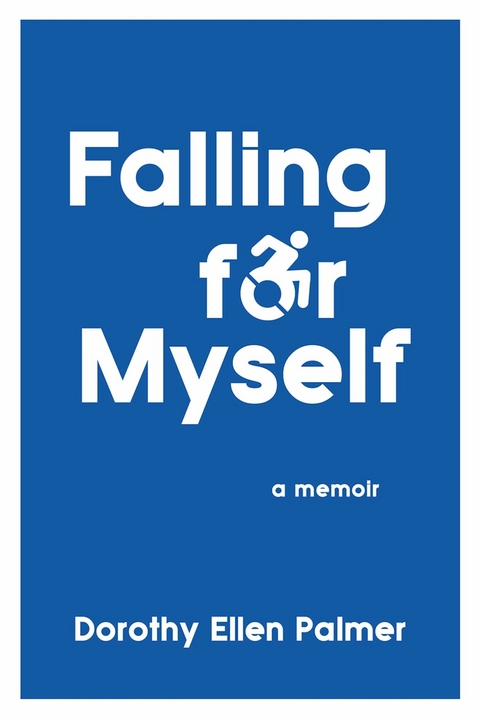
Falling for Myself (eBook)
300 Seiten
Wolsak and Wynn (Verlag)
978-1-989496-04-6 (ISBN)
In this searing and seriously funny memoir, Dorothy Ellen Palmer falls down, a lot, and spends a lifetime learning to appreciate her disability. Born with two very different, very tiny feet, she was adopted as a toddler by an already wounded 1950s family. From childhood surgeries to decades as a feminist teacher, mom, improv coach and unionist, she tried to hide being different. But now, standing proud with her walker, she's sharing her journey. Navigating abandonment, abuse and ableism, she finds her birth parents and a new chosen family in the disability community.
A is Always for Almost
In my first baby picture, I’m no baby; I’m almost three years old.
In brand-new Sunday best, I’m wearing my first costume: the ensemble my parents brought to court. They want me to look nice for the judge, and for posterity – for the photo of “the day we brought you home.” It’s the winter of 1958. My parents, Marguerite Isobel Stobie Palmer and Robert David Palmer, have just signed my adoption papers. The judge banged his gavel and the Toronto Children’s Aid caseworker put their re-clad, renamed daughter into their arms. The photos are in black and white, but I remember my ensemble in living colour. From head to toe, I’m the blush pink of a newborn rose.
It’s February. I’m plenty warm. My bonnet is a rich, quilted velveteen. Three pink rosettes with minty green leaves embellish the white ribbon on the crown. Like every well-dressed girl in the 1950s, my bonnet matches my coat. It’s the same pink velveteen, sporting the same white ribbon trim and identical rosettes on the collar and cuffs. Of course, my coat matches my dress; it’s also velveteen, with an ornately embroidered yoke of festive holly green, trimmed with the same minty leaves and rosebuds. I have pink mittens, hand-knit by my new mother. They dangle on a pink string, attached to my coat collar with a pink safety pin. When she covers my mouth with a pink scarf, I smile. Of course, I do; I’m a good girl.
This outfit is the first set of big girl clothes, and the only set of new clothes, I’ve ever owned. The white leotards are my first pair of tights. I’m concerned that these strange new people do not seem to think I need a diaper, but I do not complain. Even my underpants have rosebuds. In each detail, my mother has chosen deliberately and well: pink and green in exactly the right shades to makeover nobody’s child into her little girl. When she wrapped my auburn curls around her finger, they fell in place like Shirley Temple’s ringlets.
But two things ruin the picture: the left one and the right one.
My shoes.
When my new father slipped an ensemble-completing pair of unwearable pink shoes into his overcoat pocket, my new mother sighed. I had to wear my baby booties. Curved over sideways, with broken laces, they matched my feet. When my new mother laced them up, she seemed to think their sides could be pulled together. Trying to close the gaps my shoes require on either side of their tongues, she tied them too tight. Looking down from my perch in her arms, I remember the perfect flashing points of her pink high heels.
When we reached 26 Delma Drive, a tiny wartime bungalow in the Toronto suburb of Alderwood, she set me down on the grey living room carpet where I promptly peed my new pink panties. It worked. She removed my shoes. Until I turned eight, my parents and I giggled at that story whenever we looked at my “coming home” photo. Then they had their own children.
My mother was born in 1920, my dad in 1922. They married at thirty-three and thirty-one, late for the times. Choosing adoption only after multiple miscarriages, I always assumed age put them so far down the priority list that they got a slightly older, slightly damaged baby. In 1959, they adopted again, photographing my brother in his snazzy coming home outfit. In 1960, my mother told five-year-old me they were going back to Children’s Aid to get my sister.
And I believed her.
How I loved that baby. My Judith Ann. My sister. My real sister.
Months later, in a medically documented phenomenon, nearing menopause and after adopting, my mother got pregnant. She didn’t tell me. I came home one day at lunch and my baby sister was gone. Judith was always in her carriage on the front porch. I grabbed her carriage and took off. As I ran, I prayed. I begged God not to take my family away from me. Not again. When I finally lifted the blanket, of course God was laughing at me. I didn’t deserve a sister.
When I came home without her, my mother’s tears were already dry.
She said, “Don’t worry. Another family will love her just as much as you do.”
“That’s not true. Nobody could love Judy more than me. Can’t we please get her back?”
“No, we can’t. But I’m going to tell you a big girl secret. Your father and I are going to have a better baby, a baby of our very own. Won’t that be lovely?”
She smiled at me like she expected me to be happy for her.
“There is no better baby! Judith is my sister. My real sister!”
“What? No, dear. We just told you that to make you feel better. This baby is our real daughter. If it’s a girl, we’ll call her Judy, too. So, sit down and eat your SpaghettiOs. And don’t worry. Soon, you won’t even remember that there was another baby.”
I didn’t even try to reach the toilet. I stood up and threw up. I can still see the tablecloth, a cheery blue gingham with tiny white baby bones floating in the red of baby’s blood.
Mother handed me a dishcloth, swivelled on her stiletto and went to lie down.
Now that I’m a mother, I can feel the devastation of her 1960 Sophie’s Choice. Given her history of miscarriage, told she could not both care for an infant and carry one, she made the only choice legally and medically available. I date the worst of my sleepwalking to that choice.
Talk about a cruel irony. You’d think my silly feet would welcome the rest. Instead, I’ve walked in my sleep from the time I could walk. I wake up mid-stair, barefoot in my nightie, to find things moved or missing. Over sixty years, I’ve shined my shoes, made sandwiches, knitted, ironed and rearranged furniture, all in my sleep. Much like the truth I’d never been toilet trained, I imagine my sleepwalking was something Children’s Aid conveniently forgot to mention.
On my first night in their home, Dave and Peggy Palmer discovered their sleeping child could indeed pee the bed, drip down the hall, unlock the front door and greet the snow in a sodden sleeper. That first night, they saved me only because the neighbours heard me screaming.
After repeat performances, once they believed I was truly asleep and not just willful and wild, my father installed a chain-link sliding lock, one set over his head that I couldn’t reach. Awakened by the sound of me yanking on the door like a mini Jacob Marley rattling her chains, they took me back to bed, shaking their heads with all the incredulity of Ebenezer Scrooge.
In 1960, when my mother’s daughter started kicking, I stepped out every night.
In the escape of sleep, I sought escape. I pulled a kitchen chair to the door and unlocked it. My father came after me; my mother couldn’t get out of bed. A prescription of total bedrest for high-risk pregnancies was common then, but that never got explained to eight-year-old me. My aunties and all the neighbour ladies treated me with the forced joviality that alerts any child. Even more alarming was the unheard-of expense of Mrs. Devenish, a cleaning lady, brought in because my mother must not pick anything up, including her two children. I came home from school for a daily fifteen-minute visit with my mother. Then, exiled from her room, I spent the evening alone in mine, straining to hear through the walls to be sure she was still breathing.
This is what I believed beyond reason: unless I was a very good girl, my mother was going to die. I trained myself to silence, convinced that any disturbance from me would kill her. Only once I was asleep did I dare try to escape. After a difficult delivery, my mother gave her beloved blood daughter my missing sister’s name.
A year later, once I’d finally begun sleeping through the night, my mother got pregnant again. In 1963, when a woman in her mid-forties who nearly died in her first confinement risks a second child, she is either brave and life-affirming or selfish to the core, so desperate for her own biological spawn that she’s willing to leave her chosen children motherless. I know that’s not fair, given women’s lack of choice in 1963. I equally know this was unfair: my eight-year-old mind quite logically concluded this: I’d disappear next. My parents sent my sister Judith back the first time. Now it was my turn. My mother was willing to die to replace me.
This is how I spent the year I turned eight and she turned forty-three. I stopped sleeping. To stay awake, I chanted the alphabet and dug my nails into my knees until they bled. No one noticed. My knees were already bloody. But it worked. The Children’s Aid kidnappers who took my sister, they couldn’t get me. If I stayed awake, I could scream. That summer, in a delivery that very nearly took her life, my mother birthed my baby brother.
We became a forced-fit family: two natural children, and by default, two unnatural ones.
Exactly one month later, the first political event that I’d remember all my life occurred. On September 15, 1963, the Ku Klux Klan bombed the 16th Street Baptist Church in Birmingham, Alabama, killing four little black girls at Sunday school. As an avid attender of Sunday school, it told me the world wasn’t safe for any girls anywhere. When JFK was assassinated two months later on November 22, 1963, I concluded that kidnappers, bombers and assassins lurked on every corner. When my dad said what I imagine many white, suburban parents said to reassure their children, “That violence is far away, not here in Canada,” I knew better than to believe him.
I know what you’re thinking: Why did no one get counselling for a child caught in this recursive trauma? That assumes anyone saw trauma. No one...
| Erscheint lt. Verlag | 22.10.2019 |
|---|---|
| Sprache | englisch |
| Themenwelt | Literatur ► Biografien / Erfahrungsberichte |
| Literatur ► Romane / Erzählungen | |
| Sachbuch/Ratgeber ► Geschichte / Politik | |
| Sachbuch/Ratgeber ► Gesundheit / Leben / Psychologie ► Lebenshilfe / Lebensführung | |
| Sozialwissenschaften ► Soziologie ► Gender Studies | |
| Schlagworte | Abuse • Accessibility • Birth defect • Disability • Disability Justice • Discrimination • Humour • Memoir • Old age • Strong Women • Theatre |
| ISBN-10 | 1-989496-04-0 / 1989496040 |
| ISBN-13 | 978-1-989496-04-6 / 9781989496046 |
| Informationen gemäß Produktsicherheitsverordnung (GPSR) | |
| Haben Sie eine Frage zum Produkt? |
 EPUB (Ohne DRM)
Digital Rights Management: ohne DRM
Dieses eBook enthält kein DRM oder Kopierschutz. Eine Weitergabe an Dritte ist jedoch rechtlich nicht zulässig, weil Sie beim Kauf nur die Rechte an der persönlichen Nutzung erwerben.
Dateiformat: EPUB (Electronic Publication)
EPUB ist ein offener Standard für eBooks und eignet sich besonders zur Darstellung von Belletristik und Sachbüchern. Der Fließtext wird dynamisch an die Display- und Schriftgröße angepasst. Auch für mobile Lesegeräte ist EPUB daher gut geeignet.
Systemvoraussetzungen:
PC/Mac: Mit einem PC oder Mac können Sie dieses eBook lesen. Sie benötigen dafür die kostenlose Software Adobe Digital Editions.
eReader: Dieses eBook kann mit (fast) allen eBook-Readern gelesen werden. Mit dem amazon-Kindle ist es aber nicht kompatibel.
Smartphone/Tablet: Egal ob Apple oder Android, dieses eBook können Sie lesen. Sie benötigen dafür eine kostenlose App.
Geräteliste und zusätzliche Hinweise
Buying eBooks from abroad
For tax law reasons we can sell eBooks just within Germany and Switzerland. Regrettably we cannot fulfill eBook-orders from other countries.
aus dem Bereich