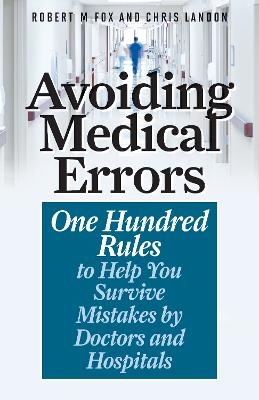
Avoiding Medical Errors
Rowman & Littlefield (Verlag)
978-1-5381-3571-6 (ISBN)
This book, written by a lawyer and a doctor explains to everyday readers ways in which they can avoid death and injury caused by medical mistakes. It may be shocking to learn that preventable errors by doctor and hospital personnel are a leading cause of death and injury in the United States—perhaps even exceeding the annual deaths caused by heart disease and cancer. But avoiding these mistakes is possible, and the rules found in this book will arm readers against the careless errors that lead to such deaths and injuries.
From hospitals to doctors’ offices, medical professionals are overwhelmed, overtired, even overworked and mistakes are sometimes unavoidable even with the best safety measures in place. A resident at the end of a 36-hour on-call stint may forget to wash her hands before performing a surgical procedure. A chart may be mismarked. Medications may be inaccurately listed. Test results may be inaccurately interpreted. But patients are in a position to help themselves and their medical caregivers to avoid these mistakes by taking more active and attentive part in their own healthcare. By being aware of the most common errors, patients can look for ways to ask questions, review information, even examine test results with a critical eye toward their own health and specific situations. Robert Fox and Chris Landon show them how.
Robert M. Fox, JD, is in private practice in Sherman Oaks, California. He has a broad background in personal injury and medical malpractice. He is a past president of the Los Angeles Trial Lawyers Association. He is the author of many legal articles and and the co-author, with his wife—Dr. Isabelle Fox—of The Prospective Spouse Checklist—Evaluating Your Potential Partner (2011). He lives in Los Angeles. Chris Landon, M.D., was a pediatric intern and resident at Stanford University Hospital, and received additional training at Stanford’s Children’s Hospital. He is board certified in both pediatrics and pediatric pulmonology, and is director of pediatrics at Ventura County Medical Center. He is also a clinical assistant professor of family medicine at UCLA and of pediatrics at USC. He has contributed to articles in the Journal of the American Medical Association, the Journal of the American Board of Family Practice, and other professional publications. He is the director of the Pediatric Diagnostic Center in Ventura, California, where he also lives.
Acknowledgments
Introduction
The Problem: Too Many Deaths
What Patients Can Do—Act!
Preamble to the Rules
Chapter 1: General Rules: Rules 1–32
Rule 1. Select (or Change to) a Competent Doctor
Rule 2. Use State Medical Board Websites to Verify the Credentials of Your Doctor
Rule 3. Don’t Hesitate to Ask Questions That Can Help Your Doctor Evaluate Your Medical Care and Protect Your Health
Rule 4. Be Courteous and Considerate to Your Doctor and All Other Medical Office Personnel
Rule 5. If You Have Doubts about Your Doctor’s Advice concerning Diagnosis or Treatment, Don’t Hesitate to Speak Up and Ask Questions
Rule 6. Insist That Your Doctor Tell You the Diagnosis Before You Accept Treatment
Rule 7. Be Persistent, Particularly If You’ve Been Told There Is Nothing Wrong, but You Know Something Is Wrong
Rule 8. Obtain an Independent Second Opinion
Rule 9. Be Careful Before You Accept Experimental or Unproven Medication or Treatment
Rule 10. Consider Stopping Treatment If There Is No Improvement over Time or If Your Condition Worsens
Rule 11. Do Not Go Home If You Do Not Feel OK
Rule 12. Take Action—Firmly and Courteously—If You Are Habitually Kept Waiting for Long Periods of Time Before You See Your Doctor
Rule 13. To Save Time (and Aggravation), Follow the “Call First” and “Schedule First” Tips
Rule 14. Before Seeing Your Doctor, Prepare a Short List of Questions
Rule 15. Resist the Urge to Talk during a Procedure or Examination
Rule 16. If You Become Involved in Legal Disputes, Remind Your Doctor’s Office to Protect Your Records
Rule 17. Educate Yourself on Doctors and Hospitals
Rule 18. In an Emergency That Requires Hospitalization, by Private Car or “911” Vehicle, Ask to Be Taken to a Full-Service Hospital
Rule 19. Consider Simple Research about Your Medical Problem or Medication
Rule 20. Evaluate Unsubstantiated Health and Medical Advice
Rule 21. In Your Home, Post Information about Doctors, Hospitals, and Medication
Rule 22. Keep Medical and Personal Information in Your Wallet
Rule 23. If Your HCP or Hospital Requires You to Sign an Arbitration Agreement, Sign It—and Don’t Worry!
Rule 24. Consider Joining a Medical Support Group
Rule 25. Create and Maintain Your Own Medical File
Rule 26. If You Discover an Error in Any Record, Ask for a Corrective Note
Rule 27. Obtain Your Original Records before Their “Destruct Date”
Rule 28. Ask for Written Instructions for Any Medication, Diet Change, or Exercise
Rule 29. Keep Each of Your Doctors Informed of Your Medications and Supplements
Rule 30. Be as Accurate as Possible When Providing the Doctor or Hospital with Essential Information
Rule 31. If There Is a Language Barrier, Bring Your Own Translator or Interpreter
Rule 32. Communicate Your Concerns to All Your Healthcare Providers; Do Not Assume They
Will Communicate with One Another
Chapter 2: Rules When Elective or Non-Emergency Surgery and Hospitalization Are First Considered: Rules 33–50
Rule 33. Ask Questions and Think Carefully Before You Agree to Have Surgery
Rule 34. If You Decide to Have Surgery, Take Steps to Assure the Best Possible Result
Rule 35. Avoid Traveling Far Away for a Surgery from the “Best” Expert
Rule 36. Verify with Your Surgeon That He or She Will Personally Perform the Surgery
Rule 37. Schedule Your Surgery at a Time When the Surgeon Will Be Available Seven Days Postoperatively
Rule 38. Schedule Your Elective Surgery for a Monday, Tuesday, or Wednesday Morning (If You Have a Choice)
Rule 39. Avoid Elective Surgery When Residents and Interns Change (June or July at Most Hospitals)
Rule 40. Ask Your Surgeon to Verify That Your Anesthesiologist Is a Board-Certified MD
Rule 41. Attempt to Have Your Surgery in a Full- Service Hospital
Rule 42. Arrange to Have an Advocate/Friend Remain in Your Hospital Room When Needed
Rule 43. Consider a Surgeon Who Is Skilled in a Particular Surgery, Even Though He or She Has a Reputation for Poor Aftercare
Rule 44. Select Your Surgeon Carefully: Investigate, Interview, and Decide
Rule 45. Don’t Panic If You Must Violate Some of Rules 36–43
Rule 46. Let Your Surgeon Select His or Her Own Method and Instruments of Surgery
Rule 47. Ask Your Surgeon If He or She Will Use a General or a Local Anesthetic and Whether You Have a Choice
Rule 48. Do Not Have Surgery on a Holiday or Weekend
Rule 49. Be Careful about Scheduling Surgery Only “to Avoid Losing Time from Work” If Such Scheduling Violates Other Rules
Rule 50. Let Your Surgeon Decide on the Number of Surgeries That Will Be Performed
Chapter 3: Rules Covering the Last Few Weeks before Planned Surgery: Rules 51–61
Rule 51. During the Weeks before Hospital Entry, Prepare, Assemble, and Learn How to Use Your “Hospital Kit”
Rule 52. A Day or Two before Hospital Entry, Use a Permanent Black Felt-Tip Marker to Print Warnings about Allergies and Body Surgery
Rule 53. Except for Your Hospital Kit, Leave Your Valuables at Home to Prevent Loss or Theft
Rule 54. If You Will Have a Private-Duty Nurse, Make Arrangements at Least a Week before Hospital Entry
Rule 55. Review Hospital Paperwork Seven to Ten Days before Entry
Rule 56. In the Weeks before Entry, Determine If a Hospitalist Will Be Available to See Patients
Rule 57. If You Are Ill before Your Elective or Non-Emergency Surgery, Ask Your Doctor about Possible Cancellation
Rule 58. Ask Your Doctor Which Medications You Should Be Taking or Discontinuing Before You Enter the Hospital
Rule 59. Ask Your Doctor’s Permission to Bring Your Own Medication to the Hospital Instead of Taking Those Supplied by the Hospital
Rule 60. Well before Surgery, Arrange for Postoperative Care
Rule 61. Verify That You Have Had a Preoperative Physical Examination
Chapter 4: Rules during Hospitalization: Rules 62–82
Rule 62. Have Your Friend/Advocate Help with the Check-in Procedure
Rule 63. Both You and Your Advocate Should Always Be Diplomatic, Friendly, and Cooperative with Everyone at the Hospital
Rule 64. Confirm That Your Hospital Wristband Has Your Correct Information
Rule 65. Right Away, Learn How to Work the Call Device and Other Equipment in Your Hospital Room
Rule 66. Promptly after Admission, Verify That Your Body Warning Signs and Other Printed Signs Are Placed and Visible
Rule 67. Before Surgery, Reconfirm Your Surgeon Will Be the One Performing the Surgery
Rule 68. Before Entering the Operating Room, Confirm Which Anesthetic Will Be Administered (Local or General)
Rule 69. Prior to Surgery, Tell Your Surgeon If You Have Removable Dentures, Implants, Stents, or Similar Items
Rule 70. Ask Your Doctor: “What Other Doctor Will Be Seeing Me during My Hospitalization?”
Rule 71. In the Hospital, Make Notes of Important Events to Include in Your Medical File
Rule 72. Before Taking Any Medication, Verify It Was Prescribed for You and Not Some Other Patient
Rule 73. If Your Room Has a Bedside Scanning Device to Check Medication, Make Sure It Is Used
Rule 74. If You Have a Serious Medical Problem, Insist on Being Seen by an Experienced MD; Do Not Allow a Delay Until Your Treating Doctor or Surgeon Returns
Rule 75. If You Discover That Doctors or Other Hospital Personnel Disagree with the Treatment You Are Receiving, Investigate and Consider a Second Opinion
Rule 76. When Tests Are Conducted, Always Ask Your Doctor, “What Did the Test Show?”
Rule 77. If Your Private-Duty Nurse Is Hostile, Incompetent, or Otherwise Unsatisfactory, Discharge Him or Her Promptly
Rule 78. Avoid Loss or Theft of Your Cell Phone or Smartphone
Rule 79. Ask Questions If You Discover Surgical or Other Treatment Complications
Rule 80. If You Are Cleared for Discharge but Feel Too Sick to Leave, Take Steps to Appeal So You Can Stay in the Hospital
Rule 81. Upon Discharge, Ask for Written Instructions about Medications or Other Required Action
Rule 82. Do Not Sign Any Documents When You Leave the Hospital
Chapter 5: Rules Covering Tests and Medical Devices: X-Rays, CT Scans, MRIs, Blood, Urine, and Other Tests: Rules 83–88 107
Rule 83. Ask Questions Before You Agree to Tests or Devices (See Exceptions)
Rule 84. Ask That All Tests Ordered by Your Doctor Be Conducted and Interpreted in the US (See Exceptions)
Rule 85. When Your Blood Is Taken for Testing, Check That Your Name Is on the Body of the Container
Rule 86. Whenever a Needle Is Used, Verify That It Is Taken from an Unopened and Sterile Package
Rule 87. Always Request Lead Shielding for Tests Involving Radiation (All X-rays and Scans)
Rule 88. If You Are Told to Use a Device, Have It Explained to You While You Are Still at the Office
Chapter 6: Rules concerning Medications and Prescriptions: Rules 89–96
Rule 89. Be Careful Buying Prescriptions by Mail or Online Pharmacies; Some Are Good, Some Are Bad, Some Are Fraudulent
Rule 90. Select Your Local Pharmacies Carefully; It Will Save Time and Money and Will Protect Your Health
Rule 91. If You Feel Sick or Have Another Problem When Starting New Medication, Stop Immediately and Contact Your Doctor
Rule 92. Check with Your Doctor about Taking, Continuing, or Stopping Medications
Rule 93. Verify That the Medication You Are Taking Was Prescribed by Your Doctor
Rule 94. Ask Your Doctor to Prescribe the Generic Unless There Are Good Reasons to Do Otherwise
Rule 95. Discard and Replace Outdated Medications
Rule 96. Do Not Give Children Adult Medication (See Exceptions)
Chapter 7: Financial and Insurance Issues: Rules 97–101
Rule 97. Maintain Medical, Hospital, and Drug Insurance
Rule 98. Verify in Advance That Your Bills Will Be Paid by Your Medical Plan
Rule 99. Reduce Out-of-Pocket Expenses by Bargaining, Coordinating, and Shopping
Rule 100. Whether You Have Insurance or Not, Learn to Financially Navigate Out-of-Pocket, Out-of-Network, and Concierge Medical Plans
Rule 101. Be Cautious Before Putting Other Medical or Laboratory Bills on Your Credit Card
Chapter 8: Medicolegal Issues: Rules 102–104
Rule 102. If Injury or Illness May Have Been Caused by Medical or Hospital Errors, or Other Causes, Take Steps to Protect Your Legal Rights
Rule 103. If Illness or Injury Occurs, as Discussed in
Rule 102, Decline Requests for “Interviews” or “Statements,” and Avoid Other Communications That May Compromise Your Legal Rights
Rule 104. Employ an Attorney ASAP If You Believe You Are a Victim of Medical or Hospital Error or Other Causes Discussed in Rule 102
Appendix A: Healthcare Providers (HCPs)
Appendix B: Hospitals and Other Facilities That Provide Similar Services: Emergency Rooms (ERs), Ambulatory Surgical Centers, Urgent Care, and Walk-in Clinics
Appendix C: Corrected Surgical Consent Form
Bibliography and Suggested Reading
About the Authors
| Erscheinungsdatum | 10.05.2021 |
|---|---|
| Sprache | englisch |
| Maße | 151 x 226 mm |
| Gewicht | 381 g |
| Themenwelt | Sachbuch/Ratgeber ► Gesundheit / Leben / Psychologie |
| Medizin / Pharmazie ► Gesundheitswesen | |
| Medizin / Pharmazie ► Medizinische Fachgebiete ► Medizinethik | |
| ISBN-10 | 1-5381-3571-X / 153813571X |
| ISBN-13 | 978-1-5381-3571-6 / 9781538135716 |
| Zustand | Neuware |
| Informationen gemäß Produktsicherheitsverordnung (GPSR) | |
| Haben Sie eine Frage zum Produkt? |
aus dem Bereich