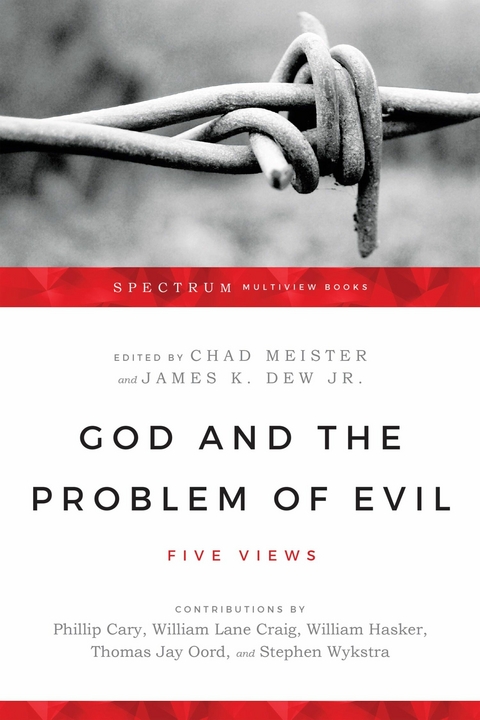
God and the Problem of Evil (eBook)
InterVarsity Press (Verlag)
978-0-8308-9174-0 (ISBN)
Chad Meister (PhD, Marquette University) is professor of philosophy and theology at Bethel College in Mishawaka, Indiana. His publications include Evil: A Guide for the Perplexed, Contemporary Philosophical Theology, The Oxford Handbook of Religious Diversity, and the six-volume work, The History of Evil. James K. Dew Jr. (PhD, Southeastern Baptist) is associate professor of the history of ideas and philosophy and dean of the College at Southeastern Baptist Theological Seminary. He is the coauthor (with Mark W. Foreman) of How Do We Know? An Introduction to Epistemology and coeditor (with Chad Meister) of God and Evil: The Case for God in a World Filled with Pain.
Evil abounds. And so do the attempts to understand God in the face of such evil. The problem of evil is a constant challenge to faith in God. How can we believe in a loving and powerful God given the existence of so much suffering in the world? Philosophers and theologians have addressed this problem countless times over the centuries. New explanations have been proposed in recent decades drawing on resources in Scripture, theology, philosophy, and science. This Spectrum Multiview volume stages a dialogue between the five key positions in the current debate:- Phillip Cary: A Classic View- William Lane Craig: A Molinist View- William Hasker: An Open Theist View- Thomas Jay Oord: An Essential Kenosis View- Stephen Wykstra: A Skeptical Theism ViewAccording to the classic position, associated especially with the Augustinian tradition, God permits evil and suffering as part of the grand narrative of divine providence to bring about the redemption of creation. Molinism modifies the classic view by adding God's middle knowledge to the picture, in which God has knowledge of what creatures would do in all possible worlds. Open theism rejects the determinism of the classic view in favor of an account of God as a risk-taker who does not know for sure what the future holds. Essential kenosis goes further in providing a comprehensive theodicy by arguing that God cannot control creatures and thus cannot unilaterally prevent evil. Skeptical theism rejects the attempt to provide a theodicy and instead argues that, if God exists, we should not expect to understand God's purposes. Edited and with an introduction by Chad Meister and James K. Dew Jr., God and the Problem of Evil hosts a generous and informative conversation on one of the most pressing issues in the Christian life. Spectrum Multiview Books offer a range of viewpoints on contested topics within Christianity, giving contributors the opportunity to present their position and also respond to others in this dynamic publishing format.
Chad Meister (PhD, Marquette University) is professor of philosophy and theology at Bethel College in Mishawaka, Indiana. His publications include Evil: A Guide for the Perplexed, Contemporary Philosophical Theology, The Oxford Handbook of Religious Diversity, and the six-volume work, The History of Evil. James K. Dew Jr. (PhD, Southeastern Baptist) is associate professor of the history of ideas and philosophy and dean of the College at Southeastern Baptist Theological Seminary. He is the coauthor (with Mark W. Foreman) of How Do We Know? An Introduction to Epistemology and coeditor (with Chad Meister) of God and Evil: The Case for God in a World Filled with Pain.
| Erscheint lt. Verlag | 16.5.2017 |
|---|---|
| Reihe/Serie | Spectrum Multiview Book Series |
| Spectrum Multiview Book Series | Spectrum Multiview Book Series |
| Verlagsort | Lisle |
| Sprache | englisch |
| Themenwelt | Sachbuch/Ratgeber ► Gesundheit / Leben / Psychologie ► Psychologie |
| Sonstiges ► Geschenkbücher | |
| Geisteswissenschaften ► Psychologie ► Trennung / Trauer | |
| Religion / Theologie ► Christentum ► Kirchengeschichte | |
| Religion / Theologie ► Christentum ► Moraltheologie / Sozialethik | |
| Schlagworte | Augustine • Augustinian • Augustinianism • classical Christianity • Compatibilism • Counterfactuals • divine providence • Doubt • essential kenosis • Free Will • Molinism • Molinist • open theism • Problem of evil • problem of pain • problem of suffering • Skeptical theism • Theodicy |
| ISBN-10 | 0-8308-9174-9 / 0830891749 |
| ISBN-13 | 978-0-8308-9174-0 / 9780830891740 |
| Informationen gemäß Produktsicherheitsverordnung (GPSR) | |
| Haben Sie eine Frage zum Produkt? |
 EPUB (Adobe DRM)
Kopierschutz: Adobe-DRM
Adobe-DRM ist ein Kopierschutz, der das eBook vor Mißbrauch schützen soll. Dabei wird das eBook bereits beim Download auf Ihre persönliche Adobe-ID autorisiert. Lesen können Sie das eBook dann nur auf den Geräten, welche ebenfalls auf Ihre Adobe-ID registriert sind.
Details zum Adobe-DRM
Dateiformat: EPUB (Electronic Publication)
EPUB ist ein offener Standard für eBooks und eignet sich besonders zur Darstellung von Belletristik und Sachbüchern. Der Fließtext wird dynamisch an die Display- und Schriftgröße angepasst. Auch für mobile Lesegeräte ist EPUB daher gut geeignet.
Systemvoraussetzungen:
PC/Mac: Mit einem PC oder Mac können Sie dieses eBook lesen. Sie benötigen eine
eReader: Dieses eBook kann mit (fast) allen eBook-Readern gelesen werden. Mit dem amazon-Kindle ist es aber nicht kompatibel.
Smartphone/Tablet: Egal ob Apple oder Android, dieses eBook können Sie lesen. Sie benötigen eine
Geräteliste und zusätzliche Hinweise
Buying eBooks from abroad
For tax law reasons we can sell eBooks just within Germany and Switzerland. Regrettably we cannot fulfill eBook-orders from other countries.
aus dem Bereich