



The Theory of Gymnastics
Seiten
2018
Routledge (Verlag)
978-1-138-60617-3 (ISBN)
Routledge (Verlag)
978-1-138-60617-3 (ISBN)
First published in 1939, this volume sought to explain how gymnastics was a means of developing both physical form and moral qualities through the classification, description and contemplation of exercises such as corrective, balance and athletic exercises along with demonstrative illustrations.
First published in 1939, this volume translated into English the Danish work ‘Den Specielle Gymnastrikteon’. Its author, Professor Lindhard, noted the still-young field of theoretical gymnastics in comparison to its physical counterpart, with the only prior major work being that of Ling from 1800. Lindhard developed upon that work to revolutionise the 1930s interpretation of Ling’s views. The author of several physiological books, Lindhard sought to explain how gymnastics was a means of developing both physical form and moral qualities. He emphasised the importance of guidance towards ethical and aesthetical gymnastics and explored the differences between men, women and children with regards to each form of exercise. This was achieved through the classification, description and contemplation of exercises such as corrective, balance and athletic exercises along with demonstrative illustrations.
First published in 1939, this volume translated into English the Danish work ‘Den Specielle Gymnastrikteon’. Its author, Professor Lindhard, noted the still-young field of theoretical gymnastics in comparison to its physical counterpart, with the only prior major work being that of Ling from 1800. Lindhard developed upon that work to revolutionise the 1930s interpretation of Ling’s views. The author of several physiological books, Lindhard sought to explain how gymnastics was a means of developing both physical form and moral qualities. He emphasised the importance of guidance towards ethical and aesthetical gymnastics and explored the differences between men, women and children with regards to each form of exercise. This was achieved through the classification, description and contemplation of exercises such as corrective, balance and athletic exercises along with demonstrative illustrations.
J. Lindhard
Part 1. Introduction. 1. Classification of the Exercises. 2. The Gymnastic Exercises. 3. The Gymnastic Significance of Sex and Age. 4. The Gymnastic Table. Part 2. The System. Group 1. 1. Order Exercises. 2. Exercises in Deportment. 3. Marching Exercises. Part 3. Group 2. 1. Corrective Exercises. 2. Starting Positions. 3. Exercises. Part 4. Group 3. 1. Balance Exercises. Part 5. Group 4. 1. Marching. 2. Running. 3. Jumping and Vaulting. 4. Agility Exercises. 5. Games and Athletics.
| Erscheinungsdatum | 11.10.2018 |
|---|---|
| Reihe/Serie | Routledge Revivals |
| Verlagsort | London |
| Sprache | englisch |
| Maße | 138 x 216 mm |
| Gewicht | 850 g |
| Themenwelt | Sachbuch/Ratgeber ► Sport ► Fitness / Aerobic / Bodybuilding |
| ISBN-10 | 1-138-60617-0 / 1138606170 |
| ISBN-13 | 978-1-138-60617-3 / 9781138606173 |
| Zustand | Neuware |
| Informationen gemäß Produktsicherheitsverordnung (GPSR) | |
| Haben Sie eine Frage zum Produkt? |
Mehr entdecken
aus dem Bereich

aus dem Bereich
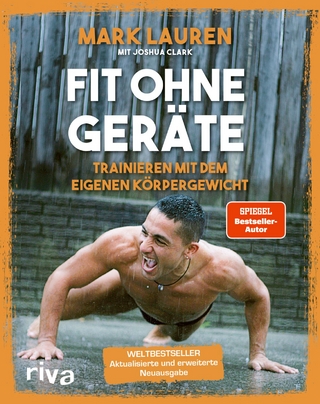
trainiere mit dem eigenen Körpergewicht
Buch | Softcover (2025)
riva (Verlag)
CHF 37,90
für sie und ihn
Buch | Hardcover (2025)
Südwest (Verlag)
CHF 31,90
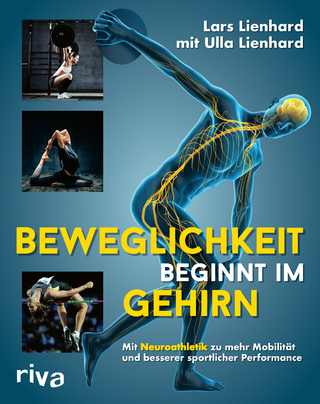
mit Neuroathletik zu mehr Mobilität und besserer sportlicher …
Buch | Softcover (2024)
riva (Verlag)
CHF 38,90


