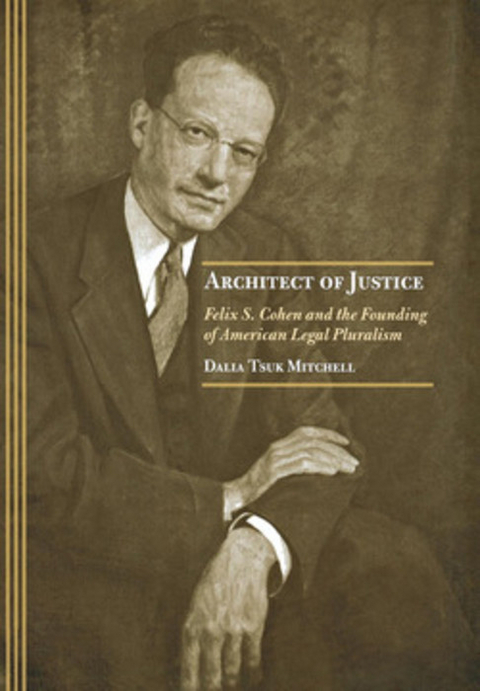
Architect of Justice (eBook)
384 Seiten
Cornell University Press (Verlag)
978-1-5017-1716-1 (ISBN)
A major figure in American legal history during the first half of the twentieth century, Felix Solomon Cohen (1907–1953) is best known for his realist view of the law and his efforts to grant Native Americans more control over their own cultural...
A major figure in American legal history during the first half of the twentieth century, Felix Solomon Cohen (1907–1953) is best known for his realist view of the law and his efforts to grant Native Americans more control over their own cultural, political, and economic affairs. A second-generation Jewish American, Cohen was born in Manhattan, where he attended the College of the City of New York before receiving a Ph.D. in philosophy from Harvard University and a law degree from Columbia University. Between 1933 and 1948 he served in the Solicitor's Office of the Department of the Interior, where he made lasting contributions to federal Indian law, drafting the Indian Reorganization Act of 1934, the Indian Claims Commission Act of 1946, and, as head of the Indian Law Survey, authoring The Handbook of Federal Indian Law (1941), which promoted the protection of tribal rights and continues to serve as the basis for developments in federal Indian law.
In Architect of Justice, Dalia Tsuk Mitchell provides the first intellectual biography of Cohen, whose career and legal philosophy she depicts as being inextricably bound to debates about the place of political, social, and cultural groups within American democracy. Cohen was, she finds, deeply influenced by his own experiences as a Jewish American and discussions within the Jewish community about assimilation and cultural pluralism as well the persecution of European Jews before and during World War II.
Dalia Tsuk Mitchell uses Cohen's scholarship and legal work to construct a history of legal pluralism—a tradition in American legal and political thought that has immense relevance to contemporary debates and that has never been examined before. She traces the many ways in which legal pluralism informed New Deal policymaking and demonstrates the importance of Cohen's work on behalf of Native Americans in this context, thus bringing federal Indian law from the margins of American legal history to its center. By following the development of legal pluralism in Cohen's writings, Architect of Justice demonstrates a largely unrecognized continuity in American legal thought between the Progressive Era and ongoing debates about multiculturalism and minority rights today. A landmark work in American legal history, this biography also makes clear the major contribution Felix S. Cohen made to America's legal and political landscape through his scholarship and his service to the American government.
A major figure in American legal history during the first half of the twentieth century, Felix Solomon Cohen (1907–1953) is best known for his realist view of the law and his efforts to grant Native Americans more control over their own cultural, political, and economic affairs. A second-generation Jewish American, Cohen was born in Manhattan, where he attended the College of the City of New York before receiving a Ph.D. in philosophy from Harvard University and a law degree from Columbia University. Between 1933 and 1948 he served in the Solicitor's Office of the Department of the Interior, where he made lasting contributions to federal Indian law, drafting the Indian Reorganization Act of 1934, the Indian Claims Commission Act of 1946, and, as head of the Indian Law Survey, authoring The Handbook of Federal Indian Law (1941), which promoted the protection of tribal rights and continues to serve as the basis for developments in federal Indian law.In Architect of Justice, Dalia Tsuk Mitchell provides the first intellectual biography of Cohen, whose career and legal philosophy she depicts as being inextricably bound to debates about the place of political, social, and cultural groups within American democracy. Cohen was, she finds, deeply influenced by his own experiences as a Jewish American and discussions within the Jewish community about assimilation and cultural pluralism as well the persecution of European Jews before and during World War II.Dalia Tsuk Mitchell uses Cohen's scholarship and legal work to construct a history of legal pluralism—a tradition in American legal and political thought that has immense relevance to contemporary debates and that has never been examined before. She traces the many ways in which legal pluralism informed New Deal policymaking and demonstrates the importance of Cohen's work on behalf of Native Americans in this context, thus bringing federal Indian law from the margins of American legal history to its center. By following the development of legal pluralism in Cohen's writings, Architect of Justice demonstrates a largely unrecognized continuity in American legal thought between the Progressive Era and ongoing debates about multiculturalism and minority rights today. A landmark work in American legal history, this biography also makes clear the major contribution Felix S. Cohen made to America's legal and political landscape through his scholarship and his service to the American government.
Dalia Tsuk Mitchell is Associate Professor of Law at The George Washington University Law School.
| Erscheint lt. Verlag | 31.5.2018 |
|---|---|
| Verlagsort | Ithaca |
| Sprache | englisch |
| Maße | 160 x 160 mm |
| Themenwelt | Literatur ► Biografien / Erfahrungsberichte |
| Literatur ► Romane / Erzählungen | |
| Sachbuch/Ratgeber ► Geschichte / Politik | |
| Geschichte ► Allgemeine Geschichte ► Neuzeit (bis 1918) | |
| Geisteswissenschaften ► Geschichte ► Regional- / Ländergeschichte | |
| Geschichte ► Teilgebiete der Geschichte ► Militärgeschichte | |
| Recht / Steuern ► Allgemeines / Lexika | |
| Recht / Steuern ► EU / Internationales Recht | |
| Recht / Steuern ► Rechtsgeschichte | |
| ISBN-10 | 1-5017-1716-2 / 1501717162 |
| ISBN-13 | 978-1-5017-1716-1 / 9781501717161 |
| Informationen gemäß Produktsicherheitsverordnung (GPSR) | |
| Haben Sie eine Frage zum Produkt? |
 PDF (Adobe DRM)
Kopierschutz: Adobe-DRM
Adobe-DRM ist ein Kopierschutz, der das eBook vor Mißbrauch schützen soll. Dabei wird das eBook bereits beim Download auf Ihre persönliche Adobe-ID autorisiert. Lesen können Sie das eBook dann nur auf den Geräten, welche ebenfalls auf Ihre Adobe-ID registriert sind.
Details zum Adobe-DRM
Dateiformat: PDF (Portable Document Format)
Mit einem festen Seitenlayout eignet sich die PDF besonders für Fachbücher mit Spalten, Tabellen und Abbildungen. Eine PDF kann auf fast allen Geräten angezeigt werden, ist aber für kleine Displays (Smartphone, eReader) nur eingeschränkt geeignet.
Systemvoraussetzungen:
PC/Mac: Mit einem PC oder Mac können Sie dieses eBook lesen. Sie benötigen eine
eReader: Dieses eBook kann mit (fast) allen eBook-Readern gelesen werden. Mit dem amazon-Kindle ist es aber nicht kompatibel.
Smartphone/Tablet: Egal ob Apple oder Android, dieses eBook können Sie lesen. Sie benötigen eine
Geräteliste und zusätzliche Hinweise
Buying eBooks from abroad
For tax law reasons we can sell eBooks just within Germany and Switzerland. Regrettably we cannot fulfill eBook-orders from other countries.
aus dem Bereich