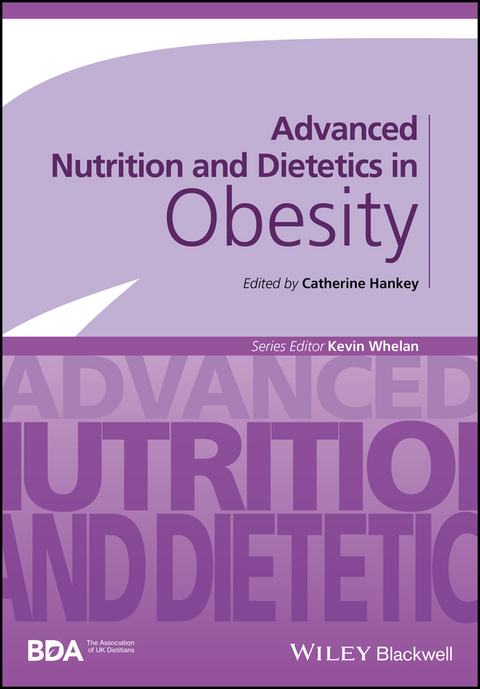
Advanced Nutrition and Dietetics in Obesity (eBook)
John Wiley & Sons (Verlag)
978-1-118-85796-0 (ISBN)
This addition to the British Dietetic Association Advanced Nutrition and Dietetics book series is written for clinicians and researchers who work with any aspect of obesity and its comorbid conditions. Featuring contributions from leading researchers and practitioners from around the globe Advanced Nutrition and Dietetics in Obesity offers a uniquely international perspective on what has become a worldwide public health crisis.
Chapters cover a full range of new ideas and research on the underlying drivers of obesity in populations including discussions on the genetic and clinical aspects of obesity, along with expert recommendations on how to effectively manage and prevent this chronic and persistent disease.
Providing a comprehensive overview of the key literature in this field, Advanced Nutrition and Dietetics in Obesity is an invaluable resource for all those whose work should or does embrace any aspect of obesity.
About the Editor
Catherine Hankey, PhD RD is Senior Lecturer in Human Nutrition at the School of Medicine, University of Glasgow, Glasgow, UK.
About the Series Editor
Kevin Whelan, PhD RD FBDA is Professor of Dietetics in the Division of Diabetes and Nutritional Sciences, King's College London, London, UK.
This addition to the British Dietetic Association Advanced Nutrition and Dietetics book series is written for clinicians and researchers who work with any aspect of obesity and its comorbid conditions. Featuring contributions from leading researchers and practitioners from around the globe Advanced Nutrition and Dietetics in Obesity offers a uniquely international perspective on what has become a worldwide public health crisis. Chapters cover a full range of new ideas and research on the underlying drivers of obesity in populations including discussions on the genetic and clinical aspects of obesity, along with expert recommendations on how to effectively manage and prevent this chronic and persistent disease. Providing a comprehensive overview of the key literature in this field, Advanced Nutrition and Dietetics in Obesity is an invaluable resource for all those whose work should or does embrace any aspect of obesity.
About the Editor Catherine Hankey, PhD RD is Senior Lecturer in Human Nutrition at the School of Medicine, University of Glasgow, Glasgow, UK. About the Series Editor Kevin Whelan, PhD RD FBDA is Professor of Dietetics in the Division of Diabetes and Nutritional Sciences, King's College London, London, UK.
Preface ix
Foreword xi
Editor biographies xiii
Contributors xv
Abbreviations xix
SECTION 1 Introduction 1
1.1 Definition, prevalence and historical perspectives of obesity in adults 3
1.2 Definition, prevalence and historical perspectives of obesity in children 11
1.3 Development of overweight and obesity across the life course 18
1.4 Diagnostic criteria and assessment of obesity in adults 24
1.5 Diagnostic criteria and assessment of obesity in children 31
SECTION 2 Consequences and comorbidities associated with obesity 39
2.1 Obesity in the development of type 2 diabetes 41
2.2 Obesity in the development of cardiovascular disease 49
2.3 Obesity as a risk factor in the development of cancer 56
2.4 Obesity as a risk factor in osteoarthritis and pulmonary disease 64
2.5 Psychology and mental health issues in obesity 71
2.6 Binge eating and obesity 78
SECTION 3 Aetiology of obesity in adults 85
3.1 Genetics and epigenetics in the aetiology of obesity 87
3.2 Food intake and appetite in the aetiology of obesity 97
3.3 Physiological control of appetite and food intake 106
3.4 Obesogenic medication in the aetiology of obesity 113
3.5 Gut microbiome in obesity 118
3.6 Physical activity and physical inactivity in the aetiology of obesity 126
3.7 Obesogenic environment and obesogenic behaviours 132
SECTION 4 Weight management in adults 139
4.1 Macronutrient composition for weight loss in obesity 141
4.2 Meal replacements for weight loss in obesity 150
4.3 Formula diets for weight loss in obesity 157
4.4 Group?]based interventions for weight loss in obesity 164
4.5 Commercial weight management organisations for weight loss in obesity 169
4.6 Fad diets and fasting for weight loss in obesity 177
4.7 Pharmacological management of weight loss in obesity 183
4.8 Diet to support pharmacological management of weight loss 188
4.9 Surgical management of weight loss in obesity 193
4.10 Diet to support surgical management of weight loss 203
4.11 Physical activity for weight loss in obesity 212
4.12 Psychological interventions for weight loss in obesity 221
4.13 Weight loss interventions in specific groups: overweight and obese men 228
4.14 Weight loss interventions in specific groups: Adults with intellectual disabilities and obesity 235
4.15 Weight maintenance following weight loss in obesity 242
4.16 Economic cost of obesity and the cost?]effectiveness of weight management 252
SECTION 5 Aetiology of obesity in children 261
5.1 Genetics, epigenetics and obesity: focus on studies in children 263
5.2 Food intake, eating behaviour and obesity in children 271
5.3 Physical activity and inactivity in the aetiology of obesity in children 277
SECTION 6 Weight management in children 287
6.1 Diet in the management of weight loss in childhood obesity 289
6.2 Physical activity in the management of weight loss in childhood obesity 295
6.3 Psychological and behavioural interventions in childhood obesity 301
6.4 Residential programmes and weight loss camps in childhood obesity 309
6.5 Pharmacological management of weight loss in childhood obesity 315
6.6 Surgical management of weight loss in childhood obesity 320
SECTION 7 Public health and the prevention of obesity 329
7.1 National campaigns to modify eating behaviour in the prevention of obesity 331
7.2 Increasing physical activity to prevent childhood obesity 339
7.3 Designing public health initiatives for the prevention of obesity 349
Index 355
Abbreviations
- AT
- Adaptive thermogenesis
- AGB
- Adjustable gastric band
- AgRP
- Agouti‐related protein
- AHO
- Albright’s hereditary osteodystrophy
- ADF
- Alternate‐day fasting
- ADMF
- Alternate‐day modified fasting
- AAIDD
- American Association on Intellectual and Developmental Disabilities
- ACS
- American Cancer Society
- ACP
- American College of Physicians
- ACR
- American College of Rheumatology
- ACSM
- American College of Sports Medicine
- ADA
- American Diabetes Association
- ASMBS
- American Society for Metabolic and Bariatric Surgery
- ANGELO
- ANalysis Grid for Elements Linked to Obesity
- ARC
- Arcuate nucleus
- ACMOMS
- Asian Consensus Meeting on Metabolic Surgery
- ALSWH
- Australian Longitudinal Study on Women’s Health
- BEBQ
- Baby Eating Behaviour Questionnaire
- BLW
- Baby‐led weaning
- BBS
- Bardet‐Biedl syndrome
- BMR
- Basal metabolic rate
- BOCF
- Baseline observation carried forward
- BDI
- Beck depression inventory
- BT
- Behavioural therapy
- ADRB3
- Beta‐3 adrenergic receptor
- BED
- Binge eating disorder
- BIA
- Bio‐electrical impedance analysis
- BBSRC
- Biotechnology and Biological Sciences Research Council
- BCS
- Body contour surgery
- BMI
- Body mass index
- BMI‐SDS
- Body mass index standard deviation score
- BDNF
- Brain‐derived neurotrophic factor
- BOMSS
- British Obesity and Metabolic Surgery Society
- CPS‐I
- Cancer Prevention Study I
- CVD
- Cardiovascular disease
- CADM2
- Cell adhesion molecule 2
- CDC
- Centers for Disease Control and Prevention
- CEBQ
- Child Eating Behaviour Questionnaire
- CHASE
- Child Health Heart Study in England
- CHEW
- Children Eating Well
- CCK
- Cholecystokinin
- COPD
- Chronic obstructive pulmonary disease
- CART
- Cocaine‐ and amphetamine‐related transcript
- CBT
- Cognitive behavioural therapy
- CWMO
- Commercial weight management organisation
- COMPX
- Compensation index
- CT
- Computer tomography
- CI
- Confidence interval
- CER
- Continuous energy restriction
- CNVs
- Copy number variants
- CAD
- Coronary artery disease
- CARDIA
- Coronary Artery Risk Development in Young Adults
- CUA
- Cost utility analysis
- CBA
- Cost‐benefit analysis
- CEA
- Cost‐effectiveness analysis
- CRP
- C‐reactive protein
- CRM
- Customer relationship management
- DHHS
- Department of Health and Human Services
- DPS
- Diabetes Prevention Study
- DSM‐IV
- Diagnostic and Statistical Manual of Mental Disorders
- DIT
- Diet‐induced thermogenesis
- DALY
- Disability‐adjusted life year
- DEXA
- Dual‐energy X‐ray absorptiometry
- DS
- Duodenal switch
- EAH
- Eating in the absence of hunger
- EF
- Ectopic fat
- ER
- Endoplasmic reticulum
- EE
- Energy expenditure
- EI
- Energy intake
- EnRG
- Environmental Research framework for weight Gain prevention
- EIN
- Epode International Network
- EFNA
- European Federation of Neurological Associations
- EFSA
- European Food Safety Authority
- EULAR
- European League Against Rheumatism
- EMAS
- European Male Aging Study
- EMA
- European Medicines Agency
- ENERGY
- Exercise and Nutrition to Enhance recovery and Good Health for You
- FBBT
- Family‐based behavioural treatment
- FANCL
- Fanconi anaemia, complementation group L
- FAIM2
- Fas apoptotic inhibitory molecule 2
- FTO
- Fat mass and obesity–associated
- FFM
- Fat‐free mass
- FDA
- Food and Drug Administration
- FFIT
- Football Fans in Training
- FEV1
- Forced expiratory volume in the first
- FFA
- Free fatty acids
- GP
- general practitioner
- GWA
- Genome wide association
- GWAS
- Genome‐wide association studies
- GCWMS
- Glasgow and Clyde Weight Management Service
- GLP‐1
- Glucagon‐like peptide‐1
- GCKR
- Glucokinase regulatory protein
- GNPDA2
- Glucosamine‐6‐phosphate deaminase 2
- QPCTL
- Glutaminyl‐peptide cyclotransferase‐like
- HR
- Hazard Ratio
- HBSC
- Health Behaviour in School‐Aged Children
- HBM
- Health belief model
- HSE
- Health Survey for England
- HTA
- Health technology assessment
- HDL
- High‐density lipoprotein
- HIF3A
- Hypoxia inducible factor 3A gene
- IWQOL
- Impact of Weight on Quality of Life
- ICER
- Incremental cost‐effectiveness ratio
- INSIG2
- Insulin‐induced gene‐2
- IGF
- Insulin‐like growth factor
- ID
- Intellectual disabilities
- ITT
- Intention‐to‐treat
- IL‐6
- Interleukin 6
- IER
- Intermittent energy restriction
- IF
- Intermittent fasting
- ICAD
- International Children’s Accelerometry Database
- IOTF
- International Obesity Task Force
- IPT
- Interpersonal psychotherapy
- IWHS
- Iowa Women’s Health Study
- IRX3
- Iroquois homeobox protein
- kb
- Kilobase
- LAGB
- Laparoscopic adjustable gastric band
- LOCF
- Last observation carried forward
- LEP
- Leptin
- LEPR
- Leptin receptor
- LMCP
- Leptin‐melanocortin pathway
- LRRN6C
- Leucine‐rich repeat neuronal 6C
- LPS
- Lipopolysaccharide
- LCDs
- Low‐calorie diets
- LCLDs
- Low‐calorie liquid diets
- LCKD
- Low‐carbohydrate ketogenic diet
- LDLR
- Low‐density lipoprotein receptor gene
- LRP1B
- Low‐density lipoprotein receptor‐related protein 1B
- LUTS
- Lower urinary tract symptoms
- LYPLAL1
- Lysophospholipase‐like 1
- MRI
- Magnetic resonance imaging
- MCT
- Medium‐chain triglyceride
- MC3R
- Melanocortin 3 receptor
- MC4R
- Melanocortin 4 receptor
- MET
- Metabolic energy turnover
- METs
- Metabolic equivalents
- MSRA
- Methionine sulfoxide reductase gene A
- miRNA
- microRNA
- MEAL
- mindful eating and living
- MB‐EAT
- mindfulness‐based eating awareness training
- MTCH2
- mitochondrial carrier 2
- MTIF3
- Mitochondrial translational initiation factor 3
- MAP2K5
- Mitogen‐activated protein kinase 5
- MVPA
- Moderate‐vigorous‐intensity physical activity
- MI
- Motivational interviewing
- MDT
- Multidisciplinary team
- NCEP
- National Cholesterol Education Program
- NHMRC
- National Health and Medical Research Council
- NHANES
- National Health and Nutrition Examination Survey
- NHS
- National Health Service
- NHLBI
- National Heart, Lung, and Blood Institute
- NICE
- National Institute for Health and Clinical Excellence
- NOO
- National Obesity Observatory
- NWCR
- National Weight Control Registry
- NRXN3
- Neurexin
- NCAN
- Neurocan
- NEGR1
- Neuronal growth regulator 1
- NPY
- Neuropeptide Y
- NGS
- Next‐generation DNA sequencing
- NES
- Night eating syndrome
- NAFLD
- Non‐alcoholic fatty liver disease
- NASH
- Non‐alcoholic steatohepatitis
- NEFAs
- Non‐esterified fatty acids
- NEAT
- Non‐exercise activity thermogenesis
- NUDT3
- Nucleoside diphosphate‐linked moiety X‐type motif 3
- NDR‐UK
- Nutrition and Diet Resources UK
- OSCA
- Obesity Services for Children and Adolescents
- OR
- Odds ratios
- OPRM1
- Opioid receptor mu‐1 gene
- OA
- Osteoarthritis
- PP
- Pancreatic polypeptide
- PTH
- Parathyroid hormone
- Peds QL
- Pediatric Quality...
| Erscheint lt. Verlag | 23.11.2017 |
|---|---|
| Reihe/Serie | Advanced Nutrition and Dietetics (BDA) |
| Advanced Nutrition and Dietetics (BDA) | Advanced Nutrition and Dietetics (BDA) |
| Mitarbeit |
Herausgeber (Serie): Kevin Whelan |
| Sprache | englisch |
| Themenwelt | Sachbuch/Ratgeber ► Gesundheit / Leben / Psychologie |
| Medizin / Pharmazie ► Gesundheitsfachberufe ► Diätassistenz / Ernährungsberatung | |
| Medizin / Pharmazie ► Medizinische Fachgebiete | |
| Schlagworte | Binge Eating • calories • Clinical Nutrition • Diätetik • diet • Dietetics • eating • Eating Disorder • Environment • Ernährung u. Diätetik • Food • Gesundheits- u. Sozialwesen • Health • Health & Social Care • Klinische Ernährung • Nutrition • Nutrition & Dietetics General • Obesity • Physical Activity • weight • weight management |
| ISBN-10 | 1-118-85796-8 / 1118857968 |
| ISBN-13 | 978-1-118-85796-0 / 9781118857960 |
| Informationen gemäß Produktsicherheitsverordnung (GPSR) | |
| Haben Sie eine Frage zum Produkt? |
 EPUB (Adobe DRM)
Kopierschutz: Adobe-DRM
Adobe-DRM ist ein Kopierschutz, der das eBook vor Mißbrauch schützen soll. Dabei wird das eBook bereits beim Download auf Ihre persönliche Adobe-ID autorisiert. Lesen können Sie das eBook dann nur auf den Geräten, welche ebenfalls auf Ihre Adobe-ID registriert sind.
Details zum Adobe-DRM
Dateiformat: EPUB (Electronic Publication)
EPUB ist ein offener Standard für eBooks und eignet sich besonders zur Darstellung von Belletristik und Sachbüchern. Der Fließtext wird dynamisch an die Display- und Schriftgröße angepasst. Auch für mobile Lesegeräte ist EPUB daher gut geeignet.
Systemvoraussetzungen:
PC/Mac: Mit einem PC oder Mac können Sie dieses eBook lesen. Sie benötigen eine
eReader: Dieses eBook kann mit (fast) allen eBook-Readern gelesen werden. Mit dem amazon-Kindle ist es aber nicht kompatibel.
Smartphone/Tablet: Egal ob Apple oder Android, dieses eBook können Sie lesen. Sie benötigen eine
Geräteliste und zusätzliche Hinweise
Buying eBooks from abroad
For tax law reasons we can sell eBooks just within Germany and Switzerland. Regrettably we cannot fulfill eBook-orders from other countries.
aus dem Bereich