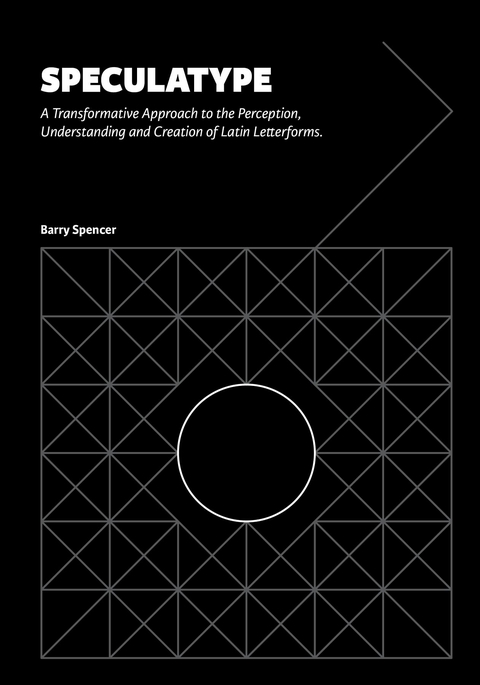
Speculatype (eBook)
256 Seiten
Barry Spencer Design (Verlag)
978-0-6480842-1-1 (ISBN)
Chapter 01: IntroductionChapter 02: Background
2.1 Definitions
2.2 History
2.3 Current StatusChapter 03: Literature review
3.1 History and Origins
3.2 Introduction, Basics and Form
3.3 Creation, Artists, Designers and Visual Examples
3.4 Essays, Articles and Theses
3.5 Psychology, Philosophy, Theories, Methodologies, Inspiration and the UnknownChapter 04: Methodology
4.1 Theoretical positions, framework and approach
4.2 Reflective Practice
4.3 Case studies and design
4.4 A note on the importance of unexpected inspiration to the research and discussion
SummaryChapter 05: Early Experimentation/What makes a letter?
5.1 The components of letters
5.2 The creation of a letter
5.3 The similarity of letterforms
5.4 The removal of detail
5.5 Creation case study 1: Missing Typeface
5.6 The addition of detail
5.7 Creation case study 2: Sayit Typeface
5.8 The reorganisation of components
5.9 Creation case study 3: Fathom Typeface
5.10 The graphic boundaries of current letterforms
SummaryChapter 06: Honours Study/Understanding through context
6.1 The idea of legibility
6.2 The idea of readability
6.3 The context of a word
6.4 Understanding and perception case study 1: Blank typeface
6.5 The context of sentences and paragraphs
6.6 Understanding and perception case study 2: Scintilla typeface
6.7 The understanding and perceptual boundaries of applying alternate letter shapes or inserting new letterforms
6.8 Understanding and perception case study 3: Hiero typeface
SummaryChapter 07: PhD Research Outcomes of further exploration
7.1 The perception of letterforms
7.2 Typeface outcome case study 1: Amble typeface
7.3 The understanding of new letterforms
7.4 Typeface outcome case study 2: Ahara typeface
7.5 The potential of new letterforms
7.6 Typeface outcome case study 3: Sandy typeface
SummaryChapter 08: Conclusion
8.1 The research questions
8.2 Reflections on transformation (Part A)
8.3 Reflections on transformation (Part B)
8.4 Observational discoveries
8.5 Altered perceptions
8.6 Limitations & Future Directions
8.7 Potential application of methodology
8.8 Further ReflectionAppendix A
Appendix B
References
| Erscheint lt. Verlag | 1.6.2017 |
|---|---|
| Sprache | englisch |
| Themenwelt | Sachbuch/Ratgeber ► Freizeit / Hobby ► Kreatives Gestalten |
| Schlagworte | Alphabet • Creative • Creativity • Design • Experimental • Latin • Letterforms • Letters • perception • speculative • Thesis • Transformation • Transformative • Trial and Error • Type • type design • Typographic • typography |
| ISBN-10 | 0-6480842-1-3 / 0648084213 |
| ISBN-13 | 978-0-6480842-1-1 / 9780648084211 |
| Informationen gemäß Produktsicherheitsverordnung (GPSR) | |
| Haben Sie eine Frage zum Produkt? |
 EPUB (Adobe DRM)
Kopierschutz: Adobe-DRM
Adobe-DRM ist ein Kopierschutz, der das eBook vor Mißbrauch schützen soll. Dabei wird das eBook bereits beim Download auf Ihre persönliche Adobe-ID autorisiert. Lesen können Sie das eBook dann nur auf den Geräten, welche ebenfalls auf Ihre Adobe-ID registriert sind.
Details zum Adobe-DRM
Dateiformat: EPUB (Electronic Publication)
EPUB ist ein offener Standard für eBooks und eignet sich besonders zur Darstellung von Belletristik und Sachbüchern. Der Fließtext wird dynamisch an die Display- und Schriftgröße angepasst. Auch für mobile Lesegeräte ist EPUB daher gut geeignet.
Systemvoraussetzungen:
PC/Mac: Mit einem PC oder Mac können Sie dieses eBook lesen. Sie benötigen eine
eReader: Dieses eBook kann mit (fast) allen eBook-Readern gelesen werden. Mit dem amazon-Kindle ist es aber nicht kompatibel.
Smartphone/Tablet: Egal ob Apple oder Android, dieses eBook können Sie lesen. Sie benötigen eine
Geräteliste und zusätzliche Hinweise
Buying eBooks from abroad
For tax law reasons we can sell eBooks just within Germany and Switzerland. Regrettably we cannot fulfill eBook-orders from other countries.
aus dem Bereich