Whistleblowers (eBook)
192 Seiten
Cornell University Press (Verlag)
978-1-5017-1292-0 (ISBN)
In a dark departure from our standard picture of whistleblowers, C. Fred Alford offers a chilling account of the world of people who have come forward to protest organizational malfeasance in government agencies and in the private sector. The...
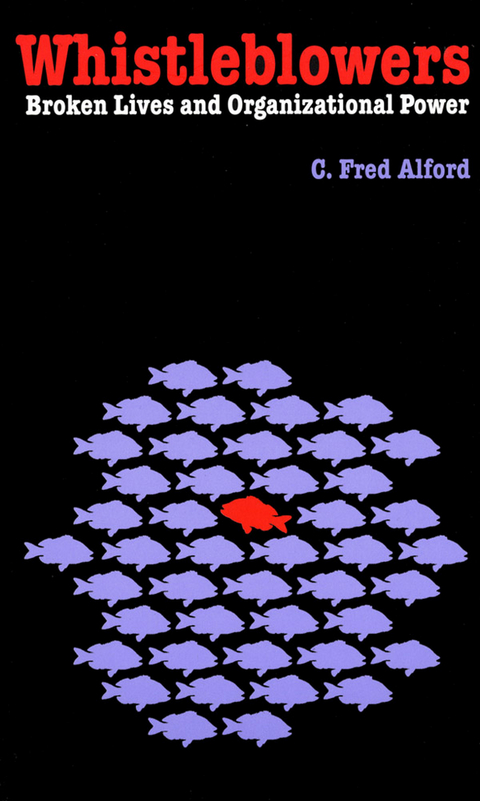
In a dark departure from our standard picture of whistleblowers, C. Fred Alford offers a chilling account of the world of people who have come forward to protest organizational malfeasance in government agencies and in the private sector. The conventional story—high-minded individual fights soulless organization, is persecuted, yet triumphs in the end—is seductive and pervasive. In speaking with whistleblowers and their families, lawyers, and therapists, Alford discovers that the reality of whistleblowing is grim. Few whistleblowers succeed in effecting change; even fewer are regarded as heroes or martyrs.Alford mixes narrative analysis with political insight to offer a frank picture of whistleblowing and a controversial view of organizations. According to Alford, the organization as an institution is dedicated to the destruction of the moral individualist. Frequently, he claims, the organization succeeds, which means that the whistleblowers are broken, unable to reconcile their actions and beliefs with the responses they receive from others. In addition to being mistreated by organizations, whistleblowers often do not receive support from their families and communities. In order to make sense of their stories, Alford claims, some whistleblowers must set aside the things they have always believed: that loyalty is larger than the herd instinct, that someone in charge will do the right thing, that the family is a haven from a heartless world. Alford argues that few whistleblowers recover from their experience, and that, even then, they live in a world very different from the one they knew before their confrontation with the organization.
In a dark departure from our standard picture of whistleblowers, C. Fred Alford offers a chilling account of the world of people who have come forward to protest organizational malfeasance in government agencies and in the private sector. The conventional story—high-minded individual fights soulless organization, is persecuted, yet triumphs in the end—is seductive and pervasive. In speaking with whistleblowers and their families, lawyers, and therapists, Alford discovers that the reality of whistleblowing is grim. Few whistleblowers succeed in effecting change; even fewer are regarded as heroes or martyrs.
Alford mixes narrative analysis with political insight to offer a frank picture of whistleblowing and a controversial view of organizations. According to Alford, the organization as an institution is dedicated to the destruction of the moral individualist. Frequently, he claims, the organization succeeds, which means that the whistleblowers are broken, unable to reconcile their actions and beliefs with the responses they receive from others. In addition to being mistreated by organizations, whistleblowers often do not receive support from their families and communities.
In order to make sense of their stories, Alford claims, some whistleblowers must set aside the things they have always believed: that loyalty is larger than the herd instinct, that someone in charge will do the right thing, that the family is a haven from a heartless world. Alford argues that few whistleblowers recover from their experience, and that, even then, they live in a world very different from the one they knew before their confrontation with the organization.
C. Fred Alford is Professor of Government at the University of Maryland, College Park. He has published many books, including What Evil Means to Us and Think No Evil, both from Cornell.
| Erscheint lt. Verlag | 15.11.2016 |
|---|---|
| Verlagsort | Ithaca |
| Sprache | englisch |
| Maße | 140 x 140 mm |
| Themenwelt | Sachbuch/Ratgeber ► Beruf / Finanzen / Recht / Wirtschaft ► Geld / Bank / Börse |
| Geisteswissenschaften ► Psychologie ► Arbeits- und Organisationspsychologie | |
| Sozialwissenschaften ► Politik / Verwaltung ► Staat / Verwaltung | |
| Sozialwissenschaften ► Soziologie ► Mikrosoziologie | |
| Wirtschaft ► Betriebswirtschaft / Management | |
| ISBN-10 | 1-5017-1292-6 / 1501712926 |
| ISBN-13 | 978-1-5017-1292-0 / 9781501712920 |
| Informationen gemäß Produktsicherheitsverordnung (GPSR) | |
| Haben Sie eine Frage zum Produkt? |
 EPUB (Adobe DRM)
Kopierschutz: Adobe-DRM
Adobe-DRM ist ein Kopierschutz, der das eBook vor Mißbrauch schützen soll. Dabei wird das eBook bereits beim Download auf Ihre persönliche Adobe-ID autorisiert. Lesen können Sie das eBook dann nur auf den Geräten, welche ebenfalls auf Ihre Adobe-ID registriert sind.
Details zum Adobe-DRM
Dateiformat: EPUB (Electronic Publication)
EPUB ist ein offener Standard für eBooks und eignet sich besonders zur Darstellung von Belletristik und Sachbüchern. Der Fließtext wird dynamisch an die Display- und Schriftgröße angepasst. Auch für mobile Lesegeräte ist EPUB daher gut geeignet.
Systemvoraussetzungen:
PC/Mac: Mit einem PC oder Mac können Sie dieses eBook lesen. Sie benötigen eine
eReader: Dieses eBook kann mit (fast) allen eBook-Readern gelesen werden. Mit dem amazon-Kindle ist es aber nicht kompatibel.
Smartphone/Tablet: Egal ob Apple oder Android, dieses eBook können Sie lesen. Sie benötigen eine
Geräteliste und zusätzliche Hinweise
Buying eBooks from abroad
For tax law reasons we can sell eBooks just within Germany and Switzerland. Regrettably we cannot fulfill eBook-orders from other countries.
aus dem Bereich