Writing History for the King (eBook)
272 Seiten
Cornell University Press (Verlag)
978-0-8014-6971-8 (ISBN)
Both a reassessment of the reign of Henry II and an original contribution to our understanding of the rise of vernacular historiography in the high Middle Ages.
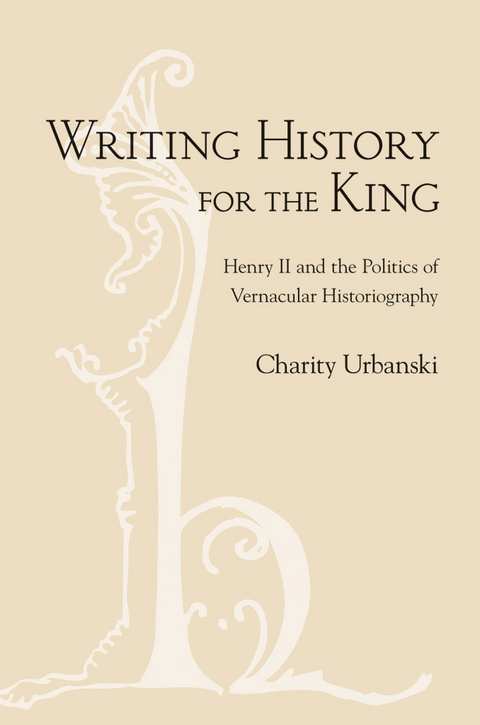
Writing History for the King is at once a reassessment of the reign of Henry II of England (1133–1189) and an original contribution to our understanding of the rise of vernacular historiography in the high Middle Ages. Charity Urbanski focuses on two dynastic histories commissioned by Henry: Wace's Roman de Rou (c. 1160–1174) and Benoît de Sainte-Maure’s Chronique des ducs de Normandie (c. 1174–1189). In both cases, Henry adopted the new genre of vernacular historical writing in Old French verse in an effort to disseminate a royalist version of the past that would help secure a grip on power for himself and his children. Wace was the first to be commissioned, but in 1174 the king abruptly fired him, turning the task over to Benoît de Sainte-Maure.Urbanski examines these histories as part of a single enterprise intended to cement the king’s authority by enhancing the prestige of Henry II’s dynasty. In a close reading of Wace’s Rou, she shows that it presented a less than flattering picture of Henry’s predecessors, in effect challenging his policies and casting a shadow over the legitimacy of his rule. Benoît de Sainte-Maure’s Chronique, in contrast, mounted a staunchly royalist defense of Anglo-Norman kingship. Urbanski reads both works in the context of Henry’s reign, arguing that as part of his drive to curb baronial power he sought a history that would memorialize his dynasty and solidify its claim to England and Normandy.
Writing History for the King is at once a reassessment of the reign of Henry II of England (1133–1189) and an original contribution to our understanding of the rise of vernacular historiography in the high Middle Ages. Charity Urbanski focuses on two dynastic histories commissioned by Henry: Wace's Roman de Rou (c. 1160–1174) and Benoît de Sainte-Maure's Chronique des ducs de Normandie (c. 1174–1189). In both cases, Henry adopted the new genre of vernacular historical writing in Old French verse in an effort to disseminate a royalist version of the past that would help secure a grip on power for himself and his children. Wace was the first to be commissioned, but in 1174 the king abruptly fired him, turning the task over to Benoît de Sainte-Maure.
Urbanski examines these histories as part of a single enterprise intended to cement the king's authority by enhancing the prestige of Henry II's dynasty. In a close reading of Wace's Rou, she shows that it presented a less than flattering picture of Henry's predecessors, in effect challenging his policies and casting a shadow over the legitimacy of his rule. Benoît de Sainte-Maure's Chronique, in contrast, mounted a staunchly royalist defense of Anglo-Norman kingship. Urbanski reads both works in the context of Henry's reign, arguing that as part of his drive to curb baronial power he sought a history that would memorialize his dynasty and solidify its claim to England and Normandy.
Charity Urbanski is Senior Lecturer in Medieval History at the University of Washington.
Acknowledgments
List of Abbreviations
Norman Genealogical Table
Map of the Angevin EmpireIntroduction1. Situating the Roman de Rou and Chronique des ducs de Normandie
Poetry and History
The Origins of Old French Historiography2. Henry II
Lineage and Regional Rivalries
Stephen's Reign and the Civil War
The Restoration of Royal Authority
The Great War, 1173/74
The Succession Question
History and Dynastic Memory3. The Roman de Rou
The Conquest of England
The Death of William the Conqueror
Henry I and Robert Curthose
The Battle of Tinchebray
Wace4. The Chronique des ducs de Normandie
Providence and the Norman Dukes
The Norman Conquest
William the Conqueror
Henry I
The Empress Matilda and Henry II
Benoit de Sainte-MaureConclusionBibliography
Index
| Erscheint lt. Verlag | 15.10.2013 |
|---|---|
| Verlagsort | Ithaca |
| Sprache | englisch |
| Maße | 160 x 160 mm |
| Themenwelt | Sachbuch/Ratgeber ► Geschichte / Politik ► Mittelalter |
| Geschichte ► Allgemeine Geschichte ► Mittelalter | |
| Geisteswissenschaften ► Geschichte ► Regional- / Ländergeschichte | |
| Geisteswissenschaften ► Sprach- / Literaturwissenschaft ► Anglistik / Amerikanistik | |
| Geisteswissenschaften ► Sprach- / Literaturwissenschaft ► Literaturwissenschaft | |
| Schlagworte | anglo norman historiography, high middle ages, dynastic history, historical writing, power in england, baronial power, english dynasties |
| ISBN-10 | 0-8014-6971-6 / 0801469716 |
| ISBN-13 | 978-0-8014-6971-8 / 9780801469718 |
| Informationen gemäß Produktsicherheitsverordnung (GPSR) | |
| Haben Sie eine Frage zum Produkt? |
 EPUB (Adobe DRM)
Kopierschutz: Adobe-DRM
Adobe-DRM ist ein Kopierschutz, der das eBook vor Mißbrauch schützen soll. Dabei wird das eBook bereits beim Download auf Ihre persönliche Adobe-ID autorisiert. Lesen können Sie das eBook dann nur auf den Geräten, welche ebenfalls auf Ihre Adobe-ID registriert sind.
Details zum Adobe-DRM
Dateiformat: EPUB (Electronic Publication)
EPUB ist ein offener Standard für eBooks und eignet sich besonders zur Darstellung von Belletristik und Sachbüchern. Der Fließtext wird dynamisch an die Display- und Schriftgröße angepasst. Auch für mobile Lesegeräte ist EPUB daher gut geeignet.
Systemvoraussetzungen:
PC/Mac: Mit einem PC oder Mac können Sie dieses eBook lesen. Sie benötigen eine
eReader: Dieses eBook kann mit (fast) allen eBook-Readern gelesen werden. Mit dem amazon-Kindle ist es aber nicht kompatibel.
Smartphone/Tablet: Egal ob Apple oder Android, dieses eBook können Sie lesen. Sie benötigen eine
Geräteliste und zusätzliche Hinweise
Buying eBooks from abroad
For tax law reasons we can sell eBooks just within Germany and Switzerland. Regrettably we cannot fulfill eBook-orders from other countries.
aus dem Bereich