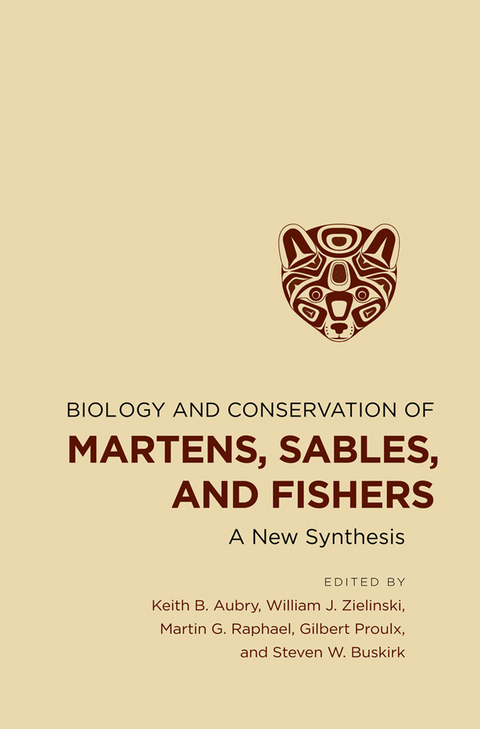
Biology and Conservation of Martens, Sables, and Fishers (eBook)
608 Seiten
Comstock Publishing Associates (Verlag)
978-0-8014-6609-0 (ISBN)
This book reflects all of the major developments in research, conservation, and management programs on Martes species that have occurred throughout the world during the last few decades.
Mammals in the genus Martes are mid-sized carnivores of great importance to forest ecosystems. This book, the successor to Martens, Sables, and Fishers: Biology and Conservation, provides a scientific basis for management and conservation efforts designed to maintain or enhance the populations and habitats of Martes species throughout the world. The twenty synthesis chapters contained in this book bring together the perspectives and expertise of sixty-three scientists from twelve countries, and are organized by the five key themes of evolution and biogeography, population biology and management, habitat ecology and management, research techniques, and conservation.
Recent developments in research technologies such as modeling and genetics, biological knowledge about pathogens and parasites, and concerns about the potential effects of global warming on the distribution and status of Martes populations make new syntheses of these areas especially timely. The volume provides an overview of what is known while clarifying initiatives for future research and conservation priorities, and will be of interest to mammalogists, resource managers, applied ecologists, and conservation biologists.
Mammals in the genus Martes are mid-sized carnivores of great importance to forest ecosystems. This book, the successor to Martens, Sables, and Fishers: Biology and Conservation, provides a scientific basis for management and conservation efforts designed to maintain or enhance the populations and habitats of Martes species throughout the world. The twenty synthesis chapters contained in this book bring together the perspectives and expertise of 63 scientists from twelve countries, and are organized by the five key themes of evolution and biogeography, population biology and management, habitat ecology and management, research techniques, and conservation.Recent developments in research technologies such as modeling and genetics, biological knowledge about pathogens and parasites, and concerns about the potential effects of global warming on the distribution and status of Martes populations make new syntheses of these areas especially timely. The volume provides an overview of what is known while clarifying initiatives for future research and conservation priorities, and will be of interest to mammalogists, resource managers, applied ecologists, and conservation biologists.Contributors: Alexei V. Abramov, Russian Academy of Sciences; Jon M. Arnemo, Hedmark University College, Norway; James A. Baldwin, USDA Forest Service; Jeff Bowman, Ontario Ministry of Natural Resources; Scott M. Brainerd, Alaska Department of Fish and Game; Richard N. Brown, Humboldt State University; Steven W. Buskirk, University of Wyoming; Carlos Carroll, Klamath Center for Conservation Research; Joseph A. Cook, University of New Mexico; Samuel A. Cushman, USDA Forest Service; Natalie G. Dawson, University of Montana; John Fryxell, University of Guelph; Mourad W. Gabriel, Integral Ecology Research Center; Jonathan H. Gilbert, Great Lakes Indian Fish and Wildlife Commission; Evan H. Girvetz, Nature Conservancy; Rebecca A. Green, USDA Forest Service; Daniel J. Harrison, University of Maine; J. Mark Higley, Hoopa Tribal Forestry; Eric P. Hoberg, USDA Agricultural Research Service; Susan S. Hughes, Pacific Northwest National Laboratory; Neil R. Jordan, Vincent Wildlife Trust; Anson V. A. Koehler, University of Otago; William B. Krohn, University of Maine; Joshua J. Lawler, University of Washington; Jeffrey C. Lewis, Washington Department of Fish and Wildlife; Eric C. Lofroth, British Columbia Ministry of Environment; Robert A. Long, Montana State University; Paula MacKay, Montana State University; Bruce G. Marcot, USDA Forest Service; Ryuichi Masuda, Hokkaido University; Marina Mergey, Université de Reims Champagne-Ardenne; Vladimir Monakhov, Russian Academy of Sciences; Takahiro Murakami, Shiretoko Museum; Anne-Mari Mustonen, University of Eastern Finland; Petteri Nieminen, University of Eastern Finland; Cino Pertoldi, Aarhus University; Roger A. Powell, North Carolina State University; Gilbert Proulx, Alpha Wildlife Research & Management Ltd.; Kathryn L. Purcell, USDA Forest Service; Catherine M. Raley, USDA Forest Service; Martin G. Raphael, USDA Forest Service; Luis M. Rosalino, Universidade de Lisboa; Aritz Ruiz-González, Universidad del País Vasco-Euskal Herriko Unibertsitatea; Hugh D. Safford, USDA Forest Service; Margarida Santos-Reis, Universidade de Lisboa; Joel Sauder, Idaho Dept. of Fish and Game;
Michael K. Schwartz, USDA Forest Service; Andrew J. Shirk, University of Washington; Keith M. Slauson, USDA Forest Service; Brian G. Slough, Yukon Territory; Wayne D. Spencer, Conservation Biology Institute; Richard A. Sweitzer, University of California, Berkeley; Craig M. Thompson, USDA Forest Service; Ian D. Thompson, Canadian Forest Service; Richard L. Truex, USDA Forest Service; Emilio Virgós, Universidad Rey Juan Carlos; Tzeidle N. Wasserman, Northern Arizona University; Greta M. Wengert, Integral Ecology Research Center; J. Scott Yaeger, USDI U.S. Fish and Wildlife Service; Andrzej Zalewski, Polish Academy of Sciences; William J. Zielinski, USDA Forest Service; Patrick A. Zollner, Purdue University
Keith B. Aubry and Martin G. Raphael are Research Wildlife Biologists at the USDA Forest Service, Pacific Northwest Research Station. William J. Zielinski is a Research Ecologist at the USDA Forest Service, Pacific Southwest Research Station. Gilbert Proulx, the chair of the Martes Working Group, is Director of Science at Alpha Wildlife Research & Management Ltd. Steven W. Buskirk is Professor of Zoology and Physiology at the University of Wyoming.
Section 1: Evolution and Biogeography of the Genus Martes1. Synthesis of Martes Evolutionary History
by Susan S. Hughes2. Behind the Genes: Diversification of North American Martens (Martes americana and M. caurina)
by Natalie G. Dawson and Joseph A. Cook3. Complex Host-Parasite Systems in Martes: Implications for Conservation Biology of Endemic Faunas
by Eric P. Hoberg, Anson V.A. Koehler, and Joseph A. Cook4. Distribution Changes of American Martens and Fishers in Eastern North America, 1699–2001
by William B. KrohnSection 2: Ecology and Management of Martes Populations5. Population Biology and Matrix Demographic Modeling of American Martens and Fishers
by Steven W. Buskirk, Jeff Bowman, and Jonathan H. Gilbert6. Evaluating Translocations of Martens, Sables, and Fishers: Testing Model Predictions with Field Data
by Roger A. Powell, Jeffrey C. Lewis, Brian G. Slough, Scott M. Brainerd, Neil R. Jordan, Alexei V. Abramov, Vladimir Monakhov, Patrick A. Zollner, and Takahiro Murakami7. Pathogens and Parasites of Martes Species: Management and Conservation Implications
by Mourad W. Gabriel, Greta M. Wengert, and Richard N. Brown8. Ecophysiology of Overwintering in Northern Martes Species
by Anne-Mari Mustonen and Petteri NieminenSection 3: Ecology and Management of Habitat for Martes Species9. Improved Insights into Use of Habitat by American Martens
by Ian D. Thompson, John Fryxell, and Daniel J. Harrison10. Habitat Ecology of Fishers in Western North America: A New Synthesis
by Catherine M. Raley, Eric C. Lofroth, Richard L. Truex, J. Scott Yaeger, and J. Mark Higley11. Habitat Ecology of Martes Species in Europe: A Review of the Evidence
by Emilio Virgós, Andrzej Zalewski, Luis M. Rosalino, and Marina MergeySection 4: Advances in Research Techniques for Martes Species12. Scale Dependency of American Marten (Martes americana) Habitat Relations
by Andrew J. Shirk, Tzeidle N. Wasserman, Samuel A. Cushman, and Martin G. Raphael13. The Use of Radiotelemetry in Research on Martes Species: Techniques and Technologies
by Craig M. Thompson, Rebecca A. Green, Joel Sauder, Kathryn L. Purcell, Richard A. Sweitzer, and Jon M. Arnemo14. Noninvasive Methods for Surveying Martens, Sables, and Fishers
by Robert A. Long and Paula MacKay15. Occupancy Estimation and Modeling in Martes Research and Monitoring
by Keith M. Slauson, James A. Baldwin, and William J. ZielinskiSection 5: Conservation of Martes Populations16. Martens and Fishers in a Changing Climate
by Joshua J. Lawler, Hugh D. Safford, and Evan H. Girvetz17. Conservation Genetics of the Genus Martes: Assessing Within-Species Movements, Units to Conserve, and Connectivity across Ecological and Evolutionary Time
by Michael K. Schwartz, Aritz Ruiz-González, Ryuichi Masuda, and Cino Pertoldi18. Use of Habitat and Viability Models in Martes Conservation and Restoration
by Carlos Carroll, Wayne D. Spencer, and Jeffrey C. Lewis19. Conservation of Martens, Sables, and Fishers in Multispecies Bioregional Assessments
by Bruce G. Marcot and Martin G. Raphael20. A Century of Change in Research and Management on the Genus Martes
by Gilbert Proulx and Margarida Santos-ReisLiterature Cited
Index
| Erscheint lt. Verlag | 15.11.2012 |
|---|---|
| Zusatzinfo | 8 halftones, 31 maps, 49 tables, 27 charts/graphs |
| Verlagsort | Ithaca |
| Sprache | englisch |
| Maße | 160 x 160 mm |
| Themenwelt | Sachbuch/Ratgeber ► Natur / Technik ► Naturführer |
| Naturwissenschaften ► Biologie ► Zoologie | |
| Schlagworte | forest ecosystems, forest ecology, sustainability and zoology, biogeography, population biology, modeling and genetics, mammology |
| ISBN-10 | 0-8014-6609-1 / 0801466091 |
| ISBN-13 | 978-0-8014-6609-0 / 9780801466090 |
| Informationen gemäß Produktsicherheitsverordnung (GPSR) | |
| Haben Sie eine Frage zum Produkt? |
 EPUB (Adobe DRM)
Kopierschutz: Adobe-DRM
Adobe-DRM ist ein Kopierschutz, der das eBook vor Mißbrauch schützen soll. Dabei wird das eBook bereits beim Download auf Ihre persönliche Adobe-ID autorisiert. Lesen können Sie das eBook dann nur auf den Geräten, welche ebenfalls auf Ihre Adobe-ID registriert sind.
Details zum Adobe-DRM
Dateiformat: EPUB (Electronic Publication)
EPUB ist ein offener Standard für eBooks und eignet sich besonders zur Darstellung von Belletristik und Sachbüchern. Der Fließtext wird dynamisch an die Display- und Schriftgröße angepasst. Auch für mobile Lesegeräte ist EPUB daher gut geeignet.
Systemvoraussetzungen:
PC/Mac: Mit einem PC oder Mac können Sie dieses eBook lesen. Sie benötigen eine
eReader: Dieses eBook kann mit (fast) allen eBook-Readern gelesen werden. Mit dem amazon-Kindle ist es aber nicht kompatibel.
Smartphone/Tablet: Egal ob Apple oder Android, dieses eBook können Sie lesen. Sie benötigen eine
Geräteliste und zusätzliche Hinweise
Buying eBooks from abroad
For tax law reasons we can sell eBooks just within Germany and Switzerland. Regrettably we cannot fulfill eBook-orders from other countries.
aus dem Bereich