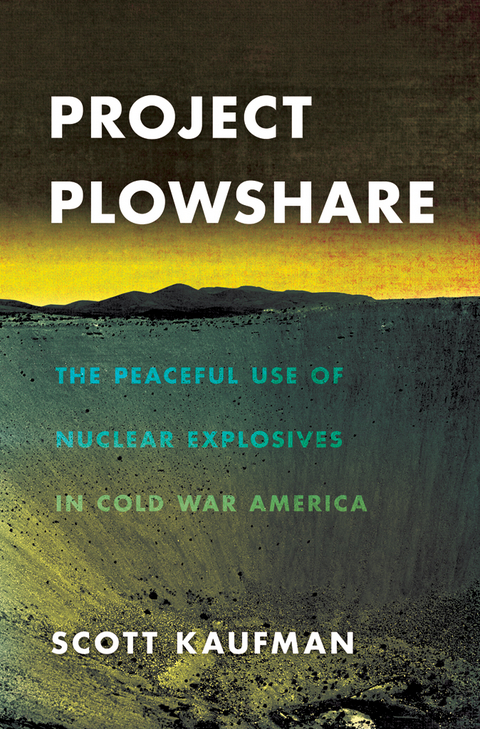
Project Plowshare (eBook)
312 Seiten
Cornell University Press (Verlag)
978-0-8014-6539-0 (ISBN)

Scott Kaufman's extensive research in nearly two dozen archives in three nations shows how science, politics, and environmentalism converged to shape the lasting conflict over the use of nuclear technology.
Inspired by President Dwight D. Eisenhower's "Atoms for Peace" speech, scientists at the Atomic Energy Commission and the University of California's Radiation Laboratory began in 1957 a program they called Plowshare. Joined by like-minded government officials, scientists, and business leaders, champions of "peaceful nuclear explosions" maintained that they could create new elements and isotopes for general use, build storage facilities for water or fuel, mine ores, increase oil and natural gas production, generate heat for power production, and construct roads, harbors, and canals. By harnessing the power of the atom for nonmilitary purposes, Plowshare backers expected to protect American security, defend U.S. legitimacy and prestige, and ensure access to energy resources.
Scott Kaufman’s extensive research in nearly two dozen archives in three nations shows how science, politics, and environmentalism converged to shape the lasting conflict over the use of nuclear technology. Indeed, despite technological and strategic promise, Plowshare’s early champions soon found themselves facing a vocal and powerful coalition of federal and state officials, scientists, industrialists, environmentalists, and average citizens. Skeptical politicians, domestic and international pressure to stop nuclear testing, and a lack of government funding severely restricted the program. By the mid-1970s, Plowshare was, in the words of one government official, "dead as a doornail." However, the thought of using the atom for peaceful purposes remains alive.
Inspired by President Dwight D. Eisenhower's "Atoms for Peace" speech, scientists at the Atomic Energy Commission and the University of California's Radiation Laboratory began in 1957 a program they called Plowshare. Joined by like-minded government officials, scientists, and business leaders, champions of "peaceful nuclear explosions" maintained that they could create new elements and isotopes for general use, build storage facilities for water or fuel, mine ores, increase oil and natural gas production, generate heat for power production, and construct roads, harbors, and canals. By harnessing the power of the atom for nonmilitary purposes, Plowshare backers expected to protect American security, defend U.S. legitimacy and prestige, and ensure access to energy resources.
Scott Kaufman's extensive research in nearly two dozen archives in three nations shows how science, politics, and environmentalism converged to shape the lasting conflict over the use of nuclear technology. Indeed, despite technological and strategic promise, Plowshare's early champions soon found themselves facing a vocal and powerful coalition of federal and state officials, scientists, industrialists, environmentalists, and average citizens. Skeptical politicians, domestic and international pressure to stop nuclear testing, and a lack of government funding severely restricted the program. By the mid-1970s, Plowshare was, in the words of one government official, "dead as a doornail." However, the thought of using the atom for peaceful purposes remains alive.
Scott Kaufman is Professor of History and Co-Director of the Robert E. McNair Center for Government at Francis Marion University. He is the author of several books, including Plans Unraveled: The Foreign Policy of the Carter Administration and The Pig War: The United States, Britain, and the Balance of Power in the Pacific Northwest, 1846–72.
Introduction: Promoting the Peaceful Atom1. A Plan of Biblical Proportions2. Just Drop Us a Card3. A Program on Hold4. From Moratorium to Test Ban5. The Complexities of Canal Construction6. Nuclear Testing, Nonproliferation, and Plowshare7. Making Headway?8. Plowshare Goes Down Under9. Dead as a DoornailConclusion: Back from the Dead?Notes
Bibliography
Index
| Erscheint lt. Verlag | 15.12.2012 |
|---|---|
| Zusatzinfo | 8 halftones, 3 maps |
| Verlagsort | Ithaca |
| Sprache | englisch |
| Maße | 160 x 160 mm |
| Themenwelt | Sachbuch/Ratgeber ► Geschichte / Politik ► 20. Jahrhundert bis 1945 |
| Natur / Technik ► Fahrzeuge / Flugzeuge / Schiffe ► Militärfahrzeuge / -flugzeuge / -schiffe | |
| Geisteswissenschaften ► Geschichte ► Regional- / Ländergeschichte | |
| Geschichte ► Teilgebiete der Geschichte ► Militärgeschichte | |
| Geschichte ► Teilgebiete der Geschichte ► Technikgeschichte | |
| Sozialwissenschaften ► Politik / Verwaltung | |
| Technik ► Elektrotechnik / Energietechnik | |
| Schlagworte | diplomatic history, atoms for peace, atomic energy commission, nuclear weapons and peace, power of the atom, energy resources, nuclear technology and conflict, nuclear restrictions, nuclear funding |
| ISBN-10 | 0-8014-6539-7 / 0801465397 |
| ISBN-13 | 978-0-8014-6539-0 / 9780801465390 |
| Informationen gemäß Produktsicherheitsverordnung (GPSR) | |
| Haben Sie eine Frage zum Produkt? |
 EPUB (Adobe DRM)
Kopierschutz: Adobe-DRM
Adobe-DRM ist ein Kopierschutz, der das eBook vor Mißbrauch schützen soll. Dabei wird das eBook bereits beim Download auf Ihre persönliche Adobe-ID autorisiert. Lesen können Sie das eBook dann nur auf den Geräten, welche ebenfalls auf Ihre Adobe-ID registriert sind.
Details zum Adobe-DRM
Dateiformat: EPUB (Electronic Publication)
EPUB ist ein offener Standard für eBooks und eignet sich besonders zur Darstellung von Belletristik und Sachbüchern. Der Fließtext wird dynamisch an die Display- und Schriftgröße angepasst. Auch für mobile Lesegeräte ist EPUB daher gut geeignet.
Systemvoraussetzungen:
PC/Mac: Mit einem PC oder Mac können Sie dieses eBook lesen. Sie benötigen eine
eReader: Dieses eBook kann mit (fast) allen eBook-Readern gelesen werden. Mit dem amazon-Kindle ist es aber nicht kompatibel.
Smartphone/Tablet: Egal ob Apple oder Android, dieses eBook können Sie lesen. Sie benötigen eine
Geräteliste und zusätzliche Hinweise
Buying eBooks from abroad
For tax law reasons we can sell eBooks just within Germany and Switzerland. Regrettably we cannot fulfill eBook-orders from other countries.
aus dem Bereich