


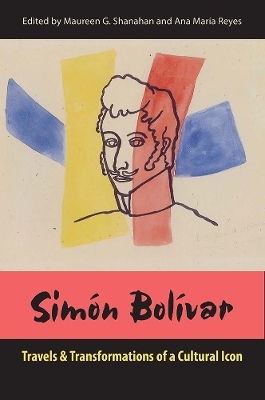
Simón Bolívar
Travels and Transformations of a Cultural Icon
Seiten
2017
University Press of Florida (Verlag)
978-0-8130-5449-0 (ISBN)
University Press of Florida (Verlag)
978-0-8130-5449-0 (ISBN)
One of Latin America's most famous historical figures, Simón Bolívar has become a mythic symbol for many nations, empires, and revolutions used to support wildly diverse ideas. In this volume, an array of interdisciplinary scholars shows the ways Bolívar has appeared over the last two centuries in painting, fiction, poetry, music, film, festival, dance, city planning, and even reliquary adoration.
One of Latin America’s most famous historical figures, Simón Bolívar has become a mythic symbol for many nations, empires, and revolutions used to support wildly diverse—sometimes opposite—ideas. From colonial Cuba to Nazi-occupied France to Cold War–era Slovenia, the image of “El Libertador” has variously signified loyalty, national unity, liberation, freedom, and revolt.
In this volume, an array of international and interdisciplinary scholars shows the ways Bolívar has appeared over the last two centuries in painting, fiction, poetry, music, film, festival, dance, city planning, and even reliquary adoration. They illustrate how Bolívar’s body has been exalted, reimagined, or fragmented in different contexts, taking on a range of meanings to represent the politics and poetics of today’s national bodies.
By critically analyzing many examples of cultural Bolivarianisms, or cults of Bolívar, this collection demonstrates the capacity of the arts and humanities to challenge and reinvent hegemonic icons and narratives and, therefore, to be vital to democracy.
One of Latin America’s most famous historical figures, Simón Bolívar has become a mythic symbol for many nations, empires, and revolutions used to support wildly diverse—sometimes opposite—ideas. From colonial Cuba to Nazi-occupied France to Cold War–era Slovenia, the image of “El Libertador” has variously signified loyalty, national unity, liberation, freedom, and revolt.
In this volume, an array of international and interdisciplinary scholars shows the ways Bolívar has appeared over the last two centuries in painting, fiction, poetry, music, film, festival, dance, city planning, and even reliquary adoration. They illustrate how Bolívar’s body has been exalted, reimagined, or fragmented in different contexts, taking on a range of meanings to represent the politics and poetics of today’s national bodies.
By critically analyzing many examples of cultural Bolivarianisms, or cults of Bolívar, this collection demonstrates the capacity of the arts and humanities to challenge and reinvent hegemonic icons and narratives and, therefore, to be vital to democracy.
Maureen G. Shanahan is professor of art history at James Madison University. Ana Maria Reyes is assistant professor of Latin American art history at Boston University.
| Erscheinungsdatum | 18.10.2017 |
|---|---|
| Verlagsort | Florida |
| Sprache | englisch |
| Maße | 152 x 226 mm |
| Gewicht | 440 g |
| Themenwelt | Literatur ► Biografien / Erfahrungsberichte |
| Kunst / Musik / Theater ► Kunstgeschichte / Kunststile | |
| Sachbuch/Ratgeber ► Geschichte / Politik | |
| Geschichte ► Allgemeine Geschichte ► Neuzeit (bis 1918) | |
| Geisteswissenschaften ► Geschichte ► Regional- / Ländergeschichte | |
| Geschichte ► Teilgebiete der Geschichte ► Militärgeschichte | |
| Sozialwissenschaften ► Politik / Verwaltung | |
| ISBN-10 | 0-8130-5449-4 / 0813054494 |
| ISBN-13 | 978-0-8130-5449-0 / 9780813054490 |
| Zustand | Neuware |
| Informationen gemäß Produktsicherheitsverordnung (GPSR) | |
| Haben Sie eine Frage zum Produkt? |
Mehr entdecken
aus dem Bereich



aus dem Bereich
Geschichte einer wilden Handlung
Buch | Hardcover (2024)
C.H.Beck (Verlag)
CHF 47,60


