


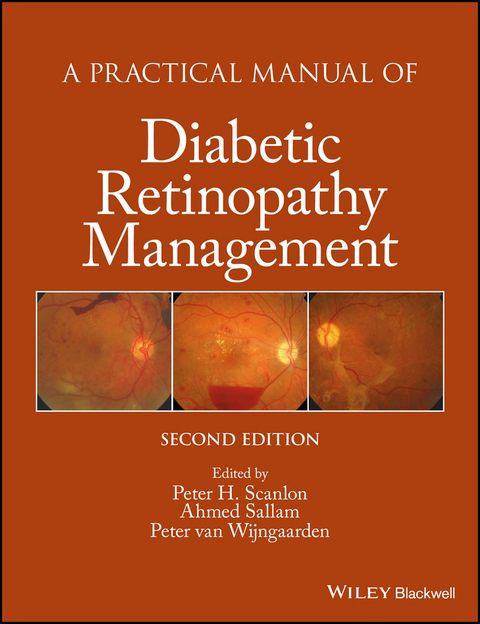
A Practical Manual of Diabetic Retinopathy Management (eBook)
John Wiley & Sons (Verlag)
978-1-119-05896-0 (ISBN)
The incidence of diabetes is increasing worldwide at an alarming rate, and diabetic retinopathy is one of the most significant complications of diabetes. Packed with outstanding retinal photos, the second edition of this one-stop clinical manual offers a comprehensive overview of the diagnosis, treatment and long-term management of patients with diabetic eye disease.
Edited and authored by world-renowned experts from leading centres of excellence, A Practical Manual of Diabetic Retinopathy Management presents evidence-based guidance relevant for a global audience of health-care professionals, including diabetologists, ophthalmologists, retinal screeners, optometrists, ophthalmic nurses, GPs, and medical students.
Peter Scanlon, Consultant Ophthalmologist, Gloucestershire and Oxford Eye Units; Senior Research Fellow, Harris Manchester College, University of Oxford; Visiting Professor of Medical Ophthalmology, University of Gloucestershire, UK
Ahmed Sallam, MD, PhD, FRCOphth, Jones Eye Institute, University of Arkansas for Medical Sciences, USA
Peter van Wijngaarden, Centre for Eye Research Australia, Royal Victorian Eye and Ear Hospital, Australia; Ophthalmology, Department of Surgery, University of Melbourne, Australia
The incidence of diabetes is increasing worldwide at an alarming rate, and diabetic retinopathy is one of the most significant complications of diabetes. Packed with outstanding retinal photos, the second edition of this one-stop clinical manual offers a comprehensive overview of the diagnosis, treatment and long term management of patients with diabetic eye disease. Edited and authored by world-renowned experts from leading centres of excellence, A Practical Manual of Diabetic Retinopathy Management presents evidence-based guidance relevant for a global audience of health-care professionals, including diabetologists, ophthalmologists, retinal screeners, optometrists, ophthalmic nurses, GPs, and medical students.
Peter Scanlon, Consultant Ophthalmologist, Gloucestershire and Oxford Eye Units; Senior Research Fellow, Harris Manchester College, University of Oxford; Visiting Professor of Medical Ophthalmology, University of Gloucestershire, UK Ahmed Sallam, MD, PhD, FRCOphth, Jones Eye Institute, University of Arkansas for Medical Sciences, USA Peter van Wijngaarden, Centre for Eye Research Australia, Royal Victorian Eye and Ear Hospital, Australia; Ophthalmology, Department of Surgery, University of Melbourne, Australia
Cover 1
Title Page 5
Copyright 6
Contents 7
List of contributors 9
Prologue 11
Acknowledgements 17
About the companion website 19
Chapter 1 Introduction 21
Practical Assessment 21
History 21
Eye examination 22
Multidisciplinary Management 27
Investigative Techniques to Assess Diabetic Retinopathy 27
Perimetry 27
The Application of Lasers in Diabetic Retinopathy 28
Photocoagulation 32
Photodisruption 32
Photoablation (photochemical effect) 33
Active laser media 33
Light wavelengths produced by different lasers 33
Practice Points 34
Chapter 2 Diabetes 35
Classification of Diabetes 35
Aetiopathology of Diabetes 37
Type 1 diabetes 37
Type 2 diabetes 38
MODY 39
Secondary diabetes 40
Tissue complications of diabetes 41
Risk Factors for Diabetic Retinopathy 41
Modifiable risk factors 41
Non-modifiable risk factors for DR 44
Practice Points 45
Reference 45
Chapter 3 Lesions and classifications of diabetic retinopathy 46
ETDRS Classification 46
Microaneurysm 46
Haemorrhage 46
HMa 46
Other larger retinal haemorrhages 46
Hard exudates 46
Cotton wool spots 49
Intraretinal microvascular abnormality 50
Venous abnormalities 50
Arteriolar abnormalities 53
Fibrous proliferations 54
New Vessels 54
Preretinal haemorrhage 54
Vitreous haemorrhage 54
Post-maculopathy laser treatment 56
Post-scatter laser treatment for proliferative diabetic retinopathy 56
Posterior vitreous detachment 57
English and International Classification 57
Practice Points 59
Reference 59
Chapter 4 Screening for diabetic retinopathy 60
Principles of Screening 60
Is it an important public health problem? 60
Is it a constant or growing public health problem? 61
Is there a recognisable latent or early symptomatic stage? 61
Is treatment effective and agreed universally? 61
Is there a suitable, reliable and acceptable screening test available? 62
Are the costs of screening and effective treatment justified? 65
Advances in Screening 66
Risk-based screening intervals 66
Automated analysis 68
Optical coherence tomography/photographic clinics 68
Practice Points 69
Reference 73
Chapter 5 Imaging techniques in diabetic retinopathy 74
Retinal Photography 74
Ultra-Widefield Imaging 75
Fundus Autoflourescence 79
Ultrasonography 80
Fluorescein Angiography 82
Indocyanine Green Angiography 91
Ultra-Widefield Angiography 91
Optical Coherence Tomography 93
Oct Angiography 103
Reference 105
Chapter 6 The normal eye 106
The Relevant Anatomy of the Eye 106
The Photographic Appearance 110
Practice Points 112
Chapter 7 Diabetic macular oedema 113
Diabetic Maculopathy 113
Optical Coherence Tomography 113
Treatment of Associated Risk Factors 118
Systemic hypertension 118
Laser for Diabetic Macular Oedema 120
ETDRS results 121
The 'early worsening' phenomenon 121
Mechanisms of action of conventional laser for macular oedema 123
Limitations and adverse effects of macular laser treatment 124
The pattern argon laser 125
Subthreshold micro-pulse laser photocoagulation 125
Navigating laser treatment 125
Anti-Vascular Endothelial Growth Factor Treatment 126
Pegaptanib sodium 126
Ranibizumab 126
Bevacizumab 127
Aflibercept 127
Predictors of visual outcomes after anti-VEGF therapy 129
Intravitreal Corticosteroids 131
Intravitreal triamcinolone acetonide 131
Dexamethasone intravitreal implant 131
Fluocinolone acetonide intravitreal inserts 132
Combination Therapy 133
Vitrectomy 135
Authors' Treatment Recommendations for DMO 135
Conclusions 135
Practice Points 135
Reference 135
Chapter 8 Mild non-proliferative diabetic retinopathy 136
Mild NPDR (ETDRS and International) and Background DR (UK Screening) 136
Microaneurysms 136
Retinal haemorrhages 136
Exudates (or hard exudates) 136
Cotton wool spots 136
A single venous loop 138
Practice Points 138
Reference 139
Chapter 9 Moderate and severe non-proliferative diabetic retinopathy 140
Moderate and Severe NPDR (ETDRS and International) and Pre-Proliferative DR (UK Screening) 140
Retinal haemorrhages 140
Intraretinal microvascular abnormality 140
Venous beading 140
Practice Points 147
Reference 147
Chapter 10 Proliferative and advanced diabetic retinopathy 148
Proliferative and Advanced DR 148
Relevant anatomy 148
Photographic appearance 148
Fluorescein angiographic appearance 148
Presentation 148
The 'early worsening' phenomenon 150
Multidisciplinary approach and treatment of associated risk factors 150
Laser Treatment for Proliferative DR 150
The Diabetic Retinopathy (DRS) Study 150
Important outcomes of the Diabetic Retinopathy Study 150
Risks for patients without high-risk characteristics 151
Adverse effects of laser treatment in the DRS and other studies 152
Factors other than high-risk characteristics influencing the decision to laser 154
Follow-up after panretinal photocoagulation 157
Quantification of retinal ablation, use of one treatment session and lessons learnt from the UK National Diabetic Laser Treatment Audit 157
Recommended laser treatment settings using conventional non-pattern argon laser treatment 158
The pattern argon laser and the evidence behind its recommendation 159
Targeted PRP 160
Navigating laser treatment 160
Patient Experiences of Laser 163
Anaesthesia for retinal laser 163
Anti-Vegf Treatments 164
Vitreous Haemorrhage Obscuring the Retinal View 167
Our views on the treatment of NVD less than one-quarter disc area 168
Our views on the treatment of NVE that have not haemorrhaged 168
Practice Points 169
Reference 169
Chapter 11 Proliferative diabetic retinopathy with maculopathy 170
Laser for Proliferative DR and Concurrent Maculopathy 170
Laser for Proliferative DR and Intravitreal Anti-Vegf Therapy for Maculopathy 171
Practice Points 179
References 179
Chapter 12 The stable treated eye 180
Following Maculopathy Treatment 180
Treatment of centre-involving or diffuse diabetic macular oedema 180
Treatment of focal exudative or focal/multifocal oedema 180
Ischaemic maculopathy 183
Following NVD or NVE Treatment 183
Practice Points 190
Reference 190
Chapter 13 Vitrectomy surgery in diabetic retinopathy 191
Introduction 191
Vitreous Surgery (Vitrectomy) 191
Indications of vitrectomy in diabetic retinopathy 191
Preoperative use of intravitreal anti-VEGF treatment 192
Treatment Techniques for PDR 192
Removal of vitreous haemorrhage and vitreous gel 193
Removal of fibrovascular tissue 194
Treating retinal breaks and detachments 195
Intraocular tamponade 196
Post-Operative Complications 196
Treatment Techniques for DMO 197
Practice Points 200
Reference 202
Chapter 14 Cataract surgery in the diabetic eye: Pre-, intra- and postoperative considerations 203
Introduction 203
Pathogenesis of Cataract Development in Diabetes 203
Osmotic stress pathway 203
Oxidative stress pathway 203
Preoperative Considerations 204
Indication for surgery 204
Control of diabetes and associated systemic co-morbidities 204
Anterior segment evaluation 204
Posterior segment evaluation 205
Operative Considerations in Cataract Surgery for Patients With Diabetes 205
Anaesthesia 205
Corneal epithelium and endothelium protection 205
Anterior capsulorrhexis 206
Pupil management 206
Phacodynamics 206
Posterior capsule rupture 206
Type of intraocular lens implant 206
Post-vitrectomy surgery cataract 208
Postoperative Considerations 208
Anterior segment inflammation 208
Iris neovascularisation 209
Progression of diabetic retinopathy 209
Macular oedema following cataract surgery 209
Endophthalmitis 211
Adjunctive pre- and Intraoperative Pharmacotherapy 211
Topical non-steroidal anti-inflammatory drugs (NSAIDs) 212
Posterior sub-Tenon triamcinolone acetonide injection 212
Intravitreal anti-vascular endothelial growth factor 212
Intravitreal injection of triamcinolone acetonide 213
Intravitreal dexamethasone implant 214
Intravitreal fluocinolone acetonide implant 214
Adjunctive Panretinal Photocoagulation Laser 214
Visual Outcome After Cataract Surgery in Patients With Diabetes 215
Conclusions 215
Practice Points 215
Reference 216
Chapter 15 Pregnancy and the diabetic eye 217
Risk Factors for Progression of Diabetic Retinopathy During Pregnancy 217
Pregnancy independently associated with DR progression 217
Baseline severity of retinopathy 218
Poor metabolic control at conception 218
Rapid improvement of glycaemic control 218
Poor metabolic control during pregnancy and early postpartum 218
Duration of diabetes 218
Chronic hypertension and pregnancy-induced hypertension 218
Before and During Pregnancy 219
Laser treatment 219
Recommendations for retinal assessment 219
Postpartum Regression 221
Practice Points 226
Reference 226
Chapter 16 Low vision and blindness from diabetic retinopathy 227
Definition of Blindness 227
In the USA 227
In Europe 228
In the Rest of the World 230
Costs of Blindness Due to Diabetic Retinopathy 230
Costs of Treatment for Diabetic Retinopathy 231
Reduced Vision and Quality of Life 231
Low-Vision Rehabilitation 232
Causes of Loss of Vision in Diabetes and Diabetic Retinopathy 233
Practice Points 238
Reference 238
Chapter 17 Future advances in the management of diabetic retinopathy 239
Predicting Risk of Diabetic Retinopathy and its Progression 239
Genetic risk profiling and the role of epigenetics 240
Blood and ocular fluid biomarkers 241
Retinal biomarkers 242
Timely Detection of Diabetic Retinopathy 243
Treatment Options 244
Anti-angiogenic therapies 244
Targeting key pathogenic pathways 245
Retinal neuroprotection 245
Laser treatment 245
Regenerative therapies 246
Electronic Medical Records, Cloud Computing and Big Data 246
Conclusion 246
Reference 247
Chapter 18 Other retinal conditions in diabetes 248
Hypertension 248
Retinal Arterial Occlusions 251
Central retinal artery occlusion (CRAO) 251
Branch retinal artery occlusion (BRAO) 253
Arterial emboli 254
Retinal Venous Occlusions 254
Central retinal vein occlusion (CRVO) 254
Branch retinal vein occlusion (BRVO) 257
Anterior Ischaemic Optic Neuropathy 259
Asteroid Hyalosis 260
Macroaneurysm 260
Imaging patients with macroaneurysms 264
Practice Points 266
Reference 266
Chapter 19 Conditions with appearances similar to diabetic retinopathy 267
Drusen and AMD 267
Myelinated Nerve Fibres 267
Sickle Cell Retinopathy 269
Coats' Disease 271
Radiation Retinopathy 271
Interferon Retinopathy 274
Practice Points 274
Reference 274
Glossary 275
Index 279
EULA 288
'This volume discusses the diagnosis of diabetic retinopathy with hundreds of photos in color and describes the various stages and treatment. For diabetologists and ophthalmologists.' Pediatric Endocrinology Reviews, 15:2 (2017)
| Erscheint lt. Verlag | 8.2.2017 |
|---|---|
| Reihe/Serie | Practical Manual of Series | Practical Manual of Series |
| Sprache | englisch |
| Themenwelt | Sachbuch/Ratgeber ► Gesundheit / Leben / Psychologie |
| Medizin / Pharmazie ► Medizinische Fachgebiete ► Augenheilkunde | |
| Medizinische Fachgebiete ► Innere Medizin ► Diabetologie | |
| Medizinische Fachgebiete ► Innere Medizin ► Endokrinologie | |
| Studium ► 1. Studienabschnitt (Vorklinik) ► Biochemie / Molekularbiologie | |
| Schlagworte | cataracts • Diabetes • Diabetic • diabetologist • endocrinology • Endokrinologie • Eye • maculpathy • Medical Science • Medizin • Ophthalmologie u. Optometrie • ophthalmologist • Ophthalmology & Optometry • Retinal • Retinopathy • screener • Screening |
| ISBN-10 | 1-119-05896-1 / 1119058961 |
| ISBN-13 | 978-1-119-05896-0 / 9781119058960 |
| Informationen gemäß Produktsicherheitsverordnung (GPSR) | |
| Haben Sie eine Frage zum Produkt? |
 PDF (Adobe DRM)
Kopierschutz: Adobe-DRM
Adobe-DRM ist ein Kopierschutz, der das eBook vor Mißbrauch schützen soll. Dabei wird das eBook bereits beim Download auf Ihre persönliche Adobe-ID autorisiert. Lesen können Sie das eBook dann nur auf den Geräten, welche ebenfalls auf Ihre Adobe-ID registriert sind.
Details zum Adobe-DRM
Dateiformat: PDF (Portable Document Format)
Mit einem festen Seitenlayout eignet sich die PDF besonders für Fachbücher mit Spalten, Tabellen und Abbildungen. Eine PDF kann auf fast allen Geräten angezeigt werden, ist aber für kleine Displays (Smartphone, eReader) nur eingeschränkt geeignet.
Systemvoraussetzungen:
PC/Mac: Mit einem PC oder Mac können Sie dieses eBook lesen. Sie benötigen eine
eReader: Dieses eBook kann mit (fast) allen eBook-Readern gelesen werden. Mit dem amazon-Kindle ist es aber nicht kompatibel.
Smartphone/Tablet: Egal ob Apple oder Android, dieses eBook können Sie lesen. Sie benötigen eine
Geräteliste und zusätzliche Hinweise
Buying eBooks from abroad
For tax law reasons we can sell eBooks just within Germany and Switzerland. Regrettably we cannot fulfill eBook-orders from other countries.
aus dem Bereich


