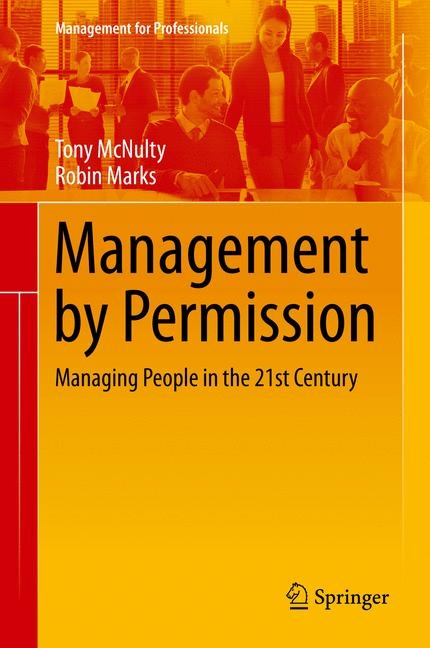
Management by Permission (eBook)
XVI, 198 Seiten
Springer International Publishing (Verlag)
9783319252476 (ISBN)
This book shows that in today's business world managers can only successfully lead with the active cooperation and consent of their staff. It presents a practical, four-pronged approach to successful management, drawing on the authors' combined research, consulting and managerial experience in more than twenty countries. Once a manager gets the four main ingredients right - (1) getting things under control; (2) establishing expectations; (3) running interference; and (4) developing people - everything else falls into place. Far from being unpleasant and stressful, managing others becomes rewarding and even fun. The book concludes by explaining how to use the four ingredients to ensure that your own manager is also managing you effectively.
'If you have time for only one management book in your life, Management by Permission would be an outstanding choice.'
Greg Thompson, President, Markel Specialty
'In this readable and practical book the authors spell out the key challenges facing managers and how they can address them. The central question is how you win permission to manage - in straightforward language this book shows you how.'
Rob Goffee, Emeritus Professor, London Business School
'A page-turner ... a strong candidate for 'Management Book of the Year.''
Professor Stephen J. Perkins, Dean, London Guildhall Faculty of Business & Law
'A 'must read' for anyone on the line management ladder.'
Dr Janine-Nicole Desai, Regional HR Director, Hilton Worldwide
Dr Tony McNulty is a graduate of King's College, London, and holds a PhD in Organizational Behaviour from London Business School. He is a former faculty member at INSEAD Business School in France, where he spent three years as a researcher. With a background in strategy implementation, organization change and development, his twenty-five years' experience in a variety of international organizations includes four years' full-time employment in France, USA and Spain. He is Managing Director of McNulty Management Consultants and an Honorary Visiting Professor at a London business School, where he also sits on the Faculty Advisory Board.
Rob Marks started his working life in engineering research and development where he gained wide experience in functional and project management. After twenty years in a range of line management jobs, he developed his career into mainline HR, specializing principally in the development, coaching and retention of managers, professionals and high potentials within an international firm. For the last fifteen years he has worked as a management and organizational consultant.
Dr Tony McNulty is a graduate of King's College, London, and holds a PhD in Organizational Behaviour from London Business School. He is a former faculty member at INSEAD Business School in France, where he spent three years as a researcher. With a background in strategy implementation, organization change and development, his twenty-five years' experience in a variety of international organizations includes four years' full-time employment in France, USA and Spain. He is Managing Director of McNulty Management Consultants and an Honorary Visiting Professor at a London business School, where he also sits on the Faculty Advisory Board. Rob Marks started his working life in engineering research and development where he gained wide experience in functional and project management. After twenty years in a range of line management jobs, he developed his career into mainline HR, specializing principally in the development, coaching and retention of managers, professionals and high potentials within an international firm. For the last fifteen years he has worked as a management and organizational consultant.
Foreword 6
Praise for Management by Permission 8
Acknowledgements 10
Contents 12
List of Figures 16
1: Introduction 18
1.1 How Does This Book Relate to Other Books on Management and Leadership? 19
1.2 A Map of the Book 21
1.3 Who Is Our Audience? 24
1.4 Guide for Readers 25
References 26
2: Management Is More Difficult, but It´s Not Mission Impossible 27
2.1 Managers Under Pressure 27
2.2 Difficult Times, More Challenging People 28
2.2.1 Reason One: Leaner and Meaner Organizations 28
2.2.2 Reason Two: Less Respect for Organizations, People in Authority and Those in Management Positions 30
2.2.3 Reason Three: A More Demanding, Self-assured and Diverse Workforce 31
2.2.4 Reason Four: Managers Often Less Well Equipped to Do the Job 35
2.3 The Bad News for Employees: You Pay a High Price for Being Poorly Managed 37
2.4 The Death of Autocratic Management? 38
2.5 The Good News: ``Management by Permission´´ 39
References 40
3: The First Ingredient: Keep Things Under Control 41
THE THREE TECHNIQUES OF CONTROL ARE: 43
3.1 Technique Number One: Track the Numbers 43
3.1.1 First Danger: Misleading, Incomplete or Inappropriate Data 44
3.1.2 Second Danger: Unintended Consequences 46
3.1.3 Third Danger: Using Measures as a Stick Rather than as a Guide 47
3.1.4 Which Numbers Should I Track in My Area? 47
3.1.4.1 Consider What Is Already Available 49
3.1.4.2 Identify the Mandatory Numbers 49
3.1.4.3 Pinpoint What You Should Track at Your Particular Level 49
3.1.4.4 Consider How Often You Should Monitor the Numbers 49
3.1.4.5 Build in Early Warning Signs So You Have Time to Take Action 50
3.1.4.6 Track an Appropriate Number of Measures 50
3.1.4.7 Consider the Lessons of History and Benchmarking 50
Remember 52
3.2 Technique Number Two: Use a Work Management System 52
3.2.1 Developing and Implementing Your Work Management System 53
3.2.1.1 Once a Job Is Complete 55
3.2.1.2 A More Ambitious Work Management Scheme 55
3.2.2 Four Common Questions on Work Management Systems 56
3.2.2.1 Should Work Be Reviewed One-on-One, or as Part of a Meeting with the Entire Team? 56
3.2.2.2 When Not to Use the Team Review 60
3.2.2.3 How Do Managers Make Sure Work Management Meetings Are Efficient and Effective? 60
3.2.2.4 Should All Jobs Carried Out by My Team Be Included on the Work Management List? 62
3.2.2.5 How Does the Work Management System Link to Organizational Project Management Systems? 62
3.2.2.6 What About Micromanagement? Is It Ever Appropriate? Will People Feel I Don´t Trust Them? 64
3.2.2.7 Work Management Systems: Six Specific Benefits for Managers 65
3.2.2.8 Work Management Systems: Four Benefits for Those Being Managed 69
Remember 71
3.3 Technique Number Three: Use Informal Methods and Management by Walking Around (``Walk the Patch´´) 71
3.3.1 Walking the Patch 72
Remember 75
3.3.2 ``Unobtrusive´´ and Other Measures 75
Remember 77
References 77
4: The Second Ingredient: Establish Expectations 79
4.1 Never Forget You Are Dealing with Human Beings 81
4.1.1 Fact Number One: It Is ``Whole Persons´´ Who Come to Work 81
4.1.2 Fact Number Two: All Human Beings Are Different 82
4.1.3 Fact Number Three: The Manager Too Is Part of the Equation 84
Remember 85
4.2 Do the Basics First: Get to Know Your People (If You Don´t Already) 85
4.2.1 People: The Basic Facts 85
4.2.2 Going Beyond the Basic Facts About People 87
4.2.3 Other Sources of Information About People 88
4.2.4 In Conclusion: The Two Key Questions Any Manager Must Be Able to Answer 89
4.2.4.1 Willingness 89
4.2.4.2 Ability 89
Remember 89
4.3 Establishing Expectations 90
4.3.1 If You´re Happy and You Know It 90
4.4 The Three Phases of Establishing Expectations: Before, During, and After 91
4.4.1 Before the Meeting: Prepare 91
4.4.1.1 Their Current Performance: What They Need to Do: More of, Less of, Start Doing, Stop Doing 93
4.4.1.2 The Overall Organization Strategy 93
4.4.1.3 Current/Future Departmental Goals, Targets, Projects, or Initiatives 94
4.4.1.4 The Needs of Your Own Boss/Manager 96
4.4.1.5 Your Own Priorities 96
4.4.1.6 The Priorities of Staff 98
4.4.1.7 Develop an Initial Discussion List of Your Expectations for Each Team Member 100
Remember 102
4.4.2 During the Meeting: Share and Discuss 102
4.4.2.1 State What Is Non-negotiable 102
4.4.2.2 Ensure Objectives People Can Control/Influence 103
4.4.2.3 Listen to People´s Expectations, Concerns and Issues 104
Four Advantages of Listening with Understanding 106
Tips for Dealing with Contentious Issues 108
4.4.2.4 Agree the Next Steps 109
Remember 109
4.4.3 After the Meeting: Follow Through 110
4.4.3.1 Some Agreements Will Not Be Written Down 111
Remember 112
References 112
5: The Third Ingredient: Run Interference 113
5.1 Modern Organizations: A World of Distraction 114
Remember 117
5.2 Running Interference: Get Your Organization Right First 117
5.2.1 Strategy/Vision/Mission/Tactics 118
5.2.2 Goals/Objectives/Targets 120
5.2.3 Structure 121
5.2.4 Roles 123
5.2.5 Customers/Stakeholders 124
5.2.6 Processes 125
5.2.7 Culture 125
5.2.8 People 127
Remember 128
5.3 Identifying and Dealing with Manager Imposed Roadblocks 129
5.3.1 Poor Communications/Information Sharing 130
5.3.2 Wasting People´s Time/Poor Management Disciplines 130
5.3.3 Inappropriate Use of Teams or Task Forces 132
5.3.4 Actions Which Demotivate 133
5.3.5 People Issues 134
5.4 Identifying and Removing Any Barriers 135
5.4.1 The Role of Team Workshops 138
Remember 140
5.5 Identifying and Dealing with Organization Imposed Roadblocks 141
5.5.1 ``Paying Your Tax´´ on Account 142
5.5.2 Dealing with Corporate Micromanagement When Projects Are Under Pressure 144
5.5.3 Defence Against the Dark Arts: Dealing with Organizational Initiatives 145
Remember 150
5.6 Protecting People from Self-inflicted Wounds 150
5.6.1 The Potential Dangers When Engaging with Senior Management 152
5.6.2 How Much Protection Should the Manager Provide? 154
Remember 154
References 154
6: The Fourth Ingredient: Develop the People 155
Remember 158
6.1 Development in the Current Role 158
6.1.1 Analyzing One´s Own Development Needs 159
6.1.2 What Lies Behind the Various Questions? 160
6.1.3 Discussing Development Needs With the Manager 162
Remember 164
6.1.4 Development on a (Practically) Zero Budget 169
6.1.5 Developing a Plan 175
Remember 177
6.2 Development Towards Other Roles 177
6.2.1 ``You Can´t Always Get What You Want´´ (Helping People Develop a Realistic Career Plan) 180
6.2.2 Some Patterns of Career Development 184
6.2.3 Trying to Prevent the Resignations of Key People: The ``Organizational Stake´´ 186
6.2.3.1 If You Develop Them, They Will Stay 186
6.2.4 How do I Cope With Resignations When They Happen? 189
Remember 191
References 191
7: Conclusion: Coping When You´re Poorly Managed and Why Management Jobs Are Still Worth the Bother
7.1 What to Do if You Are Being Poorly Managed 194
7.1.1 Some Practical Steps You Can Take 195
7.1.1.1 Control 196
7.1.1.2 Clarifying Expectations 197
7.1.1.3 Running Interference 198
7.1.1.4 Development 199
7.1.2 If, Despite All Your Efforts 200
7.2 Management as a Maligned Profession: Are the Rewards Worth the Effort? 201
7.2.1 First Reason: Job Interest and Professional and Personal Development 202
7.2.2 Second Reason: Power, Influence and Status 203
7.2.3 Third Reason: Financial Rewards 204
7.2.4 Fourth Reason: Developing and Growing Others 205
7.3 Hello to Management by Permission, Goodbye to Shawshank 205
Reference 206
Appendix 207
More Advanced Work Management System 207
Index 210
| Erscheint lt. Verlag | 10.3.2016 |
|---|---|
| Reihe/Serie | Management for Professionals | Management for Professionals |
| Zusatzinfo | XVI, 198 p. 60 illus., 58 illus. in color. |
| Verlagsort | Cham |
| Sprache | englisch |
| Themenwelt | Sachbuch/Ratgeber ► Beruf / Finanzen / Recht / Wirtschaft ► Bewerbung / Karriere |
| Wirtschaft ► Betriebswirtschaft / Management ► Unternehmensführung / Management | |
| Schlagworte | Active cooperation • Coaching • Expectation Management • HR Development • HR Management • Human resource development • Human Resource Management • Leadership • leading • Permission management • staff development |
| ISBN-13 | 9783319252476 / 9783319252476 |
| Informationen gemäß Produktsicherheitsverordnung (GPSR) | |
| Haben Sie eine Frage zum Produkt? |
 PDF (Wasserzeichen)
DRM: Digitales Wasserzeichen
Dieses eBook enthält ein digitales Wasserzeichen und ist damit für Sie personalisiert. Bei einer missbräuchlichen Weitergabe des eBooks an Dritte ist eine Rückverfolgung an die Quelle möglich.
Dateiformat: PDF (Portable Document Format)
Mit einem festen Seitenlayout eignet sich die PDF besonders für Fachbücher mit Spalten, Tabellen und Abbildungen. Eine PDF kann auf fast allen Geräten angezeigt werden, ist aber für kleine Displays (Smartphone, eReader) nur eingeschränkt geeignet.
Systemvoraussetzungen:
PC/Mac: Mit einem PC oder Mac können Sie dieses eBook lesen. Sie benötigen dafür einen PDF-Viewer - z.B. den Adobe Reader oder Adobe Digital Editions.
eReader: Dieses eBook kann mit (fast) allen eBook-Readern gelesen werden. Mit dem amazon-Kindle ist es aber nicht kompatibel.
Smartphone/Tablet: Egal ob Apple oder Android, dieses eBook können Sie lesen. Sie benötigen dafür einen PDF-Viewer - z.B. die kostenlose Adobe Digital Editions-App.
Buying eBooks from abroad
For tax law reasons we can sell eBooks just within Germany and Switzerland. Regrettably we cannot fulfill eBook-orders from other countries.
aus dem Bereich