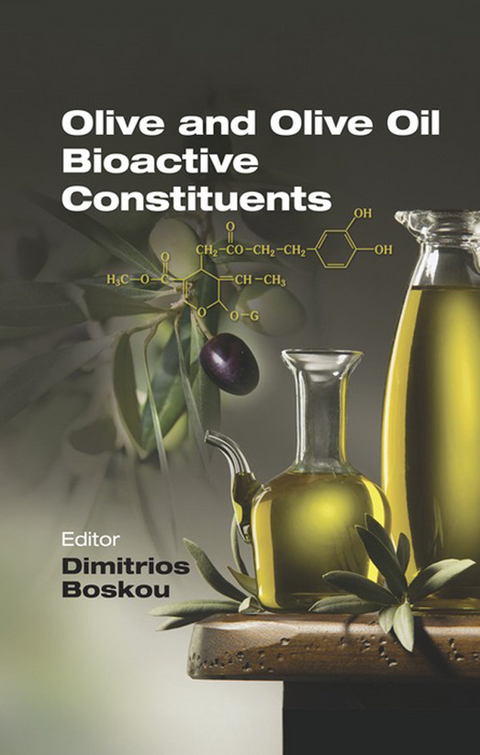
Olive and Olive Oil Bioactive Constituents (eBook)
422 Seiten
Elsevier Science (Verlag)
978-1-63067-042-9 (ISBN)
The market is flooded with products posing as elixirs, supplements, functional foods, and olive oil alternatives containing phenols obtained from multiple olive sources. This technically-oriented book will be of value to nutritionists and researchers in the biosciences. It unravels the body of science pertaining to olive minor constituents in relation to new chemical knowledge, technological innovations, and novel methods of recovery, parallel to toxicology, pharmacology, efficacy, doses, claims, and regulation. Topics include: the biological importance of bioactive compounds present in olive products; developments and innovations to preserve the level of bioactives in table olives and olive oil; and importance of variety, maturity, processing of olives, storage, debittering of olives and table olives as a valuable source of bioactive compounds. - Presents detailed information concerning the claimed benefits of olive oil and discusses the permitted health claim to EFSA on oils with natural phenolics- Recovery of bioactive constituents from olive waste is comprehensively described- Explores the relationship betwen phenolic levels and sensory evaluation- Features chapters on the clinical and cellular mechanisms and health effects of olive, important for functional foods research
List of Abbreviations
1-D one-dimensional
3, 4-DHPEA Hydroxytyrosol
ABTS 2,2-Azino-bis (3-ethylbenzothiazoline-6-sulphonic acid)
AC Antioxidant capacity
AMF Anhydrous milk fat
APCI-TOF-MS Atmospheric pressure chemical ionization-time-of-flight-mass spectrometry
API Atmospheric pressure ionization
CAD Coronary artery disease
CE Capillary electrophoresis
CHD Coronary heart disease
CL Cardiolipin
CONICET Consejo Nacional de Investigaciones Científicas y Técnicas
COX2 Cyclooxigenase-2
CP Cross-polarization
CRAMPS Combined Rotation and Multiple-Pulse Spectroscopy
CSA Chemical shift anisotropy
CZE Capillary zone electrophoresis
DAD Diode array detector
DAG Diacylglycerol
DD Dipole-dipole
DF Diafiltration
DHA Docosahexaenoic acid
DME Dimethyl ether
DMF Dimethylformamide
DOSY Diffusion-ordered spectroscopy
DPG Diphosphatidylglycerol
DPPH 1,1-Diphenyl-2-picrylhydrazyl radical
EBV Epstein-Barr virus
EDTA Ethylenediaminetetracetic acid
EESI Extractive electrospray ionization
EFSA European Food Safety Authority
EGCG Epigallocatechin-3-gallate
EIC Extracted ion chromatogram
ELSD Evaporating light scattering detector
EPC Endolethial progenitor cells
ESI Electrospray ionization
ESI-TOF-MS Electron spray ionization-time-of-flight-mass spectrometry
EVOO Extra virgin olive oil
FA Fatty acid
F–C Folin–Ciocalteu assay
FDA Food and Drug Administration
FG Fat globule
FID Free induction decay
FLD Fluorescence detector
FRAP Ferric ion reducing antioxidant power
FFA Free fatty acid
GC Gas chromatography
GC-FID Gas chromatography-flame ionization detector
GC–MS Gas chromatography–mass spectrometry
GluCer Glucosylceramide
GLUT Glucose transporter
HDL High-density lipoprotein
HPHT High-pressure, high-temperature
HPLC High-performance liquid chromatography
HPLC-DAD High performance liquid chromatography–diode array detection
HPLC–DAD/MS High-pressure liquid chromatography–diode array detector/mass spectrometry
HPLC–ESI-TOF/MS Liquid chromatography diode array detector–electrospray time-of-flight mass spectrometry
HR-MAS High-resolution magic angle spinning
HRMS High resolution mass spectroscopy
HT Hydroxytyrosol
ICAM-1 Intercellular adhesion molecule 1
INEPT Insensitive Nuclei Enhanced by Polarization Transfer
IOC International Olive Council
IR Infrared
IRH Ischemic reactive hyperemia
LAB Lactic acid
LacCer Lactosylceramide
LC Liquid chromatography
LDA Linear discriminant analysis
LDL Low-density lipoprotein
LLE Liquid–liquid extraction
LPA Lysophosphatidic acid
LPC Lysophosphatidylcholine
LPE Lysophosphatidylethanolamine
LPI Lysophosphatidylinositol
LPS Lipopolysaccharide
LRP1 Receptor-related protein
MAE Microwave-assisted extraction
MAG Monoacyglycerol
MALDI Matrix-assisted laser desorption ionization
MAR Macroporous resin
MCP1 Monocyte chemoattractant protein
Md Median defect
MF Microfiltration
MFGM Milk fat globule membrane
MFG Milk fat globule
MFLA Monoaldehydic form of ligstroside aglycon
MFOA Monoaldehydic form of oleuropein aglycon
MIP Molecularly imprinted polymer
MS Mass spectrometry
MUFA Monounsaturated fatty acid
MWCO Molecular weight cut-off
NACE Nonaqueous capillary electrophoresis
NF Nanofiltration
NMR Nuclear magnetic resonance
NOE Nuclear overhauser enhancement
OBP Olive biophenols
OHTyr Hydroxytyrosol
OL Oleuropein
OMWW Olive oil mill waste water
ORAC Oxygen radical absorbance capacity
OTP Olive tree pruning
PA Phosphatidic acid
PAL L-phenylalanine ammonia-lyase
PC Phosphatidylcholine
PDO Protected designation of origin
PE Phosphatidylethanolamine
PES Polyethersulphone
PFG Pulse field gradients
PGD Protected geographic denomination
p-HPEA Tyrosol
PI Phosphatidylinositol; Pigmentation index
PLE Pressurized liquid...
| Erscheint lt. Verlag | 15.8.2015 |
|---|---|
| Sprache | englisch |
| Themenwelt | Sachbuch/Ratgeber ► Gesundheit / Leben / Psychologie ► Ernährung / Diät / Fasten |
| Naturwissenschaften ► Biologie | |
| Technik ► Lebensmitteltechnologie | |
| ISBN-10 | 1-63067-042-1 / 1630670421 |
| ISBN-13 | 978-1-63067-042-9 / 9781630670429 |
| Informationen gemäß Produktsicherheitsverordnung (GPSR) | |
| Haben Sie eine Frage zum Produkt? |
 EPUB (Adobe DRM)
Kopierschutz: Adobe-DRM
Adobe-DRM ist ein Kopierschutz, der das eBook vor Mißbrauch schützen soll. Dabei wird das eBook bereits beim Download auf Ihre persönliche Adobe-ID autorisiert. Lesen können Sie das eBook dann nur auf den Geräten, welche ebenfalls auf Ihre Adobe-ID registriert sind.
Details zum Adobe-DRM
Dateiformat: EPUB (Electronic Publication)
EPUB ist ein offener Standard für eBooks und eignet sich besonders zur Darstellung von Belletristik und Sachbüchern. Der Fließtext wird dynamisch an die Display- und Schriftgröße angepasst. Auch für mobile Lesegeräte ist EPUB daher gut geeignet.
Systemvoraussetzungen:
PC/Mac: Mit einem PC oder Mac können Sie dieses eBook lesen. Sie benötigen eine
eReader: Dieses eBook kann mit (fast) allen eBook-Readern gelesen werden. Mit dem amazon-Kindle ist es aber nicht kompatibel.
Smartphone/Tablet: Egal ob Apple oder Android, dieses eBook können Sie lesen. Sie benötigen eine
Geräteliste und zusätzliche Hinweise
Buying eBooks from abroad
For tax law reasons we can sell eBooks just within Germany and Switzerland. Regrettably we cannot fulfill eBook-orders from other countries.
aus dem Bereich