


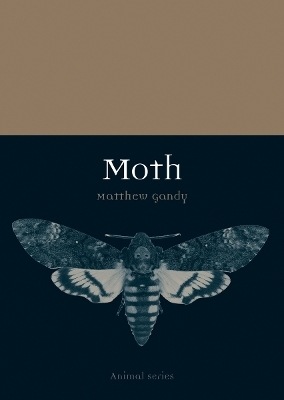
Moth
Seiten
2016
Reaktion Books (Verlag)
978-1-78023-585-1 (ISBN)
Reaktion Books (Verlag)
978-1-78023-585-1 (ISBN)
- Titel z.Zt. nicht lieferbar
- Portofrei ab CHF 40
- Auch auf Rechnung
- Artikel merken
A cultural and natural history of the moth, which may seem drab compared to the butterfly, but which in fact has more species and brighter colouring than its day-flying cousin.
Unlike their gaudy day-flying cousins, moths seem to reside in the shadows as denizens of the night, circling around street lights or caught momentarily in the glare of car headlights on a country lane. There are, however, many more species of day-flying moths than there are of butterflies, and as for colours and patterns, many moths rival or even exceed butterflies in the dazzling range of their markings.
The study of moths formed an integral part of early natural history and many thousands of drawings, paintings and physical specimens remain in museum collections. In recent years there has been a renewed surge of interest in moths facilitated by advances in digital photography, the Web-based dissemination of scientific expertise and new cartographic projects that enable direct collaboration between amateur experts and scientifically framed research projects. The rich history of vernacular names speaks to the significant place of moths in early cultures of nature: names such as the Merveille du Jour, the Green-brindled Crescent and the Clifden Nonpareil evoke a sense of wonder that connects disparate fields such as folklore, the history of place and early scientific texts.
To read and download some sample pages from the book please click here.
Unlike their gaudy day-flying cousins, moths seem to reside in the shadows as denizens of the night, circling around street lights or caught momentarily in the glare of car headlights on a country lane. There are, however, many more species of day-flying moths than there are of butterflies, and as for colours and patterns, many moths rival or even exceed butterflies in the dazzling range of their markings.
The study of moths formed an integral part of early natural history and many thousands of drawings, paintings and physical specimens remain in museum collections. In recent years there has been a renewed surge of interest in moths facilitated by advances in digital photography, the Web-based dissemination of scientific expertise and new cartographic projects that enable direct collaboration between amateur experts and scientifically framed research projects. The rich history of vernacular names speaks to the significant place of moths in early cultures of nature: names such as the Merveille du Jour, the Green-brindled Crescent and the Clifden Nonpareil evoke a sense of wonder that connects disparate fields such as folklore, the history of place and early scientific texts.
To read and download some sample pages from the book please click here.
Matthew Gandy is Professor of Geography at Cambridge University. His previous books include Concrete and Clay: Reworking Nature in New York City (2002) and The Fabric of Space: Water, Modernity, and the Urban Imagination (2014). You can find out more about Matthew via his website and blog.
| Reihe/Serie | Animal |
|---|---|
| Zusatzinfo | 120 illustrations, 103 in colour |
| Verlagsort | London |
| Sprache | englisch |
| Themenwelt | Sachbuch/Ratgeber ► Natur / Technik ► Naturführer |
| ISBN-10 | 1-78023-585-2 / 1780235852 |
| ISBN-13 | 978-1-78023-585-1 / 9781780235851 |
| Zustand | Neuware |
| Informationen gemäß Produktsicherheitsverordnung (GPSR) | |
| Haben Sie eine Frage zum Produkt? |
Mehr entdecken
aus dem Bereich



aus dem Bereich
Buch | Hardcover (2019)
Quelle & Meyer (Verlag)
CHF 55,90


