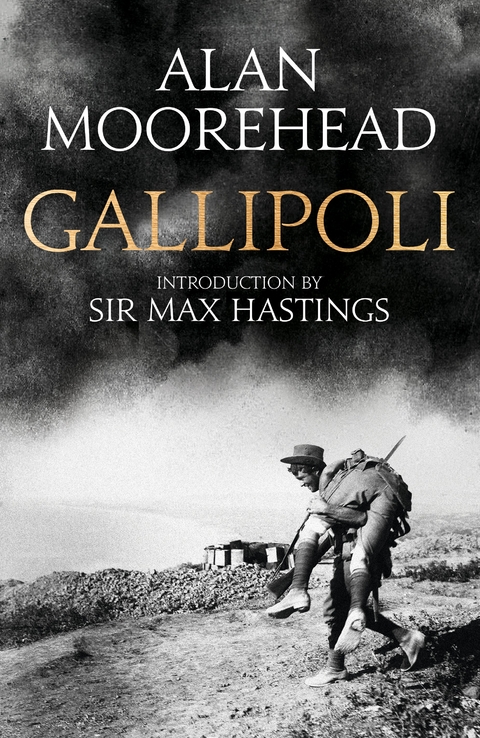
A century has now gone by, yet the Gallipoli campaign of 1915-16 is still infamous as arguably the most ill conceived, badly led and pointless campaign of the entire First World War. The brainchild of Winston Churchill, then First Lord of the Admiralty, following Turkey's entry into the war on the German side, its ultimate objective was to capture the Gallipoli peninsula in western Turkey, thus allowing the Allies to take control of the eastern Mediterranean and increase pressure onthe Central Powers to drain manpower from the vital Western Front.
From the very beginning of the first landings,however, the campaign went awry, and countless casualties. The Allied commanders were ignorant of the terrain, and seriously underestimated the Turkish army which had been bolstered by their German allies. Thus the Allies found their campaign staled from the off and their troops hopelessly entrenched on the hillsides for long agonising months, through the burning summer and bitter winter, in appalling, dysentery-ridden conditions. By January 1916, the death toll stood at 21,000 British troops, 11,000 Australian and New Zealand, and 87,000 Turkish and the decision was made to withdraw, which in itself, ironically, was deemed to be a success.
First published in 1956, when it won the inaugural Duff Cooper Prize, Alan Moorehead's book is still regarded as the definitive work on this tragic episode of the Great War. One could argue he was the first writer to capture the true turmoil thatoccurred in this campaign with his colourful, analytical and compelling style of prose. Sir Max Hastings himself says in this new introduction that he wasinspired as a young man by Moorehead's books to become a reporter himself. Within-depth analysis of the campaign, the objectives both sides set themselves,and with character sketches of the main players, it brings the complex operation to life, showing how and why it went so terribly wrong and a century on, remains a by word for the loss of human life.
A century has now gone by, yet the Gallipoli campaign of 1915-16 is still infamous as arguably the most ill conceived, badly led and pointless campaign of the entire First World War. The brainchild of Winston Churchill, then First Lord of the Admiralty, following Turkey's entry into the war on the German side, its ultimate objective was to capture the Gallipoli peninsula in western Turkey, thus allowing the Allies to take control of the eastern Mediterranean and increase pressure onthe Central Powers to drain manpower from the vital Western Front.From the very beginning of the first landings,however, the campaign went awry, and countless casualties. The Allied commanders were ignorant of the terrain, and seriously underestimated the Turkish army which had been bolstered by their German allies. Thus the Allies found their campaign staled from the off and their troops hopelessly entrenched on the hillsides for long agonising months, through the burning summer and bitter winter, in appalling, dysentery-ridden conditions. By January 1916, the death toll stood at 21,000 British troops, 11,000 Australian and New Zealand, and 87,000 Turkish and the decision was made to withdraw, which in itself, ironically, was deemed to be a success.First published in 1956, when it won the inaugural Duff Cooper Prize, Alan Moorehead's book is still regarded as the definitive work on this tragic episode of the Great War. One could argue he was the first writer to capture the true turmoil thatoccurred in this campaign with his colourful, analytical and compelling style of prose. Sir Max Hastings himself says in this new introduction that he wasinspired as a young man by Moorehead's books to become a reporter himself. Within-depth analysis of the campaign, the objectives both sides set themselves,and with character sketches of the main players, it brings the complex operation to life, showing how and why it went so terribly wrong and a century on, remains a by word for the loss of human life.
| Erscheint lt. Verlag | 2.4.2015 |
|---|---|
| Einführung | Max Hastings |
| Sprache | englisch |
| Themenwelt | Literatur |
| Sachbuch/Ratgeber ► Geschichte / Politik ► Allgemeines / Lexika | |
| Geschichte ► Allgemeine Geschichte ► Neuzeit (bis 1918) | |
| Geisteswissenschaften ► Geschichte ► Regional- / Ländergeschichte | |
| Geschichte ► Teilgebiete der Geschichte ► Militärgeschichte | |
| Sozialwissenschaften ► Politik / Verwaltung ► Europäische / Internationale Politik | |
| Schlagworte | allies • Anniversary • anz • Anzac • armistice • artillery • Aussie • Australia • Battleship • Beach • blooodshed • British • campaign • Capture • Casualty • Commonwealth • Constantinople • Danger • Dardanelles • Death • defeat • disaster • Disease • dysentry • effort • fierce • Fighting • Gallipoli • Great Britain • History • Impact • Imperial • India • international • Ireland • Irish • Islands • Istanbul • Jets • killed • landings • lest we forget • Loose • Loss • Lost • medeterranian • Memorial • Military • Newfoundland • New Zealand • Ni • Ottoman • Peninsula • poor conditions • poppy • rememberance day • ri • Ships • soldiers • Spitfire • strife • The Great War • Tragedy • Trenches • troops • Turkey • UK • United Kingdom • Veteran • war • wartime • Winston Churchill • World War One • Wounded • WW1 • wwi |
| ISBN-10 | 1-78131-485-3 / 1781314853 |
| ISBN-13 | 978-1-78131-485-2 / 9781781314852 |
| Informationen gemäß Produktsicherheitsverordnung (GPSR) | |
| Haben Sie eine Frage zum Produkt? |
 EPUB (Adobe DRM)
Kopierschutz: Adobe-DRM
Adobe-DRM ist ein Kopierschutz, der das eBook vor Mißbrauch schützen soll. Dabei wird das eBook bereits beim Download auf Ihre persönliche Adobe-ID autorisiert. Lesen können Sie das eBook dann nur auf den Geräten, welche ebenfalls auf Ihre Adobe-ID registriert sind.
Details zum Adobe-DRM
Dateiformat: EPUB (Electronic Publication)
EPUB ist ein offener Standard für eBooks und eignet sich besonders zur Darstellung von Belletristik und Sachbüchern. Der Fließtext wird dynamisch an die Display- und Schriftgröße angepasst. Auch für mobile Lesegeräte ist EPUB daher gut geeignet.
Systemvoraussetzungen:
PC/Mac: Mit einem PC oder Mac können Sie dieses eBook lesen. Sie benötigen eine
eReader: Dieses eBook kann mit (fast) allen eBook-Readern gelesen werden. Mit dem amazon-Kindle ist es aber nicht kompatibel.
Smartphone/Tablet: Egal ob Apple oder Android, dieses eBook können Sie lesen. Sie benötigen eine
Geräteliste und zusätzliche Hinweise
Buying eBooks from abroad
For tax law reasons we can sell eBooks just within Germany and Switzerland. Regrettably we cannot fulfill eBook-orders from other countries.
aus dem Bereich