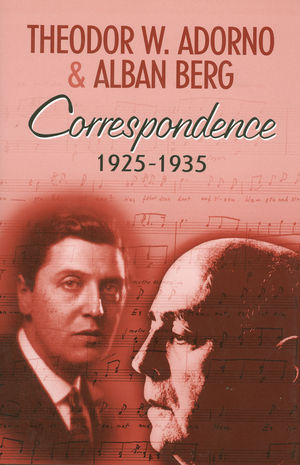
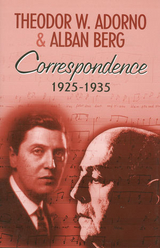
Correspondence 1925-1935 (eBook)
John Wiley & Sons (Verlag)
978-0-7456-9496-2 (ISBN)
The ensuing correspondence between the two men documents a rare encounter of creative tension between literary tradition and aesthetic modernism which would be sustained right up until the novelist's death in 1955. In the letters, Thomas Mann openly acknowledged his 'fascinated reading' of Adorno's Minima Moralia and commented in detail on the 'Essay on Wagner', which he was as eager to read as 'the one in the Book of Revelation consumes a book which tastes 'as sweet as honey''. Adorno in turn offered detailed observations upon and frequently enthusiastic commendations of Mann's later writings, such as The Holy Sinner, The Betrayed One and The Confessions of Felix Krull. Their correspondence also touches upon issues of great personal significance, notably the sensitive discussion of the problems of returning from exile to postwar Germany.
The letters are extensively annotated and offer the reader detailed notes concerning the writings, events and personalities referred or alluded to in the correspondence.
Theodor W. Adorno and Alban Berg
In December 1945 Thomas Mann wrote a famous letter to Adorno in which he formulated the principle of montage adopted in his novel Doctor Faustus. The writer expressly invited the philosopher to 'consider, with me, how such a work - and I mean Leverkuhn's work - could more or less be practically realized'. Their close collaboration on questions concerning the character of the fictional composer's putatively late works (Adorno produced specific sketches which are included as an appendix to the present volume) effectively laid the basis for a further exchange of letters.The ensuing correspondence between the two men documents a rare encounter of creative tension between literary tradition and aesthetic modernism which would be sustained right up until the novelist's death in 1955. In the letters, Thomas Mann openly acknowledged his 'fascinated reading' of Adorno's Minima Moralia and commented in detail on the 'Essay on Wagner', which he was as eager to read as 'the one in the Book of Revelation consumes a book which tastes "e;as sweet as honey"e;'. Adorno in turn offered detailed observations upon and frequently enthusiastic commendations of Mann's later writings, such as The Holy Sinner, The Betrayed One and The Confessions of Felix Krull. Their correspondence also touches upon issues of great personal significance, notably the sensitive discussion of the problems of returning from exile to postwar Germany.The letters are extensively annotated and offer the reader detailed notes concerning the writings, events and personalities referred or alluded to in the correspondence.
Theodor W. Adorno and Alban Berg
Editor's Note.
Translator's Note.
Correspondence 1943-1955.
Appendix I: Letters from Adorno to Helene Berg 1935-1949.
Appendix II: Other Correspondence.
Bibliographical Listing.
Index.
"These letters provide us with a unique overview of the period and
offer interesting and enlightening perspectives on even mundane
aspects of daily life, as well as bringing us closer to the
characters in question by allowing us a special insight into thir
peculiar foibles and eccentricities."
Musical Times
"Major composers who befriend major philosophers, and
vice-versa, are hardly numerous in the history of Western culture.
Alban Berg's relationship with Theodor W. Adorno as teacher and
colleague ranks with that between Richard Wagner and Friedrich
Nietzsche, with the difference that Berg's and Adorno's genuine
affection for each other, and their magnificent insight into each
other's work, remained constant to the end. Their
correspondence is one of the landmarks of the early twentieth
century and its music - a beacon of light in desperate
times."
John Deathridge, King's College London
"Sensitively translated and skillfully edited, the Adorno-Berg
Correspondence represents scholarship eminently worthy of this
extraordinary collection of letters between two twentieth-century
intellectual-artistic giants. Adorno's composition lessons with
Berg lasted for only a few months, but the impact transformed his
understanding of modern music in particular and aesthetics in
general. Berg, in turn, respected his pupil's abilities as a
composer, just as he clearly benefited, both intellectually and
emotionally, from young Adorno's profound insight into his
master's music. Though separated in age by nearly two
decades, the two men formed a relationship born of deep affection
and still deeper shared respect that lasted until Berg's untimely
and sudden death. The collected correspondence makes available for
the first time in English a body of texts that will add
significantly to our understanding of Adorno and Berg as well as
their breathtaking accomplishments."
Richard Leppert, University of Minnesota
Correspondence 1925–1935
1 WIESENGRUND-ADORNO TO BERG
FRANKFURT, 5.2.1925
5 February 1925.
Frankfurt a. M. – Oberrad
19 Seeheimer Straße.
Dear Herr Berg,
you may perhaps remember me: at the Tonkünstlerfest1 in Frankfurt in 1924, I had Scherchen introduce me to you, and told you of my intention to come to Vienna and study with you. The plan has now become ripe for decision, and I would like to ask you if you would be willing to accept me.
Allow me to relate to you in brief my curriculum vitae: I was born in Frankfurt in 1903, completed secondary school in 1921, and received a PhD from the university in 1924 for an epistemological study.2 – I have played music since my earliest childhood, first playing the violin/viola, later the piano. My first compositional attempts were also made at an early age; I taught myself harmonic theory, and in 1919 came to Bernhard Sekles3 with songs and chamber music. I have been his student since; most recently, I have been composing five-and eight-part vocal counterpoint and double fugues for voices. Independently of this tuition, I have also been composing for myself; six ‘Studies for String Quartet’ (1920)4 were given a private performance in 1921 by the Rebner-Hindemith Quartet,5 and my First String Quartet (1921)6 was performed in 1923 by Hans Lange. In addition I have written two string trios7 and songs with differing instrumentation. The last years have been devoted largely to scientific, pianistic and technical work; I have managed to compose only three four-part songs for female chorus a capella (1923)8 and three piano pieces.9 Meanwhile, I am dissatisfied with all of these, and in order to fulfil my new plans I would first of all like to entrust myself to your guidance and supervision. There are quite specific technical problems at issue, ones which I do not feel equal to; I think that I can tell you quite precisely what help I require from you.
A by-product of my philosophical and musical activities has been some work as a critic: I was music critic for a Frankfurt journal10 from 1921–22; since 1923 I have been the Frankfurt correspondent for the ‘Zeitschrift für Musik’; since 1925 I have also reported for the Berlin journal ‘Musik’.
For information concerning me, you would perhaps best consult Sekles (director of the Hochsches Konservatorium), or Dr. Karl Holl11 of the Frankfurter Zeitung. I will gladly send you articles of mine, if you wish; it would probably suit your needs better to send you compositions, but as I am not content with my work, I am loath to send you anything. At least my writings on music could give you an idea of how I think. – I hope to bring you something when I come to Vienna, some work I can stand by in some measure. – I would also like to continue my piano studies there, and hope you can offer me some friendly advice in this matter. But the deciding purpose of my stay would be your tuition alone.
I would be grateful if you could respond soon, and tell me your conditions. – I need hardly add that my powerful impression of your works compels me to call upon your services.
My thanks to you in advance for your efforts
yours in sincere admiration
Dr. Th. Wiesengrund-Adorno.
Original: manuscript.
1 On 16 June 1924, Hermann Scherchen (1891–1966) conducted the premiere of the Drei Bruchstücke aus der Oper ‘Wozzeck’.
2 Adorno’s doctoral thesis, ‘Die Transzendenz des Dinglichen und Noematischen in Husserls Phänomenologie’, remained unpublished in its author’s lifetime; see Theodor W. Adorno, Gesammelte Schriften, ed. Rolf Tiedemann in collaboration with Gretel Adorno, Susan Buck-Morss and Klaus Schultz, vol. 1: Philosophische Frühschriften, 3rd edn, Frankfurt am Main, 1996, pp. 7–77 (the Gesammelte Schriften [1970–86] will henceforth be referred to with the abbreviation GS and the number of the volume).
3 The composer Bernhard Sekles (1872–1934) taught at the Hoch’sches Konservatorium in Frankfurt from 1896, and was its director from 1923 until the Nazis seized power; he was also Paul Hindemith’s teacher.
4 The premiere of the yet unpublished work was given on 12 September 1994 in Frankfurt by the Neues Leipziger Streichquartett.
5 The quartet founded by the Austrian violinist Adolf Rebner (1876–1967), who also taught at the Hoch’sches Konservatorium; Hindemith played in the quartet until 1921.
6 The premiere took place on 24 April 1923 in Frankfurt; besides this, the Lange Quartett (H. Lange, R. Itkes, G. Graf, W. Lange) played the String Quartet op. 28 by Ernst Toch – also a premiere – and 4 Gesänge für Tenorstimme mit Violine und 2 Bratschen by Ludwig Rottenberg (1864–1932).
7 The first of these – dedicated to Adorno’s former German teacher ‘Reinhold Zickel in friendship’ – is dated ‘June 1921–February 1922’; the second, composed immediately after it, follows the model of Schönberg’s First Chamber Symphony op. 9 in its single-movement form, and is signed: ‘Fair copy completed 18.IV.1922: on Gustav Mahler’s birthday’. Both trios are as yet unpublished; the first was premiered by Trio Recherche on 30 July 1994, during the International Summer Course for New Music in Darmstadt.
8 These are the Drei Gedichte von Theodor Däubler für vierstimmigen Frauenchor op. 8, which Adorno revised in 1945.
9 These as yet unpublished pieces – dedicated to Maria Proelss – were premiered by Maria Luisa Lopez-Vito on 18 September 1981, during the seventh Festival of Contemporary Music in Bolzano.
10 The reference is to the Neue Blätter für Kunst und Literatur, edited by Albert Dessoff, which was published from 1918 to 1923.
11 Karl Holl (1892–1975), who worked for the Frankfurter Zeitung from 1922, had taken over Paul Bekker’s post there in 1925.
2 WIESENGRUND-ADORNO TO BERG
FRANKFURT, 17.2.1925
Frankfurt a. M. – Oberrad,
19 Seeheimer Straße
17 February 1925.
Esteemed Herr Berg,
many thanks for your cordial letter,1 which compels me to come to you as soon as possible, if possible still in February, otherwise in the first days of March. I shall give you the precise date,2 or call you directly in Vienna. – I also look forward to following you to Berlin in May,3 if this meets your approval. In June you would be back in Vienna, I daresay.
It gives me particular satisfaction that you were sympathetic to my articles,4 as they caused me some frustration in Frankfurt. I should think that I will find a somewhat conveniently situated room with a grand piano. I have already asked friends in Vienna5 to look for quarters for me.
Devoted greetings
Yours Th. Wiesengrund-Adorno.
Original: manuscript.
1 Berg’s letter of reply does not seem to have been preserved.
2 Adorno arrived in Vienna on 5 March.
3 That is to say: to the premiere of Wozzeck originally scheduled for early 1925, which took place only on 14 December 1925.
4 In Berg’s library, an issue of the journal Neue Blätter für Kunst und Literatur, dated 18 September 1922 (vol. 5, no. 1), has survived, containing two articles by Adorno: ‘Bartók-Aufführungen in Frankfurt’ (see GS 19, pp. 16–21) and ‘Zeitgenössische Kammermusik: erster und zweiter Abend im Verein für Theater- und Musikkultur’ (see GS 19, pp. 21–4).
5 Unknown.
3 WIESENGRUND-ADORNO TO BERG
VIENNA, 19.5.1925
fuchs robettin1
for berg
arrive wednesday lunchtime
blauer stern2 wiesengrund
Original: telegram.
1 At the time, Berg was staying in Prague, where Alexander von Zemlinsky (1872–1942) performed the Drei Bruchstücke aus Wozzeck on 20 May. Berg was the guest of the industrialist family Fuchs-Robettin; Herbert Fuchs-Robettin (1886–1949) was married to Franz Werfel’s sister Hanna (1894–1964); the invitation most probably came about on the initiative of Alma Mahler-Werfel. Hanna Fuchs-Robettin, with whom Berg fell in love, was the addressee of the ‘secret programme’ of the Lyric Suite (see George Perle, ‘Das geheime Programm der Lyrischen Suite’, in Musik-Konzepte, ed. Heinz-Klaus Metzger and Rainer Riehn, 4: Alban Berg, Kammermusik I, Munich, 1978, pp....
| Erscheint lt. Verlag | 5.11.2014 |
|---|---|
| Übersetzer | Wieland Hoban |
| Sprache | englisch |
| Themenwelt | Literatur ► Biografien / Erfahrungsberichte |
| Kunst / Musik / Theater ► Musik | |
| Sachbuch/Ratgeber ► Geschichte / Politik | |
| Geisteswissenschaften | |
| Sozialwissenschaften ► Soziologie ► Allgemeine Soziologie | |
| Schlagworte | Adorno • adorno already • AIM • Alban • Berg • Beyond • Birds • contemporary social theory • Control • Desire • Knowledge • language • LESS • March • musical composition • Old • one claim • Philosophie • Philosophy • Remain • Sociology • Soziologie • stay • Study • twentyone • Vienna • World • years • Zeitgenössische Sozialtheorie • Zeitgenössische Sozialtheorie |
| ISBN-10 | 0-7456-9496-9 / 0745694969 |
| ISBN-13 | 978-0-7456-9496-2 / 9780745694962 |
| Informationen gemäß Produktsicherheitsverordnung (GPSR) | |
| Haben Sie eine Frage zum Produkt? |
 EPUB (Adobe DRM)
Kopierschutz: Adobe-DRM
Adobe-DRM ist ein Kopierschutz, der das eBook vor Mißbrauch schützen soll. Dabei wird das eBook bereits beim Download auf Ihre persönliche Adobe-ID autorisiert. Lesen können Sie das eBook dann nur auf den Geräten, welche ebenfalls auf Ihre Adobe-ID registriert sind.
Details zum Adobe-DRM
Dateiformat: EPUB (Electronic Publication)
EPUB ist ein offener Standard für eBooks und eignet sich besonders zur Darstellung von Belletristik und Sachbüchern. Der Fließtext wird dynamisch an die Display- und Schriftgröße angepasst. Auch für mobile Lesegeräte ist EPUB daher gut geeignet.
Systemvoraussetzungen:
PC/Mac: Mit einem PC oder Mac können Sie dieses eBook lesen. Sie benötigen eine
eReader: Dieses eBook kann mit (fast) allen eBook-Readern gelesen werden. Mit dem amazon-Kindle ist es aber nicht kompatibel.
Smartphone/Tablet: Egal ob Apple oder Android, dieses eBook können Sie lesen. Sie benötigen eine
Geräteliste und zusätzliche Hinweise
Buying eBooks from abroad
For tax law reasons we can sell eBooks just within Germany and Switzerland. Regrettably we cannot fulfill eBook-orders from other countries.
aus dem Bereich