Gut Flora, Nutrition, Immunity and Health (eBook)
John Wiley & Sons (Verlag)
978-0-470-77748-0 (ISBN)
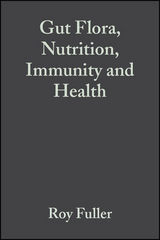
This important book contains chapters covering the basic principles of nutrition, gut microecology and immunology, as well as chapters which discuss the way in which this knowledge may be used to explain the positive and negative effects of food consumption, metabolism, probiotics and prebiotics. Food hypersensitivity and allergic reactions, carcinogenesis, and the role of nutrition in the reduced immunity of the aged are also discussed in detail.
The editors of this exciting and informative book, who between them have a vast wealth of knowledge of the area, have drawn together and carefully edited international contributions from many well known and respected workers in the area. Gut Flora, Nutrition, Immunity and Health provides essential information for a range of professionals including nutritionists, dietitians, food scientists, microbiologists, gastroenterologists, immunologists and all personnel working in the development and use of functional foods and supplements, prebiotics and probiotics. Libraries in universities and research establishments where these subjects are studied and taught, and pharmaceutical and food companies should have multiple copies of this very useful book on their shelves.
Roy Fuller is a consultant in gut microecology, based in Reading, UK; Gabriela Perdigón is based at the Centro de Referencia para Lactobacillus (CERELA) and at the Faculty of Biochemistry, Chemistry and Pharmacy of Tucuman University, Argentina.
Roy Fuller is the editor of Gut Flora, Nutrition, Immunity and Health, published by Wiley.
Gabriela Peridigón is the editor of Gut Flora, Nutrition, Immunity and Health, published by Wiley.
Some foods, as well as contributing essential nutrients to the body, also contain additional components that improve disease resistance and general health status over and above that induced by ingestion of conventional foods. The so-called functional foods, and prebiotics and probiotics exemplify the relationship that exists between nutrition, the gut (the largest element of the body s immune system) and its flora, immunology and health. This important book contains chapters covering the basic principles of nutrition, gut microecology and immunology, as well as chapters which discuss the way in which this knowledge may be used to explain the positive and negative effects of food consumption, metabolism, probiotics and prebiotics. Food hypersensitivity and allergic reactions, carcinogenesis, and the role of nutrition in the reduced immunity of the aged are also discussed in detail. The editors of this exciting and informative book, who between them have a vast wealth of knowledge of the area, have drawn together and carefully edited international contributions from many well known and respected workers in the area. Gut Flora, Nutrition, Immunity and Health provides essential information for a range of professionals including nutritionists, dietitians, food scientists, microbiologists, gastroenterologists, immunologists and all personnel working in the development and use of functional foods and supplements, prebiotics and probiotics. Libraries in universities and research establishments where these subjects are studied and taught, and pharmaceutical and food companies should have multiple copies of this very useful book on their shelves. Roy Fuller is a consultant in gut microecology, based in Reading, UK; Gabriela Perdig n is based at the Centro de Referencia para Lactobacillus (CERELA) and at the Faculty of Biochemistry, Chemistry and Pharmacy of Tucuman University, Argentina.
Roy Fuller is the editor of Gut Flora, Nutrition, Immunity and Health, published by Wiley. Gabriela Peridigón is the editor of Gut Flora, Nutrition, Immunity and Health, published by Wiley.
Contents 7
Preface 13
Acknowledgements 14
1 The Intestinal Microflora 15
From Petri dish to polyacrylamide gel 15
Catalogues show diversity 21
A phoenix arises 21
Is it all the same in the end? 26
The formative years 28
Rules and regulations, but mind your language 29
2 Food and the Large Intestine 38
The large intestine 38
Interactions of the microflora with the host 40
Effect of diet on the colonic microflora 40
Diet and bacterial species composition in the large intestine 40
Diet and bacterial metabolism 42
Intestinal bacteria and vitamins 44
Bacterial growth substrates in the large intestine 45
Breakdown of complex carbohydrates by intestinal bacteria 46
Protein breakdown by gut microorganisms 49
Toxological implications of amino acid fermentation 50
Effects of carbohydrate on amino acid fermentation 52
Short-chain fatty acids 53
Effect of diet on SCFA production 54
In vitro studies on SCFA production 54
SCFA and cell metabolism 55
SCFA and colon cancer 55
Lactate formation by gut microorganisms 55
3 The Health Benefits of Probiotics and Prebiotics 66
Summary 66
Introduction 66
Probiotics 69
Composition of probiotic preparations 69
Tracking probiotics through the gut 71
Prebiotics 73
Oligosaccharides as prebiotics 73
Lactulose 74
Inulin and fructooligosaccharides 74
Galactooligosaccharides 75
Soybean oligosaccharides 76
Lactosucrose 76
Isomaltooligosaccharides 77
Glucooligosaccharides 77
Xylooligosaccharides 78
Current status 78
Persistence of the prebiotic effect to distal regions of the colon 79
Anti-adhesive activities against pathogens and toxins 79
Targeted prebiotics 79
Attenuative properties 80
Defined health outcomes of probiotics and prebiotics 80
Improved tolerance to lactose 80
Protection from gastroenteritis 81
Coronary heart disease 81
Colon cancer 82
Vitamin synthesis 82
Irritable bowel syndrome 82
Improved digestion and gut function 82
Immunomodulation 83
Mineral bioavailability 83
Conclusions 83
4 Intestinal Microflora and Metabolic Activity 91
Dietary carbohydrates 91
Bacterial fermentation 93
SCFA production 96
SCFA and electrolytes absorption 98
Colonic metabolism 101
Physiological consequences of SCFA absorption 101
Probiotics and the intestinal metabolism of carbohydrates 103
5 The Role of the Immune System 113
Overview of the immune system 113
Introduction 113
Innate immune response 114
Early induced immune response 117
Adaptative immune response 118
B lymphocytes and the immunoglobulins 118
T lymphocytes and the T cell receptor complex 123
APCs and the MHC molecules 124
Education of lymphocytes in the primary lymphoid organs 129
Education of T lymphocytes in the thymus 129
Education of B lymphocytes in the bone marrow 131
The immune system functioning 133
Peripheral lympoid tissues, a place where lymphocytes meet the antigen 133
Lymphocyte traffic 134
Activation of T cells 135
Cell-mediated immune response: generation of armed effector T cells 136
Generation of Thl and Th2 cells 136
Cytotoxic T cells 138
Humoral immune response 139
Activation of B cells in the secondary lymphoid organs 139
Kinetics of the immune response 144
Endogenous regulation of the immune response 144
Tolerance to T cell repertoire 145
Tolerance to B cell repertoire 146
Immunoregulation 147
6 Behaviour of the Immune System in Eating Disorders 151
Relationship between nutrition and the immune system 151
The defence of the organism 151
Immune system behaviour under malnutrition 152
Effects of micronutrients on the immune system 153
Antioxidant vitamins 157
The immune system in eating disorders 160
Eating disorders as a clear example of malnutrition 160
Cytokine participation over the lack of infection in eating disorders 160
The interrelationship between leptin and cytokines 161
Conclusions 163
7 Mucosal Immune System and Malnutrition 169
Mucosal immunity 169
Introduction 169
Organized mucosal lymphoid tissues 170
Antigen uptake 170
Role of epithelial, toll-like receptors and dentritic cells 170
Tolerance to food 174
Effect of nutritional factors on the microenvironment of mucosal immune system 174
Nutrition and immunity 175
Nutritional effects on immune mechanisms 175
Essential amino acid deficiency and immune response 176
Nutritional deficiencies and mucosal immune defence systems in animals 177
Probiotics in malnutrition 180
Introduction 180
Protein malnutrition and immune response 181
Effects of probiotic addition to a renutrition diet 182
8 Immune Activation Versus Hyporesponsiveness and Tolerance in the Gut 192
Introduction 192
Innate and adaptative immunity 193
Antigen and the T cell response 194
Antigen-presenting cells in the GIT 195
T cell function in the GIT - the CD4+ population 195
?? T cells 197
Turnover of T cells 198
Intestinal epithelial cells 198
Peyer's patches - suppression of T cell responsiveness 199
Probiotic bacteria - a biological role as live or dead organisms 201
Immune activation by probiotic bacteria feeding 201
Probiosis - is it Gram-positive versus Gram-negative bacteria or is it live versus dead bacteria? 206
Summary and perspective 209
9 Food Hypersensitivity and Allergic Diseases 215
Introduction 215
Immunological mechanisms 215
Food allergens 216
Clinical manifestations 216
Identification of high risk infants for prevention 218
Preventive measures 218
Breast feeding 218
Hydrolysed formulas 219
Other measures 220
Management of food allergy 220
10 Nutritional and Microbial Modulation of Carcinogenesis 222
Introduction 222
Bacteria and cancer overview 223
Bacterial metabolites 225
Enzyme activities 225
?-glucuronidase and ?-glycosidase 225
Enzymic hydrolysis of plant flavonoids 226
Nitroreductase and nitrate reductase 227
Metabolism of heterocyclic amines 227
Metabolism of sulphur-containing compounds 228
Secondary bile acids 229
Fecapentaenes 230
Reduced exposure to toxic compounds 231
Formation of toxic and protective agents during fermentation 231
Carbohydrate fermentation 232
Short chain fatty acids 232
Products of colonic protein fermentation 233
Probiotics, prebiotics and cancer 234
11 The Role of Nutrition in Immunity of the Aged 251
Introduction 251
Aging and immune function 252
Innate immune system 252
Age-related changes in skin and mucous barriers 252
Age-related changes in phagocytic cells 252
Age-related changes in natural killer cells 257
Acquired immune system 258
Age-related involution of thymic function 258
Quantitative and qualitative changes in T cell subpopulations in the elderly 258
Age-related changes in T cell function 260
Changes in B cell number and function in the elderly 261
Nutritional regulation of immune function of the aged 262
Effect of protein-energy malnutrition on immune responses in aged people 262
Alterations in polymorphonuclear functions during PEM in the elderly 262
Alterations in monocyte/macrophage functions during PEM in the elderly 264
Alterations in T-cell mediated immunity during PEM in the elderly 264
Alterations in B-cell mediated immunity during PEM 266
Immune response during nutritional recovery in undernourished elderly persons 266
Influence of nutritional recovery on PMN function in old age 266
Influence of nutritional recovery on T cell function in old age 267
Influence of nutritional supplementation in healthy well-nourished elderly subjects 269
Concluding remarks 272
12 Conclusions 284
Index 289
| Erscheint lt. Verlag | 15.4.2008 |
|---|---|
| Sprache | englisch |
| Themenwelt | Sachbuch/Ratgeber ► Gesundheit / Leben / Psychologie |
| Medizin / Pharmazie ► Allgemeines / Lexika | |
| Medizin / Pharmazie ► Gesundheitsfachberufe ► Diätassistenz / Ernährungsberatung | |
| Medizinische Fachgebiete ► Innere Medizin ► Gastroenterologie | |
| Studium ► Querschnittsbereiche ► Infektiologie / Immunologie | |
| Schlagworte | Ernährungslehre • Ernährungslehre • Gesundheits- u. Sozialwesen • Health & Social Care • nutrients, immunology, functional food, probiotics, prebiotics, gut microecology, gut immunology, supplements • Nutrition |
| ISBN-10 | 0-470-77748-6 / 0470777486 |
| ISBN-13 | 978-0-470-77748-0 / 9780470777480 |
| Informationen gemäß Produktsicherheitsverordnung (GPSR) | |
| Haben Sie eine Frage zum Produkt? |
 PDF (Adobe DRM)
Kopierschutz: Adobe-DRM
Adobe-DRM ist ein Kopierschutz, der das eBook vor Mißbrauch schützen soll. Dabei wird das eBook bereits beim Download auf Ihre persönliche Adobe-ID autorisiert. Lesen können Sie das eBook dann nur auf den Geräten, welche ebenfalls auf Ihre Adobe-ID registriert sind.
Details zum Adobe-DRM
Dateiformat: PDF (Portable Document Format)
Mit einem festen Seitenlayout eignet sich die PDF besonders für Fachbücher mit Spalten, Tabellen und Abbildungen. Eine PDF kann auf fast allen Geräten angezeigt werden, ist aber für kleine Displays (Smartphone, eReader) nur eingeschränkt geeignet.
Systemvoraussetzungen:
PC/Mac: Mit einem PC oder Mac können Sie dieses eBook lesen. Sie benötigen eine
eReader: Dieses eBook kann mit (fast) allen eBook-Readern gelesen werden. Mit dem amazon-Kindle ist es aber nicht kompatibel.
Smartphone/Tablet: Egal ob Apple oder Android, dieses eBook können Sie lesen. Sie benötigen eine
Geräteliste und zusätzliche Hinweise
Buying eBooks from abroad
For tax law reasons we can sell eBooks just within Germany and Switzerland. Regrettably we cannot fulfill eBook-orders from other countries.
aus dem Bereich