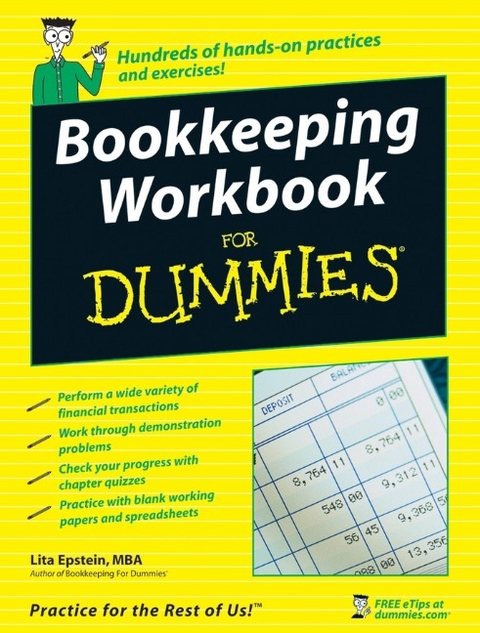
Bookkeeping Workbook For Dummies (eBook)
John Wiley & Sons (Verlag)
978-0-470-23797-7 (ISBN)
With demonstration problems, complementary examples, and multiple-choice questions you'll find in this user-friendly primer, you'll sharpen your bookkeeping skills for the real world as you increase your ability to perform well on any test, Chapter quizzes let check your progress as you go, and step-by-step answers show you where you went wrong (or right) each problem, You'll feel your confidence -and competence-growing as you learn how to:
- Perform a wide variety of financial transactions
- Use key concepts and skills with real-world bookkeeping problems
- Design a bookkeeping system
- Track day-to-day business operations
- Keep journals for active accounts
- Use blank working papers and spread sheets
- Handle cash entries and develop internal controls
- Calculate and pay employee withholding taxes
- Depreciate assets
- Prove out your books at year's end
- Prepare tax returns as set up for a new year
Complete with Top Ten lists for managing cash, monitoring accounts, and finding additional helpful resources, Bookkeeping Workbook For Dummies is the test-prep guide you need to help you ace the certification test and speed your way into a successful and rewarding career,
Lita Epstein, who earned her MBA from Emory University's Goizueta Business School, enjoys helping people develop good financial, investing and tax-planning skills,
While getting her MBA, Lita worked as a teaching assistant for the financial accounting department and ran the accounting lab, After completing her MBA, she managed finances for a small nonprofit organization and for the facilities management section of a large medical clinic,
She designs and teaches online courses on topics such as investing for retirement, getting ready for tax time and finance and investing for women, She's written over 20 books including Reading Financial Reports For Dummies and Trading For Dummies,
Lita was the content director for a financial services Web site, MostChoice,com, and managed the Web site, Investing for Women, As a Congressional press secretary, Lita gained firsthand knowledge about how to work within and around the Federal bureaucracy, which gives her great insight into how government programs work, In the past, Lita has been a daily newspaper reporter, magazine editor, and fundraiser for the international activities of former President Jimmy Carter through The Carter Center,
Master the art of bookkeeping with this valuable study guideIf you're preparing for The American Institute of Professional Bookkeepers' (AIPB) bookkeeping certification test, you need an easy- to-follow test-preparation guide that gets you up to speed quickly in all of the bookkeeping basics, from setting up a company's books and recording transactions to managing employee payroll, handling government paperwork, and closing out the books. You need Bookkeeping Workbook For Dummies. With demonstration problems, complementary examples, and multiple-choice questions you'll find in this user-friendly primer, you'll sharpen your bookkeeping skills for the real world as you increase your ability to perform well on any test. Chapter quizzes let check your progress as you go, and step-by-step answers show you where you went wrong (or right) each problem. You'll feel your confidence and competence growing as you learn how to: Perform a wide variety of financial transactions Use key concepts and skills with real-world bookkeeping problems Design a bookkeeping system Track day-to-day business operations Keep journals for active accounts Use blank working papers and spread sheets Handle cash entries and develop internal controls Calculate and pay employee withholding taxes Depreciate assets Prove out your books at year's end Prepare tax returns as set up for a new year Complete with Top Ten lists for managing cash, monitoring accounts, and finding additional helpful resources, Bookkeeping Workbook For Dummies is the test-prep guide you need to help you ace the certification test and speed your way into a successful and rewarding career.
Lita Epstein, who earned her MBA from Emory University's Goizueta Business School, enjoys helping people develop good financial, investing and tax-planning skills. While getting her MBA, Lita worked as a teaching assistant for the financial accounting department and ran the accounting lab. After completing her MBA, she managed finances for a small nonprofit organization and for the facilities management section of a large medical clinic. She designs and teaches online courses on topics such as investing for retirement, getting ready for tax time and finance and investing for women. She's written over 20 books including Reading Financial Reports For Dummies and Trading For Dummies. Lita was the content director for a financial services Web site, MostChoice.com, and managed the Web site, Investing for Women. As a Congressional press secretary, Lita gained firsthand knowledge about how to work within and around the Federal bureaucracy, which gives her great insight into how government programs work. In the past, Lita has been a daily newspaper reporter, magazine editor, and fundraiser for the international activities of former President Jimmy Carter through The Carter Center.
Bookkeeping Workbook for Dummies 5
About the Author 7
Dedication 9
Author’s Acknowledgments 9
Contents at a Glance 11
Table of Contents 13
Introduction 17
About This Book 17
Foolish Assumptions 18
How This Book Is Organized 18
Icons Used in This Book 19
Where to Go from Here 20
Part I: Exploring Bookkeeping Basics 21
Chapter 1: Deciphering the Basics 23
Using Cash or Accrual Method 23
Sorting Out Assets, Liabilities, and Equity 28
Tracking the Daily Finances 30
Testing Your Work 30
Naming the Financial Statements 30
Keeping a Paper Trail 32
Answers to Problems on Deciphering the Basics 33
Chapter 2: Designing Your Bookkeeping System 35
Introducing the Accounts 35
Cycling Through the Bookkeeping Process 40
Seeing Double with Double-Entry Bookkeeping 42
Differentiating Between Debits and Credits 44
Answers to Problems on Designing Your Bookkeeping System 46
Chapter 3: Sorting Out Your Business Road Map 49
Charting Your Accounts 49
Detailing Your Balance Sheet Accounts 51
Tracking Your Income Accounts 56
Setting Up Your Accounts Road Map 60
Answers to Problems on Sorting Out Your Business Road Map 62
Part II: Putting it All on Paper 63
Chapter 4: Looking at the Big Picture 65
Preparing the Core of Your Financial Details 65
Developing Entries for the Ledger 67
Posting Your Entries 71
Adjusting for Errors 75
Answers to Problems on Looking at the Big Picture 76
Chapter 5: Journaling — The Devil’s in the Details 79
Defining Your Journals 79
Tracking Cash 80
Managing Sales 85
Watching Purchases 86
Dealing with Miscellaneous Transactions 87
Answers to Problems on Journaling — The Devil’s in the Details 90
Chapter 6: Designing Controls for Your Books, Your Records, and Your Money 95
Getting a Handle on Cash 95
Organizing Your Record Keeping 101
Protecting Your Business from Theft and Fraud 103
Taking Out a Bond 104
Answers to Problems on Designing Controls for Your Books, Your Records, and Your Money 105
Part III: Tracking Day-to-Day Business Operations with Your Books 107
Chapter 7: Purchasing Goods and Tracking Your Purchases 109
Detailing and Managing Your Inventory 109
Paying Your Bills 115
Answers to Problems on Purchasing Goods and Tracking Your Purchases 117
Chapter 8: Calculating and Monitoring Sales 119
Taking in Cash 119
Selling on Credit 124
Checking Your Register 128
Discounting Sales 130
Recording Sales Returns and Allowances 134
Monitor Collections from Your Customers 137
Writing Off Bad Accounts 138
Answers to Problems on Calculating and Monitoring Sales 140
Chapter 9: Paying Your Employees 143
Setting Up Payroll 143
Collecting Employee Payroll Taxes 146
Figuring Out Net Pay 148
Calculating Payroll 148
Depositing Taxes 152
Answers to Problems on Paying Your Employees 154
Chapter 10: Paying Employer Taxes and Completing Related Government Reports 157
Paying Social Security and Medicare Taxes 157
Filing Unemployment Reports and Paying Taxes 159
Covering Workman’s Compensation 161
Maintaining Employee Records 163
Answers to Problems on Paying Employer Taxes and Completing Related Government Reports 164
Part IV: Getting Ready for Year’s (Or Month’s) End 165
Chapter 11: Depreciating Your Assets 167
Understanding Depreciation 167
Depreciating Your Assets 171
Setting Schedules 174
Recording Depreciation Expenses 174
Answers to Problems on Depreciating Your Assets 175
Chapter 12: Paying and Collecting Interest 177
Determining Interest Types 177
Determining Interest on Debt 179
Recording Interest on Short-term Debt 182
Separating and Paying Interest on Debt 184
Booking Interest Income 185
Answers to Problems on Paying and Collecting Interest 186
Chapter 13: Proving Out Your Books 189
Checking Cash 189
Closing Journals 190
Reconciling Bank Accounts 194
Posting to the Ledger 197
Answers to Problems on Proving Out Your Books 198
Chapter 14: Checking and Correcting Your Books 201
Doing a Trial Balance Worksheet 201
Making Adjustments 205
Reworking Your Chart of Accounts 211
Answers to Problems on Checking and Correcting Your Books 213
Part V: Putting on Your Best Financial Face 217
Chapter 15: Showing Everything’s in Balance 219
Exploring the Balance Sheet 219
Gathering the Numbers 219
Preparing the Statement for Prime Time 221
Working with Your Balance Sheet Numbers 227
Answers to Problems on Showing Everything’s in Balance 233
Chapter 16: Proving Your Profits 237
Exploring the Income Statement 237
Formatting the Income Statement 239
Preparing the Numbers 241
Analyzing Your Income Results 243
Answers to Problems on Proving Your Profits 247
Chapter 17: Doing Your Business Taxes 249
Exploring Business Types 249
Tax Reporting 251
Determining Sales Taxes 254
Answers to Problems on Doing Your Business Taxes 255
Chapter 18: Getting Ready for a New Bookkeeping Year 257
Finalizing the Ledger 257
Reviewing Customer Accounts 259
Assessing Vendor Accounts 260
Deleting Accounts 261
Preparing to Restart Business Cycle 262
Answers to Problems on Getting Ready for a New Bookkeeping Year 264
Part VI: The Part of Tens 265
Chapter 19: Top Ten Checklist for Managing Your Cash 267
Charting the Way 267
Balancing Your Entries 267
Posting Your Transactions 268
Tracking Customer Collections 268
Paying Bills Accurately and on Time 268
Planning Profits 268
Comparing Budget to Actual Expenses 268
Comparing Sales Goals to Actual Sales 269
Tracking Cost Trends 269
Making Pricing Decisions 269
Chapter 20: Top Ten Accounts You Should Monitor 271
Cash 271
Accounts Receivable 271
Inventory 271
Accounts Payable 272
Loans Payable 272
Sales 272
Purchases 272
Payroll Expenses 272
Office Expenses 273
Owner’s Equity 273
Retained Earnings 273
Chapter 21:Top Ten Problems You Should Practice 275
Identifying Accounts and Using Double-Entry Bookkeeping 275
Keeping Journals 275
Paying Bills and Managing Inventory 275
Tracking Sales 276
Testing Your Balance 276
Reporting Income 276
Closing the Books and Starting Over 276
Index 277
| Erscheint lt. Verlag | 5.10.2007 |
|---|---|
| Sprache | englisch |
| Themenwelt | Sachbuch/Ratgeber ► Beruf / Finanzen / Recht / Wirtschaft ► Wirtschaft |
| Mathematik / Informatik ► Mathematik | |
| Recht / Steuern ► Wirtschaftsrecht | |
| Wirtschaft ► Betriebswirtschaft / Management ► Rechnungswesen / Bilanzen | |
| Schlagworte | American • Balance • Basics • Bookkeeper • bookkeeping • books • Business & Management • Certified • Companys • easytofollow • Employee • General • Guide • Handson • Institute • ledger • Order • Payroll • Problems • professional bookkeepers • Recording Transactions • Sheet • solve • Wirtschaft • Wirtschaft u. Management • Workbook |
| ISBN-10 | 0-470-23797-X / 047023797X |
| ISBN-13 | 978-0-470-23797-7 / 9780470237977 |
| Informationen gemäß Produktsicherheitsverordnung (GPSR) | |
| Haben Sie eine Frage zum Produkt? |
 PDF (Adobe DRM)
Kopierschutz: Adobe-DRM
Adobe-DRM ist ein Kopierschutz, der das eBook vor Mißbrauch schützen soll. Dabei wird das eBook bereits beim Download auf Ihre persönliche Adobe-ID autorisiert. Lesen können Sie das eBook dann nur auf den Geräten, welche ebenfalls auf Ihre Adobe-ID registriert sind.
Details zum Adobe-DRM
Dateiformat: PDF (Portable Document Format)
Mit einem festen Seitenlayout eignet sich die PDF besonders für Fachbücher mit Spalten, Tabellen und Abbildungen. Eine PDF kann auf fast allen Geräten angezeigt werden, ist aber für kleine Displays (Smartphone, eReader) nur eingeschränkt geeignet.
Systemvoraussetzungen:
PC/Mac: Mit einem PC oder Mac können Sie dieses eBook lesen. Sie benötigen eine
eReader: Dieses eBook kann mit (fast) allen eBook-Readern gelesen werden. Mit dem amazon-Kindle ist es aber nicht kompatibel.
Smartphone/Tablet: Egal ob Apple oder Android, dieses eBook können Sie lesen. Sie benötigen eine
Geräteliste und zusätzliche Hinweise
Buying eBooks from abroad
For tax law reasons we can sell eBooks just within Germany and Switzerland. Regrettably we cannot fulfill eBook-orders from other countries.
aus dem Bereich