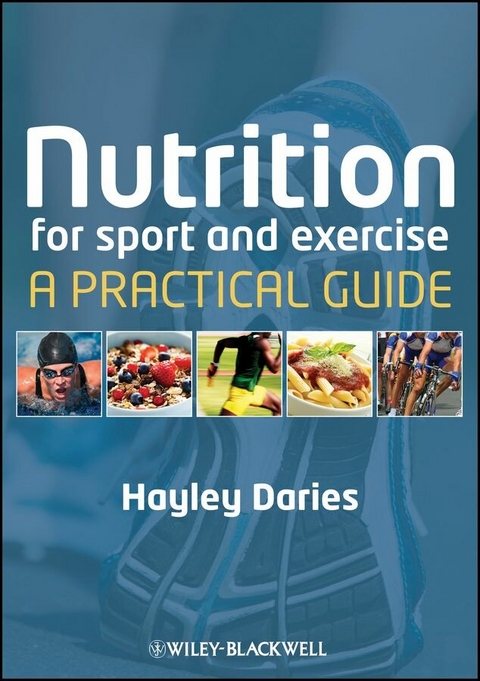
Nutrition for Sport and Exercise (eBook)
John Wiley & Sons (Verlag)
978-1-118-35973-0 (ISBN)
Food and drink choices before, during and after training and competition have a direct impact on health, body mass and composition, nutrient availability and recovery time, and an optimal diet can significantly improve exercise performance. Nutrition for Sport and Exercise outlines the fundamental principles of nutrition in relation to sport and exercise and then applies these principles through practical tools such as food and nutrient lists, recipes and menu options. This practical guide translates the athlete’s goals into achievable strategies and shortens the gap between theory and practice. Equipping the reader to successfully implement dietary changes, this is an invaluable resource for athletes, sports physicians and undergraduate students of nutrition and sport and exercise science courses.
Special Features
- Dedicated chapters on the impact and relevance of specific nutrients and food groups
- Includes recipes and menu options
- Covers the area of sport and exercise nutrition with an evidence-based approach
- Concise and accessible, combining theory and practice
Food and drink choices before, during and after training and competition have a direct impact on health, body mass and composition, nutrient availability and recovery time, and an optimal diet can significantly improve exercise performance. Nutrition for Sport and Exercise outlines the fundamental principles of nutrition in relation to sport and exercise and then applies these principles through practical tools such as food and nutrient lists, recipes and menu options. This practical guide translates the athlete s goals into achievable strategies and shortens the gap between theory and practice. Equipping the reader to successfully implement dietary changes, this is an invaluable resource for athletes, sports physicians and undergraduate students of nutrition and sport and exercise science courses. Special Features Dedicated chapters on the impact and relevance of specific nutrients and food groups Includes recipes and menu options Covers the area of sport and exercise nutrition with an evidence-based approach Concise and accessible, combining theory and practice
Hayley Daries, MSc (Med), is a registered dietitian with 18 years of professional experience in the field of nutrition and sport. She has worked in South Africa and the United Kingdom, where she held positions such as consultant dietitian in London's Harley Street, senior lecturer at a leading university in Wales, and chief dietitian in the NHS. Currently freelancing, Hayley divides her time between university lecturing, writing, radio interviews, course development, dietary consultation with patients and athletes, and outreach work in resource-poor schools and sport clubs.
Nutrition for Sport and Exercise : A Practical Guide 3
Contents 7
Preface 8
Acknowledgments 9
Foreword 10
CHAPTER 1 Introduction 13
The importance of an adequate diet for athletes 13
Goals of an adequate sports diet 14
Barriers to achieving an adequate sports diet and best food practice 15
Athletes’ primary source of information and misconceptions 15
Poor nutrition knowledge 16
Dietary extremism 18
Poor practical food skills 19
Frequent travel 19
Rationale for following sport and exercise nutrition principles 21
Body composition affects dietary needs 21
Factors affecting fuel use during exercise 22
Environmental factors 22
CHAPTER 2 The Athlete’s Energy Needs 25
Energy 25
The nutrients providing energy 26
Energy and nutrients as fuel for exercise 27
ATP 27
Effect of intensity of exercise on fuel use 29
Effect of duration of exercise on fuel use 30
Nutritional assessment of the athlete 31
Anthropometry 32
Dietary assessment 35
CHAPTER 3 Laying the Foundation of a Good Diet 44
Food group illustrations 45
Accessibility of the eatwell plate, and healthy eating tips 46
Limitations of the eatwell plate 47
From food pyramid to food plate 47
Incorporating dietary guidelines in the athlete’s diet 48
Starchy foods are ideal fuel for exercise 51
Make fruit and vegetables a major part of the diet 51
Fish is rich in protein and heart-healthy fat 53
Make room for healthier fats in the diet 54
A little sugary food and fluid fuels exercise 56
Sodium (salt) and water balance 56
Maintain a healthy weight 57
Maintaining hydration 58
Athletes better have breakfast 59
Breakfasts and Smoothies 62
A Muesli & Granola Breakfast
(Makes 975 g) 62
Banana and Peanut Butter Smoothie 63
(Serves 1/1 Glass) 63
Beans and Chickpeas on Toast 64
(Serves 3) 64
Berry Smoothie 65
(Serves 2/2 Glasses) 65
Broccoli Omelette 66
(Serves 2) 66
French Toast with Strawberry Fruit Salad 67
(Serves 2) 67
Orange, Carrot and Pineapple Juice 68
(Makes ±500 mL) 68
Oven-Baked Nectarines with Walnut and Ricotta Filling 69
(Serves 4) 69
CHAPTER 4 Carbohydrates 70
From carbohydrate to energy 71
Foods containing carbohydrates 71
Carbohydrate value 72
Stores of carbohydrate in the body 73
Measurement of muscle glycogen 73
How the timing of carbohydrate intake affects muscle glycogen stores 74
How the amount of carbohydrate intake affects muscle glycogen stores and exercise performance 74
Requirements for carbohydrate in sport and exercise 75
How the type of carbohydrate intake affects muscle glycogen stores 77
How to apply GI in sport and exercise 79
What to eat before exercise: preparing for a competition event 81
Preparing for competition 81
Origin of the carbohydrate-loading regimen (also known as glycogen loading) 81
An updated carbohydrate-loading plan 82
Performance benefits of carbohydrate loading 83
Effect of high-protein diet on exercise performance 84
1-day carbohydrate loading 85
Example: How to calculate carbohydrate needs for training and carbohydrate loading 85
Pre-competition meal: What to eat in the hours before competition 86
Pre-competition meal: what to eat 30–60 minutes before competition 88
Carbohydrate intake during exercise 89
Carbohydrates for recovery 90
High-GI carbohydrate foods for first 1–2 hours post-exercise 91
Creating ‘plate space’ for carbohydrate foods 91
Pasta, Potatoes and Soups 94
Classic Pea and Ham Soup 94
(Serves 4–6) 94
Jacket Potato with Tuna and Mayonnaise filling 95
(Serves 4) 95
Macaroni, Chicken and Leek Bake 96
(Serves 4–6) 96
Roasted Onion and Potato Soup 97
(Makes ±2.5 L) 97
Sundried Tomato Risotto 98
(Serves 4) 98
Tomato and Basil Pasta Sauce 99
(Serves 2) 99
Tuna and Anchovies with Basil Pesto 100
Serves 4) 100
Warm Potato and Grilled Pepper Salad 101
(Serves 4) 101
CHAPTER 5 Protein 102
Protein reserves 105
Functions of proteins, at rest 106
Functions of proteins, during exercise 106
The role of protein after exercise 107
Estimating protein requirements 108
Protein requirements for exercise and sport training and recovery 109
Mass building: increasing muscle size 112
Harmful effects of high dietary intakes of protein 114
Protein: role in weight management 115
Proteins and allergic reactions 115
Protein foods that are high in fat 116
Protein-Rich Dishes 119
Bean and Lentil Burgers 119
(Serves 4) 119
Bean Curry 120
(Serves 4–6) 120
Lemon and Honey Chicken 121
(Serves 4) 121
Peppered Beef Fillet with Haricot Bean Mash 122
(Serves 4) 122
Roasted Spicy Chicken 123
(Serves 3–6) 123
Seafood Curry 124
(Serves 4) 124
Smoked Cod Risotto 125
(Serves 4) 125
Sweet and Sour Pork with Noodles 126
(Serves 4) 126
CHAPTER 6 Fats 127
Functions of fat 130
Primary function: energy source 130
Fat for exercise 131
Dietary fats 132
Dietary Intake of fat 132
‘Fat-loading’ diets 133
High-fat diets and detrimental health effects 134
Overweight and obesity 135
Diet 137
Physical activity 138
Genetics 138
Successful weight management 138
Three key strategies 140
Reduce energy intake 140
Increase physical activity 142
Change behaviour around food and exercise 145
Principal behavioural strategies 146
Sandwiches and Spreads 149
Gypsy Ham and Cheese Sandwich 149
(Serves 1) 149
Mozzarella, Tomato and Pesto on Rye 150
(Serves 2) 150
Salmon and Cottage Cheese Spread 151
(Makes 480 g of spread) 151
Smoked Mackerel Pitta 152
(Serves 2) 152
Spicy Chicken Wraps 153
(Serves 4) 153
Turkey Burger 154
(Serves 3) 154
Veal Steak Rolls 155
(Serves 2) 155
CHAPTER 7 Vitamins and Minerals 156
Exercise and micronutrient requirements 160
Vitamins with specific roles in exercise metabolism 163
B-complex vitamins 163
Vitamins with antioxidant properties 164
Minerals and exercise metabolism 167
Iron 167
Iron in the diet 169
Some ways to increase iron absorption 170
Calcium 170
Optimal absorption of calcium with vitamin D 173
Other minerals 173
Vitamin and mineral requirements 174
Athletes at risk 174
Athletes’ micronutrient intake and supplementation practices 175
Avocado and Prawn Salad 179
(Serves 4) 179
Brown Rice and Lentil Salad 180
(Serves 4–6) 180
Salads and Fruit Recipes 181
Chicken Caesar Salad 181
(Serves 4) 181
Greek Salad with Lemon Vinaigrette 182
(Serves 4) 182
Mango and Chilli Juice 183
(Makes 2 glasses) 183
Melon Wrapped in Parma Ham 184
(Serves 4) 184
Roasted Sweet Potato Salad with Mint Yoghurt Dressing 185
(Serves 4) 185
Sardine Pasta Salad 186
(Serves 4) 186
Tofu and Vegetable Stir-fry 187
(Serves 4) 187
CHAPTER 8 Fluid Balance 188
Functions of water 188
Functions of electrolytes 189
Water losses 189
Sweat rates among athletes 190
A note on football 190
Historical perspective of fluid intake during distance running 191
Dehydration, fluid intake and exercise performance 194
Involuntary dehydration 195
Drinking no fluid, ad libitum or ‘as much as tolerable’ during exercise 197
Practical disadvantages 199
Over-hydration 199
Symptoms of hyponatremia 200
Athletes at risk for hyponatremia 200
Carbohydrate and exercise performance 201
Fluid ingestion and ‘stitch’ 203
Optimal hydration strategies 205
Gastric emptying 205
Factors influencing gastric emptying rate 205
Oxidation of carbohydrate 206
Recommendations for fluid intake before, during and after exercise or sport 207
What we know 208
Suggested guidelines: ‘First Do No Harm’ 208
Alcohol and sport 210
CHAPTER 9 Performance-Enhancing (Ergogenic) Aids 213
Nutritional supplements 214
Nutritional ergogenic aids 214
The role players in clean sport 215
Caffeine 217
Qualities of caffeine 217
Benefits for exercise 217
Scientific evidence 218
Application 219
Dose administered 219
Side effects 220
Creatine (refer also to Chapter 1) 220
Qualities of creatine 220
Benefits for exercise 221
Scientific evidence 222
Application 223
Dose administered 223
Side effects 224
Sodium bicarbonate 224
Qualities of sodium bicarbonate 224
Benefits for exercise 224
Scientific evidence 225
Application 226
Dose administered 226
Side effects 226
APPENDIX Reference Values for Estimated Energy Expenditure 228
Reference table for basal metabolic rate (BMR) 228
Energy 228
Protein 229
Glossary 230
Student Exercises 235
Answers to Student Exercises 245
References 251
Internet Resources 276
Index 277
| Erscheint lt. Verlag | 8.8.2012 |
|---|---|
| Sprache | englisch |
| Themenwelt | Sachbuch/Ratgeber ► Gesundheit / Leben / Psychologie |
| Medizin / Pharmazie ► Allgemeines / Lexika | |
| Medizin / Pharmazie ► Gesundheitsfachberufe ► Diätassistenz / Ernährungsberatung | |
| Schlagworte | achievable • Athletes • changes • Competition • Dietary • direct impact • Ernährungslehre • Ernährungslehre • exercise • fundamental • GAP • Gesundheits- u. Sozialwesen • goals • Guide • Health • Health & Social Care • implement • IMPROVE • nutrient • Nutrition • Optimal • Performance • Practical • Principles • Reader • Relation • Sport • Strategies |
| ISBN-10 | 1-118-35973-9 / 1118359739 |
| ISBN-13 | 978-1-118-35973-0 / 9781118359730 |
| Informationen gemäß Produktsicherheitsverordnung (GPSR) | |
| Haben Sie eine Frage zum Produkt? |
 PDF (Adobe DRM)
Kopierschutz: Adobe-DRM
Adobe-DRM ist ein Kopierschutz, der das eBook vor Mißbrauch schützen soll. Dabei wird das eBook bereits beim Download auf Ihre persönliche Adobe-ID autorisiert. Lesen können Sie das eBook dann nur auf den Geräten, welche ebenfalls auf Ihre Adobe-ID registriert sind.
Details zum Adobe-DRM
Dateiformat: PDF (Portable Document Format)
Mit einem festen Seitenlayout eignet sich die PDF besonders für Fachbücher mit Spalten, Tabellen und Abbildungen. Eine PDF kann auf fast allen Geräten angezeigt werden, ist aber für kleine Displays (Smartphone, eReader) nur eingeschränkt geeignet.
Systemvoraussetzungen:
PC/Mac: Mit einem PC oder Mac können Sie dieses eBook lesen. Sie benötigen eine
eReader: Dieses eBook kann mit (fast) allen eBook-Readern gelesen werden. Mit dem amazon-Kindle ist es aber nicht kompatibel.
Smartphone/Tablet: Egal ob Apple oder Android, dieses eBook können Sie lesen. Sie benötigen eine
Geräteliste und zusätzliche Hinweise
Buying eBooks from abroad
For tax law reasons we can sell eBooks just within Germany and Switzerland. Regrettably we cannot fulfill eBook-orders from other countries.
aus dem Bereich