


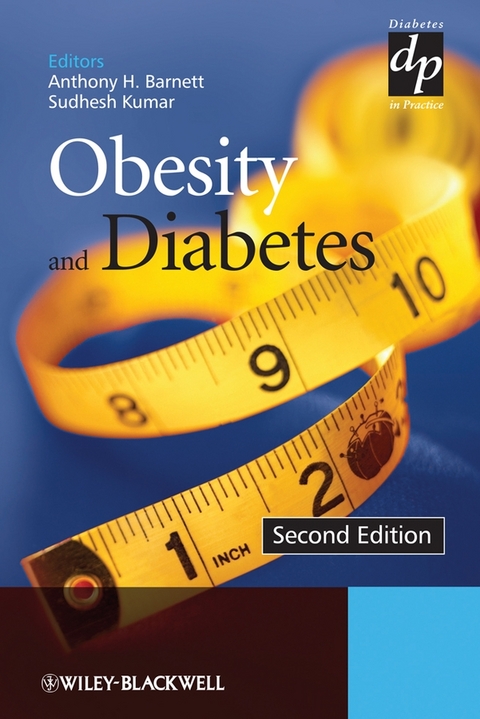
Obesity and Diabetes (eBook)
John Wiley & Sons (Verlag)
978-0-470-74148-1 (ISBN)
Part of the successful 'Diabetes in Practice' series, Obesity and Diabetes Second Edition focuses on the link between diabetes and obesity, two of the most pressing health problems in the developed world. It covers topics ranging from the changing epidemiology of type 2 diabetes to an analysis of the principal causes of the metabolic syndrome.
- Includes new chapters on obesity management in ethnic minorities and obesity issues in the workplace
- Features many suggestions of practical value
- Describes a contemporary approach to the clinical assessment of obesity and its management in both primary and secondary care settings
- Covers emerging problems such as childhood 'diabesity' and the impact of obesity on polycystic ovary syndrome
- All chapters have been updated
Obesity and Diabetes Second Edition addresses the management of obesity and diabetes in practical terms useful to clinicians with an interest in diabetes, both in primary and secondary care, general practitioners, paediatricians, endocrinologists and nutritionists, as well as to students and researchers interested in obesity.
Anthony H Barnett is Professor of Medicine, Consultant Physician and Clinical Director of Diabetes and Endocrinology at Birmingham Heartlands and Solihull Hospitals.
Type 2 diabetes, associated with obesity, is today the most common form of diabetes. It is also associated with a number of other cardiovascular risk factors which constitute the metabolic syndrome. Effective management of diabesity is crucial to the reduction of morbidity and premature morbidity due to cardiovascular disease. Part of the successful Diabetes in Practice series, Obesity and Diabetes Second Edition focuses on the link between diabetes and obesity, two of the most pressing health problems in the developed world. It covers topics ranging from the changing epidemiology of type 2 diabetes to an analysis of the principal causes of the metabolic syndrome. Includes new chapters on obesity management in ethnic minorities and obesity issues in the workplace Features many suggestions of practical value Describes a contemporary approach to the clinical assessment of obesity and its management in both primary and secondary care settings Covers emerging problems such as childhood diabesity and the impact of obesity on polycystic ovary syndrome All chapters have been updated Obesity and Diabetes Second Edition addresses the management of obesity and diabetes in practical terms useful to clinicians with an interest in diabetes, both in primary and secondary care, general practitioners, paediatricians, endocrinologists and nutritionists, as well as to students and researchers interested in obesity.
Anthony H Barnett is Professor of Medicine, Consultant Physician and Clinical Director of Diabetes and Endocrinology at Birmingham Heartlands and Solihull Hospitals.
Obesity and Diabetes 1
Contents 7
Foreword 13
Contributors 15
1 Changing epidemiology of obesity – implications for diabetes 19
1.1 Introduction 19
1.2 Assessment of obesity in epidemiological studies 19
1.3 Prevalence of obesity 20
1.4 The epidemiological link between obesity and diabetes 21
1.5 Factors modifying the relationship between obesity and diabetes 23
1.6 Early life influences on obesity and diabetes 26
1.7 Conclusions 27
References 27
2 The genetics of human obesity 31
2.1 Introduction 31
2.2 Why has the genetics of obesity been difficult to study? 32
2.3 How much of obesity is genetic? 33
2.4 Is there a major gene for obesity? 35
2.5 How to identify obesity genes 36
2.6 Summary and conclusions 46
References 46
3 Lifestyle determinants of obesity 49
3.1 The importance of energy balance 49
3.2 Physical activity 50
3.3 Energy intake 51
3.4 An integrated analysis 56
3.5 Conclusions 59
References 60
4 Pathophysiology of obesityinduced T2DM 65
4.1 Introduction 65
4.2 Potential mechanisms linking central obesity to T2DM 65
4.3 Sources of increased plasma NEFA in obesity 67
4.4 ‘Randle’s glucose-fatty acid’ hypothesis 67
4.5 Ectopic fat storage hypothesis 70
4.6 ‘Oxidative stress’ 71
4.7 The role of adipose tissue as an ‘endocrine organ’ in the pathogenesis of T2DM 72
4.8 Obesity as a low-grade inflammatory state 77
4.9 Summary 80
References 80
5 Obesity and prevention of type 2 diabetes 85
5.1 Obesity and the risk of type 2 diabetes 85
5.2 Lifestyle intervention studies 89
5.3 Other intervention studies 95
5.4 Conclusions 97
References 99
6 Diet and food-based therapies for obesity in diabetic patients 105
6.1 Introduction 105
6.2 Type 2 diabetes 105
6.3 Patterns of weight loss in diabetes 106
6.4 Target setting 107
6.5 Dietary and lifestyle alterations 108
6.6 Dietary nutrient composition in type 2 diabetes 108
6.7 The approach to dietary prescription 110
6.8 Failure of therapy 110
6.9 Fat or carbohydrate 111
6.10 Meal replacement therapy 114
6.11 Very low calorie diets 115
6.12 Conclusions 116
References 116
7 Behaviour change components of obesity treatment 121
7.1 Introduction 121
7.2 The ‘toxic environment’ 122
7.3 Motivational readiness 123
7.4 Patient expectations for treatment 124
7.5 Behavioural modification strategies in obesity treatment 124
7.6 Efficacy of combination treatments 131
7.7 Conclusions and future work 134
References 135
8 Physical activity, obesity and type 2 diabetes 143
8.1 Introduction 143
8.2 Physical activity and exercise, what is the difference? 143
8.3 Current physical activity behaviour and guidelines 144
8.4 The importance of physical activity to health 146
8.5 Energy expenditure 148
8.6 Exercise tolerance and cardiorespiratory fitness in overweight and obese adults and children 153
8.7 Guidelines for exercise and activity prescription (including practical issues of clinical management for diabetics and the obese) 154
8.8 Research evidence on the role of physical activity in the prevention and treatment of obesity and type 2 diabetes 156
8.9 Physical activity and the behavioural treatment of obesity 160
8.10 Linking research and practice 160
8.11 Summary 161
References 163
9 Diabetes, obesity and cardiovascular disease – therapeutic implications 169
9.1 Introduction 169
9.2 Obesity and mortality 170
9.3 Obesity and cardiovascular disease 170
9.4 Obesity and hypertension 172
9.5 Obesity and dyslipidaemia 173
9.6 Metabolic syndrome, obesity, type 2 diabetes and insulin resistance 174
9.7 Obesity and type 2 diabetes 177
9.8 Insulin resistance and cardiovascular disease 177
9.9 Type 2 diabetes and dyslipidaemia 180
9.10 Type 2 diabetes and hypertension 181
9.11 Type 2 diabetes and CHD 182
9.12 Benefits of weight loss 184
9.13 Management of hypertension 184
9.14 Management of dyslipidaemia 188
9.15 Conclusions 193
References 193
10 Drug therapy for the obese diabetic patient 203
10.1 Introduction 203
10.2 Drugs for hyperglycaemia 203
10.3 The role of anti-obesity drugs in diabetic management 209
10.4 Antihypertensive treatment 214
10.5 Use of other drugs that may cause weight gain 215
References 216
11 The role of metabolic surgery in the management of type 2 diabetes 221
11.1 Introduction 221
11.2 Obesity and type 2 diabetes 222
11.3 Surgical techniques 222
11.4 Resolution of diabetes after bariatric surgery 226
11.5 How could surgery ‘cure’ diabetes? 227
11.6 Conclusions 232
References 233
12 Childhood obesity and type 2 diabetes 239
12.1 Introduction 239
12.2 Childhood is a time of change 239
12.3 The problem of size 240
12.4 The size of the problem 241
12.5 What causes obesity in childhood? 243
12.6 Does obesity in childhood matter? 245
12.7 Management of childhood obesity 252
12.8 Management of T2DM 257
12.9 Conclusions 257
References 258
13 Obesity and PCOS 265
13.1 Definition of the syndrome 265
13.2 Genetics of PCOS 267
13.3 Scope of the chapter 268
13.4 Pathogenetic mechanisms underlying the relationship between obesity and PCOS 268
13.5 Clinical features of obese PCOS women 274
13.6 Treatment of obese women with PCOS 278
13.7 Conclusions 282
References 282
14 Management of diabesity in primary care: a multidisciplinary approach 291
14.1 Prevalence of obesity in primary care 291
14.2 Current approach to diabetes care in primary care 292
14.3 Early treatment with hypoglycaemic agents 292
14.4 Integrating obesity management with diabetes 293
14.5 A multidisciplinary approach 293
14.6 Dietary treatment of diabetes 293
14.7 Clinical assessment 295
14.8 Treatment groups 295
14.9 Physical activity 297
14.10 Behavioural change 298
14.11 Use of medication to aid weight loss in primary care 299
14.12 Summary 300
References 300
15 Obesity and employment 303
15.1 Introduction 303
15.2 Obesity, health and work 303
15.3 Effect of work on health 304
15.4 Shift work 305
15.5 Work and response to treatment 305
15.6 Effect of health on work 305
15.7 Sickness absence and short-term disability 306
15.8 Disability pensions 307
15.9 Is it reversible? 307
15.10 Accidents 307
15.11 Fitness for work and ergonomics 308
15.12 Medical standards 309
15.13 Rehabilitation 309
15.14 Stigma and discrimination 310
15.15 Health promotion 312
References 313
16 Obesity in different ethnic groups 317
16.1 Introduction – obesity and adiposity 317
16.2 Prevalence of obesity and its relationship with metabolic risk in various ethnic sub-groups 318
16.3 Conclusion 327
References 328
Index 335
"Obesity and Diabetes is an extremely useful, high quality reference book and does what it does effectively, educating clearly and comprehensively on the science of the conditions, with a highly eminent cast list." (Practical Diabetes International, May 2010)
| Erscheint lt. Verlag | 12.3.2009 |
|---|---|
| Reihe/Serie | Practical Diabetes |
| Wiley Diabetes in Practice Series | Wiley Diabetes in Practice Series |
| Sprache | englisch |
| Themenwelt | Sachbuch/Ratgeber ► Gesundheit / Leben / Psychologie |
| Medizinische Fachgebiete ► Innere Medizin ► Diabetologie | |
| Schlagworte | Cardiovascular • Common • crucial • diabesity • Diabetes • Disease • Due • Edition • Effective • endocrinology • Endokrinologie • Factors • Fettleibigkeit • Form • Link • Medical Science • Medizin • metabolic • Metabolic disease • Morbidity • Number • Obesity • Part • Practice • premature • reduction • Risk • Second • series • Stoffwechselkrankheiten • Successful • syndrome |
| ISBN-10 | 0-470-74148-1 / 0470741481 |
| ISBN-13 | 978-0-470-74148-1 / 9780470741481 |
| Informationen gemäß Produktsicherheitsverordnung (GPSR) | |
| Haben Sie eine Frage zum Produkt? |
 PDF (Adobe DRM)
Kopierschutz: Adobe-DRM
Adobe-DRM ist ein Kopierschutz, der das eBook vor Mißbrauch schützen soll. Dabei wird das eBook bereits beim Download auf Ihre persönliche Adobe-ID autorisiert. Lesen können Sie das eBook dann nur auf den Geräten, welche ebenfalls auf Ihre Adobe-ID registriert sind.
Details zum Adobe-DRM
Dateiformat: PDF (Portable Document Format)
Mit einem festen Seitenlayout eignet sich die PDF besonders für Fachbücher mit Spalten, Tabellen und Abbildungen. Eine PDF kann auf fast allen Geräten angezeigt werden, ist aber für kleine Displays (Smartphone, eReader) nur eingeschränkt geeignet.
Systemvoraussetzungen:
PC/Mac: Mit einem PC oder Mac können Sie dieses eBook lesen. Sie benötigen eine
eReader: Dieses eBook kann mit (fast) allen eBook-Readern gelesen werden. Mit dem amazon-Kindle ist es aber nicht kompatibel.
Smartphone/Tablet: Egal ob Apple oder Android, dieses eBook können Sie lesen. Sie benötigen eine
Geräteliste und zusätzliche Hinweise
Buying eBooks from abroad
For tax law reasons we can sell eBooks just within Germany and Switzerland. Regrettably we cannot fulfill eBook-orders from other countries.
aus dem Bereich


