Starguard
Human Kinetics (Verlag)
978-0-7360-9835-9 (ISBN)
- Titel erscheint in neuer Auflage
- Artikel merken
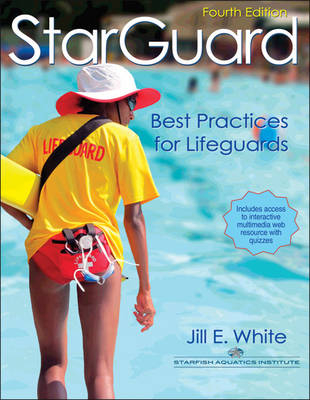
Focusing on specific strategies for decision making, StarGuard: Best Practices for Lifeguards, Fourth Edition, offers an integrated approach to lifeguard training:
- Strategies for reducing risk at recreational aquatic venues
- Strategies for identifying distress and drowning
- Physical and decision-making skills necessary for response and rescue, including details on performing land-based assists and water-based rescues
- Emergency care skills necessary in the event of a drowning, injury, or illness, including suspected spinal injuries
- Adapting lifeguarding skills to special situations, such as single-guard facilities, wilderness settings, special events, or working with disabled individuals
- Expectations for professional behavior and performance
- Strategies for minimizing the risk of workplace injury
The updated fourth edition contains the latest research on best practices in lifeguarding and lifesaving, including the most current CPR/AED and first aid content based on the American Heart Association 2010 Guidelines for Cardiopulmonary Resuscitation and Emergency Cardiovascular Care. Readers will also find new information on victim recognition, when and how to initiate a systematic method of emergency response, adapting CPR and rescue skills for an unresponsive drowning victim, and workplace safety. Integrating each of these components into an experiential methodology of training lifeguards is a hallmark of the StarGuard certification program.
The fourth edition also includes several new and improved learning features. Learning objectives appear at the beginnng of each chapter, and key skills and knowledge are highlighted in Best Practices sidebars throughout the text. Skill guides with clear descriptions and photos offer a concise reference for the proper performance of the physical skills of lifeguarding. Knowledge Into Practice sections assist readers in applying concepts in on-the-job situations. In addition, readers can learn more about key competency requirements and performance expectations in each chapter's On the Job section. Also accompanying the text is a new web resource containing over 80 interactive multimedia learning activities to assist readers in developing their knowledge. A list of chapter-related learning activities in the web resource concludes each chapter.
From surveillance techniques to prevention and emergency care, StarGuard: Best Practices for Lifeguards, Fourth Edition, covers all aspects of lifeguarding in an easy-to-understand format. Together, the textbook, online resource, and hands-on training course prepare lifeguards with the decision-making, emergency response, first aid, and lifesaving skills necessary for preventing water emergencies and saving lives.
Jill E. White founded the Starfish Aquatics Institute in 1999 with the mission to reduce drowning and save lives by providing reputable, responsive aquatic safety training programs to the public. She has consistently been named one of the Top 25 Most Influential People in Aquatics by Aquatics International magazine. In 2010 she received the prestigious Al Turner Memorial Commitment to Excellence Award from the World Waterpark Association. White has authored textbooks on lifeguarding, lifeguarding instruction, and swim instruction for the National Safety Council, Jeff Ellis & Associates, and the American Safety & Health Institute and served as the aquatic education division director for Human Kinetics. She has firsthand experience in training, supervising, and managing lifeguards and has taught thousands of lifeguards and hundreds of lifeguarding instructors. White has collaborated in drowning prevention and standards development initiatives and is a frequent speaker at national and international industry conferences. White enjoys reading, hiking, and aquatic sports. She lives in Savannah, Georgia, with her husband, Robbin.
Part I. Prevention Strategy Chapter 1. Foundation of Best Practices Identifying What Is Important in Saving Lives Misconceptions About Lifeguarding The Need for Best Practices in Lifeguarding The Need for Best Practices from Management and Patrons Chapter 2. Reducing the Risk at an Aquatic Facility StarGuard Risk Management Model Prevention Strategy Layers of Protection Controlling High-Risk Behaviors Minimizing the Risk of Injury Enforcing Rules and Policies Identifying Threatening Behaviors Performing Lifeguard Interventions Chapter 3. Managing Bloodborne and Recreational Water Illness Disease Transmission and Swimming Pools Bloodborne Pathogens Reducing Exposure to Bloodborne Pathogens Recreational Water Illness and Waterborne Pathogens Reducing Exposure to Waterborne Pathogens Part II. Surveillance Chapter 4. Recognizing Distress and Drowning Distress Drowning Process Victim Recognition How the Water Hides Drowning Victims Chapter 5. Looking for Distress and Drowning Observation Skills The RID factor Zones The StarGuard Scanning Model Strategies for Improving Vigilance Proactive Rotations Drowning Detection Technology Part III. Response and Rescue Chapter 6. Deciding to Act and Emergency Response Legal Considerations Legal Liability Responder Chain of Command Emergency Action Plans STAAR Aquatic Rescue Model Early Activation of Emergency Medical Services When to Call EMS for Help Deciding to Act What to Expect When You Call 9-1-1 in the United States Crowd and Bystander Management in an Emergency Situation Activating the Emergency Action Plan for a Water Rescue Chapter 7. Performing Assists and Rescues for Responsive Drowning Victims Rescue Equipment Land-Based Assists Water Entry Water Rescue on the Surface Water Rescue Under the Surface Special-Situation Rescues After the Rescue Part IV. Emergency Care Chapter 8. Managing Aquatic Spinal Injuries Mechanisms of Injury and Symptoms Managing a Spinal Injury on Land Managing a Spinal Injury in the Water In-Line Stabilization Backboarding Equipment Preparing to Backboard Backboarding and Extrication Objectives Chapter 9. Performing Basic First Aid Primary Assessment Secondary Assessment Recovery Positions and Protecting the Airway Control of Bleeding and Managing Shock Wounds Facial Injuries Bone, Joint, and Muscle Injuries Illness and Altered Mental Status Breathing Difficulty or Shortness of Breath Severe Abdominal Pain Burns Poisoning Bites and Stings Exposure to Heat Exposure to Cold Triage for Catastrophic Events Emergency Moves Chapter 10. Performing CPR and Using an AED for Professional Rescuers Basic Life Support Treatment for Sudden Cardiac Arrest (SCA) Rescue Breathing for an Unresponsive Person With a Pulse Special Conditions for CPR Choking (Foreign-Body Airway Obstruction) Chapter 11. Performing Rescues and Lifeguard CPR for Unresponsive Drowning Victims Rescue of a Unresponsive Victim Extrication Special Considerations for Drowning Victims Integrating Adjunct Equipment Transferring to EMS Coping With Emotional Distress After the Incident Part V. Workplace Environment Chapter 12. Facilitating Workplace Safety Minimizing the Risk of Workplace Injury Health Considerations Chapter 13. Meeting Workplace Expectations Projecting a Professional Image In-Service Training and Fitness Accountability Judgment Skills What to Expect From Your Employer What Your Employer Will Expect From You Chapter 14. Considering Site- and Situation-Specific Considerations Single-Lifeguard Facilities Lifeguarding People With Disabilities Lifeguarding Special Events and Programs Lifeguarding Outside the Workplace Lifeguarding in Wilderness Settings Chapter 15. Lifeguarding at Water Parks and Similar Spaces Water-Park Features Facilities Similar to Water Parks Prevention Strategy at Water Parks Surveillance Strategy at Water Parks Response, Rescue, and Emergency Care at Water Parks Water-Park Workplace Expectations Chapter 16. Lifeguarding at Nonsurf Waterfronts Waterfront Features Prevention Strategy at Waterfronts Surveillance Strategy for Waterfronts Response, Rescue, and Emergency Care at Waterfronts Waterfront Workplace Expectations
| Zusatzinfo | 8 black & white illustrations, 251 black & white halftones |
|---|---|
| Verlagsort | Champaign, IL |
| Sprache | englisch |
| Themenwelt | Sachbuch/Ratgeber ► Sport ► Segeln / Tauchen / Wassersport |
| ISBN-10 | 0-7360-9835-6 / 0736098356 |
| ISBN-13 | 978-0-7360-9835-9 / 9780736098359 |
| Zustand | Neuware |
| Informationen gemäß Produktsicherheitsverordnung (GPSR) | |
| Haben Sie eine Frage zum Produkt? |
aus dem Bereich