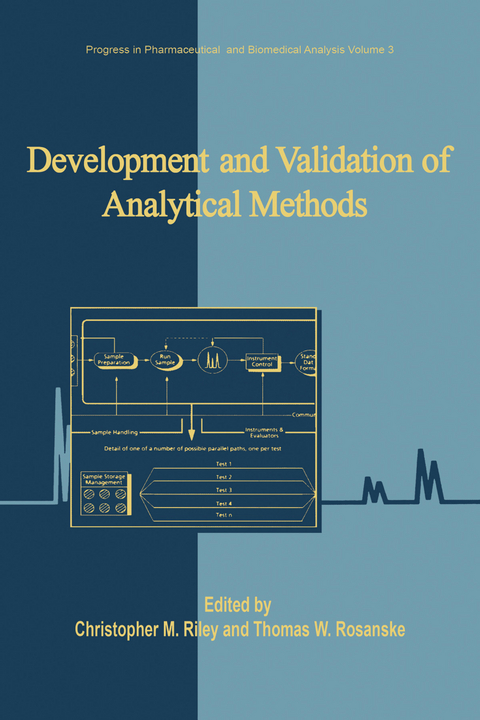
Development and Validation of Analytical Methods (eBook)
349 Seiten
Elsevier Science (Verlag)
978-0-08-053035-2 (ISBN)
The book is divided into three parts. Part One, comprising two chapters, looks at some of the basic concepts of method validation. Chapter 1 discusses the general concept of validation and its role in the process of transferring methods from laboratory to laboratory. Chapter 2 looks at some of the critical parameters included in a validation program and the various statistical treatments given to these parameters.
Part Two (Chapters 3, 4 and 5) of the book focuses on the regulatory perspective of analytical validation. Chapter 3 discusses in some detail how validation is treated by various regulatory agencies around the world, including the United States, Canada, the European Community, Australia and Japan. This chapter also discusses the International Conference on Harmonization (ICH) treatment of assay validation. Chapters 4 and 5 cover the issues and various perspectives of the recent United States vs. Barr Laboratories Inc. case involving the retesting of samples.
Part Three (Chapters 6 - 12) covers the development and validation of various analytical components of the pharmaceutical product development process. This part of the book contains specific chapters dedicated to bulk drug substances and finished products, dissolution studies, robotics and automated workstations, biotechnology products, biological samples, analytical methods for cleaning procedures and computer systems and computer-aided validation. Each chapter goes into some detail describing the critical development and related validation considerations for each topic.
This book is not intended to be a practical description of the analytical validation process, but more of a guide to the critical parameters and considerations that must be attended to in a pharmaceutical development program. Despite the existence of numerous guidelines including the recent attempts by the ICH to be implemented in 1998, the practical part of assay validation will always remain, to a certain extent, a matter of the personal preference of the analyst or company. Nevertheless, this book brings together the perspectives of several experts having extensive experience in different capacities in the pharmaceutical industry in an attempt to bring some consistency to analytical method development and validation.
The need to validate an analytical or bioanalytical method is encountered by analysts in the pharmaceutical industry on an almost daily basis, because adequately validated methods are a necessity for approvable regulatory filings. What constitutes a validated method, however, is subject to analyst interpretation because there is no universally accepted industry practice for assay validation. This book is intended to serve as a guide to the analyst in terms of the issues and parameters that must be considered in the development and validation of analytical methods. In addition to the critical issues surrounding method validation, this book also deals with other related factors such as method development, data acquisition, automation, cleaning validation and regulatory considerations. The book is divided into three parts. Part One, comprising two chapters, looks at some of the basic concepts of method validation. Chapter 1 discusses the general concept of validation and its role in the process of transferring methods from laboratory to laboratory. Chapter 2 looks at some of the critical parameters included in a validation program and the various statistical treatments given to these parameters.Part Two (Chapters 3, 4 and 5) of the book focuses on the regulatory perspective of analytical validation. Chapter 3 discusses in some detail how validation is treated by various regulatory agencies around the world, including the United States, Canada, the European Community, Australia and Japan. This chapter also discusses the International Conference on Harmonization (ICH) treatment of assay validation. Chapters 4 and 5 cover the issues and various perspectives of the recent United States vs. Barr Laboratories Inc. case involving the retesting of samples. Part Three (Chapters 6 - 12) covers the development and validation of various analytical components of the pharmaceutical product development process. This part of the book contains specific chapters dedicated to bulk drug substances and finished products, dissolution studies, robotics and automated workstations, biotechnology products, biological samples, analytical methods for cleaning procedures and computer systems and computer-aided validation. Each chapter goes into some detail describing the critical development and related validation considerations for each topic.This book is not intended to be a practical description of the analytical validation process, but more of a guide to the critical parameters and considerations that must be attended to in a pharmaceutical development program. Despite the existence of numerous guidelines including the recent attempts by the ICH to be implemented in 1998, the practical part of assay validation will always remain, to a certain extent, a matter of the personal preference of the analyst or company. Nevertheless, this book brings together the perspectives of several experts having extensive experience in different capacities in the pharmaceutical industry in an attempt to bring some consistency to analytical method development and validation.
Cover 1
Development and Validation of Analytical Methods 2
Copyright Page 5
Table of Contents 6
List of Contributors 8
Introduction 10
Part One: Basic Concepts 12
Chapter 1. Assay Validation and Inter-laboratory Transfer 14
Chapter 2. Statistical Parameters and Analytical Figures of Merit 26
Part Two: Regulatory Considerations 84
Chapter 3. Overview of Worldwide Regulations 86
Chapter 4. Issues Related to United States v. Barr Laboratories Inc. 112
Chapter 5. Judge Wolin's Interpretations of Current Good Manufacturing Practice Issues Contained in the Court's Ruling in the United States v. Barr Laboratories 130
Part Three: Specific Methods and Applications 144
Chapter 6. Bulk Drug Substances and Finished Products 146
Chapter 7. Dissolution Studies 180
Chapter 8. Robotics and Automated Workstations 196
Chapter 9. Biotechnology Products 220
Chapter 10. Biological Samples 260
Chapter 11. Analytical Methods for Cleaning Procedures 304
Chapter 12. Computer Systems and Computer-aided Validation 314
Index 350
| Erscheint lt. Verlag | 29.5.1996 |
|---|---|
| Sprache | englisch |
| Themenwelt | Sachbuch/Ratgeber |
| Medizin / Pharmazie ► Pharmazie | |
| Naturwissenschaften ► Biologie ► Biochemie | |
| Naturwissenschaften ► Chemie ► Analytische Chemie | |
| Naturwissenschaften ► Chemie ► Organische Chemie | |
| Technik ► Umwelttechnik / Biotechnologie | |
| Wirtschaft | |
| ISBN-10 | 0-08-053035-4 / 0080530354 |
| ISBN-13 | 978-0-08-053035-2 / 9780080530352 |
| Informationen gemäß Produktsicherheitsverordnung (GPSR) | |
| Haben Sie eine Frage zum Produkt? |
 PDF (Adobe DRM)
Kopierschutz: Adobe-DRM
Adobe-DRM ist ein Kopierschutz, der das eBook vor Mißbrauch schützen soll. Dabei wird das eBook bereits beim Download auf Ihre persönliche Adobe-ID autorisiert. Lesen können Sie das eBook dann nur auf den Geräten, welche ebenfalls auf Ihre Adobe-ID registriert sind.
Details zum Adobe-DRM
Dateiformat: PDF (Portable Document Format)
Mit einem festen Seitenlayout eignet sich die PDF besonders für Fachbücher mit Spalten, Tabellen und Abbildungen. Eine PDF kann auf fast allen Geräten angezeigt werden, ist aber für kleine Displays (Smartphone, eReader) nur eingeschränkt geeignet.
Systemvoraussetzungen:
PC/Mac: Mit einem PC oder Mac können Sie dieses eBook lesen. Sie benötigen eine
eReader: Dieses eBook kann mit (fast) allen eBook-Readern gelesen werden. Mit dem amazon-Kindle ist es aber nicht kompatibel.
Smartphone/Tablet: Egal ob Apple oder Android, dieses eBook können Sie lesen. Sie benötigen eine
Geräteliste und zusätzliche Hinweise
Buying eBooks from abroad
For tax law reasons we can sell eBooks just within Germany and Switzerland. Regrettably we cannot fulfill eBook-orders from other countries.
aus dem Bereich