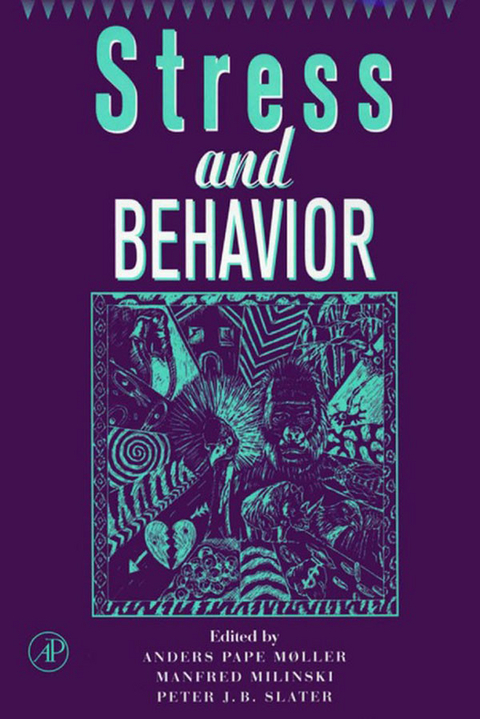
Advances in the Study of Behavior (eBook)
552 Seiten
Elsevier Science (Verlag)
9780080582887 (ISBN)
Advances in the Study of Behavior continues to serve scientists across a wide spectrum of disciplines. Focusing on new theories and research developments with respect to behavioral ecology, evolutionarybiology, and comparative psychology, these volumes foster cooperation and communication in these diverse fields.
Front Cover 1
Stress and Behavior 4
Copyright Page 5
Contents 6
Contributors 10
Preface 12
Introduction 14
Chapter 1. The Concept of Stress and Its Relevance for Animal Behavior 18
I. Introduction 18
II. The Concept of Stress 19
III. Social Stress in Mammals 59
IV. Summary 123
References 126
Chapter 2. Stress and Immune Response 150
I. Introduction 150
II. The Nature of Stress 151
III. The Nature of Immunocompetence 153
IV. Neurological Linking of Stress and Immunocompetence 157
V. Endocrine Linkage of Stress and Immunocompetence 159
Vl. Why Stress Alters Immunocompetence 162
VII. Summary 166
References 167
Chapter 3. Behavioral Variability and Limits to Evolutionary Adaptation under Stress 172
I. Introduction 172
II. Energy Limits to Adaptation 175
III. Variability and the Survival of Variants 181
IV. Extending the Limits of Adaptation 182
V. From Stress-Resistance Genotypes to a Connected Metabolism 186
VI. Summary 191
References 191
Chapter 4. Developmental Instability as a General Measure of Stress 198
I. Introduction 198
II. Genetic and Environmental Determinants of Developmental Instability 203
III. Directional Selection and Developmental Instability 207
IV. Fitness Correlates of Developmental Instability 209
V. Practical Uses of Developmental Instability 210
VI. Conclusions and Prospects for Future Studies 223
VII. Summary 225
References 225
Chapter 5. Stress and Decision-Making under the Risk of Predation: Recent Developments from Behavioral, Reproductive, and Ecological Perspectives 232
I. Introduction 232
II. Behavior of Feeding Animals: Classical Motivations 234
III. Patterns of Activity 242
IV. After an Encounter with a Predator 252
V. Social Situations 256
VI. Reproduction 258
VII. Long-Term Consequences of Decision Making 262
VIII. Ecological Influences and Implications 265
IX. Additional Considerations 278
X. Conclusions and Summary 281
References 282
Chapter 6. Parasitic Stress and Self-Medication in Wild Animals 308
I. Introduction 308
II. Self-Medication 310
III. Prophylactic Self Medication 311
IV. Therapeutic Self-Medication 315
V. Skepticism 320
VI. Behavioral Mechanisms 321
VII. Implications 325
VIII. Summary and Conclusions 327
References 328
Chapter 7. Stress and Human Behavior: Attractiveness, Women’s Sexual Development, Postpartum Depression, and Baby’s Cry 336
I. Introduction 336
II. Human Attraction and Attractiveness 338
III. Parent–Daughter Relations and Women’s Sexual Behavior 349
IV. Postpartum Depression 358
V. Infant Crying as a Signal of Phenotypic Quality 369
VI. Summary 373
References 376
Chapter 8. Welfare, Stress, and the Evolution of Feelings 388
I. Feelings, Their Role and Their Evolution 388
II. Welfare, Stress, and Feelings 411
III. Summary 417
References 418
Chapter 9. Biological Conservation and Stress 422
I. Introduction 422
II. Stress in a Conservation Biology Context 424
III. Designing a Conservation Study to Measure Stress and Its Impact 437
IV. The Natural History of Stress 445
V. Effects of Anthropogenic Stressors 469
VI. Conservation Research and Management Activities as Stressors 490
VII. The Equivalence of Natural and Anthropogenic Stressors 503
VIII. Minimizing Occurrence and Impact of Stress in Conservation Research and Management 505
IX. Conclusions: How Important Is Stress in Biological Conservation? 511
X. Summary 513
References 514
Index 544
Contents of Previous Volumes 566
| Erscheint lt. Verlag | 14.5.1998 |
|---|---|
| Mitarbeit |
Herausgeber (Serie): Milinski Manfred, Anders Pape Moller, Peter J.B. Slater |
| Sprache | englisch |
| Themenwelt | Sachbuch/Ratgeber |
| Geisteswissenschaften ► Psychologie ► Allgemeine Psychologie | |
| Geisteswissenschaften ► Psychologie ► Biopsychologie / Neurowissenschaften | |
| Geisteswissenschaften ► Psychologie ► Klinische Psychologie | |
| Geisteswissenschaften ► Psychologie ► Verhaltenstherapie | |
| Geisteswissenschaften ► Sprach- / Literaturwissenschaft ► Sprachwissenschaft | |
| Naturwissenschaften ► Biologie ► Humanbiologie | |
| Naturwissenschaften ► Biologie ► Zoologie | |
| ISBN-13 | 9780080582887 / 9780080582887 |
| Informationen gemäß Produktsicherheitsverordnung (GPSR) | |
| Haben Sie eine Frage zum Produkt? |
 PDF (Adobe DRM)
Kopierschutz: Adobe-DRM
Adobe-DRM ist ein Kopierschutz, der das eBook vor Mißbrauch schützen soll. Dabei wird das eBook bereits beim Download auf Ihre persönliche Adobe-ID autorisiert. Lesen können Sie das eBook dann nur auf den Geräten, welche ebenfalls auf Ihre Adobe-ID registriert sind.
Details zum Adobe-DRM
Dateiformat: PDF (Portable Document Format)
Mit einem festen Seitenlayout eignet sich die PDF besonders für Fachbücher mit Spalten, Tabellen und Abbildungen. Eine PDF kann auf fast allen Geräten angezeigt werden, ist aber für kleine Displays (Smartphone, eReader) nur eingeschränkt geeignet.
Systemvoraussetzungen:
PC/Mac: Mit einem PC oder Mac können Sie dieses eBook lesen. Sie benötigen eine
eReader: Dieses eBook kann mit (fast) allen eBook-Readern gelesen werden. Mit dem amazon-Kindle ist es aber nicht kompatibel.
Smartphone/Tablet: Egal ob Apple oder Android, dieses eBook können Sie lesen. Sie benötigen eine
Geräteliste und zusätzliche Hinweise
Buying eBooks from abroad
For tax law reasons we can sell eBooks just within Germany and Switzerland. Regrettably we cannot fulfill eBook-orders from other countries.
aus dem Bereich