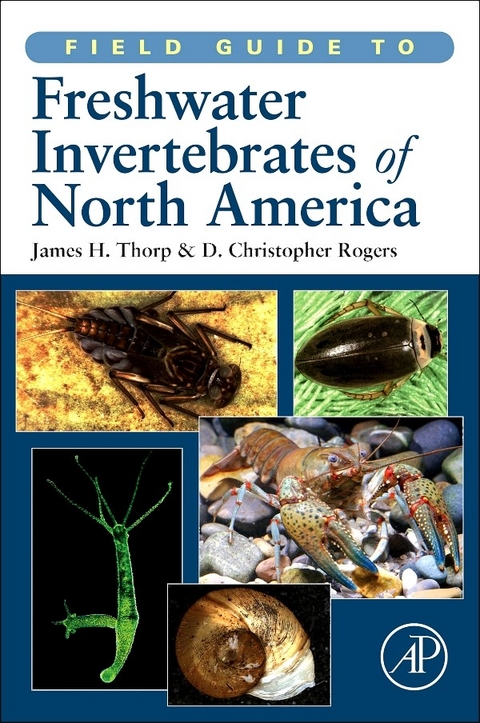
Field Guide to Freshwater Invertebrates of North America (eBook)
304 Seiten
Elsevier Science (Verlag)
978-0-12-381427-2 (ISBN)
The Field Guide to Freshwater Invertebrates of North America focuses on freshwater invertebrates that can be identified using at most an inexpensive magnifying glass. This Guide will be useful for experienced nature enthusiasts, students doing aquatic field projects, and anglers looking for the best fish bait, lure, or fly. Color photographs and art, as well as the broad geographic coverage, set this guide apart. - 362 color photographs and detailed descriptions aid in the identification of species- Introductory chapters instruct the reader on how to use the book, different inland water habitats and basic ecological relationships of freshwater invertebrates- Broad taxonomic coverage is more comprehensive than any guide currently available
Cover 1
Field Guide to Freshwater Invertebrates of North America 2
Copyright 5
Contents 8
Preface 18
Acknowledgments 20
Biographic Sketches of the Authors 22
Photograph Credits 24
Part1 Introduction 28
1. Using This Book Effectively 30
I. Introduction to This Field Guide 30
II. How Invertebrates are Classified 31
III. A Cautionary Note 33
2. General Techniques for Collecting and Identification 34
I. Finding, Collecting, and Culturing Aquatic Invertebrates 34
II. How to Use a Dichotomous Key 41
III. Introductory Taxonomic Key for Invertebrates and Chapter Guide 42
Part II General Ecology of Freshwater Invertebrates 44
3. The Nature of Inland Water Habitats 46
I. Introduction 46
II. Lotic Environments—Creeks and Rivers 46
III. Subterranean Habitats: Hyporheic Zone and Cave Environments 52
IV. Lentic Ecosystems 54
4. A Primer on Ecological Relationships amongFreshwater Invertebrates 64
I. Introduction 64
II. Physiological Ecology 64
III. Organismal and Population Ecology 67
IV. Community Ecology 54
Part III Ecology and Identification of Specific Taxa 74
5. Sponges: Phylum Porifera 76
I. Introduction, Diversity, and Distribution 76
II. Form and Function 76
III. Ecology, Behavior, and Environmental Biology 77
IV. Collection and Culturing 78
V. Representative Taxa of Freshwater Sponges: Phylum Porifera 79
6. Hydra and Jellyfish: Phylum Cnidaria 80
I. Introduction, Diversity, and Distribution 80
II. Form and Function 80
III. Ecology, Behavior, and Environmental Biology 77
IV. Collection and Culturing 78
V. Representative Taxa: Phylum Cnidaria 79
7. Flatworms: Phylum Platyhelminthes, Class Turbellaria 84
I. Introduction, Diversity, and Distribution 84
II. Form and Function 85
III. Ecology, Behavior, and Environmental Biology 85
IV. Collection and Culturing 86
V. Representative Taxa of Flatworms: Class Turbellaria 87
8. Hairworms: Phylum Nematomorpha 88
I. Introduction, Diversity, and Distribution 88
II. Form and Function 88
III. Ecology, Behavior, and Environmental Biology 89
IV. Collection and Culturing 89
V. Representative Taxa of Hairworms: Phylum Nematomorpha 90
9. Snails: Phylum Mollusca, Class Gastropoda 92
I. Introduction, Diversity, and Distribution 92
II. Form and Function 94
III. Ecology, Behavior, and Environmental Biology 96
IV. Collection and Culturing 98
V. Representative Taxa of Snails and Limpets: Class Gastropoda 99
10. Mussels and Clams: Phylum Mollusca, Class Bivalvia 110
I. Introduction, Diversity, and Distribution 110
II. Form and Function 112
III. Ecology, Behavior, and Environmental Biology 114
IV. Collection and Culturing 115
V. Representative Taxa of Clams and Mussels: Class Bivalvia 117
11. Aquatic Segmented Worms and Leeches: Phylum Annelida 124
I. Introduction to the Phylum Annelida 124
II. Form and Function 124
III. Ecology, Behavior, and Environmental Biology 125
IV. Collection and Culturing 126
V. Representative Taxa of Aquatic Earthworms and Leeches:Phylum Annelida 128
12. Moss Animals: Phylum Ectoprocta, or Bryozoa 132
I. Introduction, Diversity, and Distribution 132
II. Form and Function 133
III. Ecology, Behavior, and Environmental Biology 134
IV. Collection and Culturing 134
V. Representative Taxa of Moss Animals or Bryozoans: Phylum Ectoprocta 135
13. Introduction to Freshwater Invertebrates in thePhylum Arthropoda 136
I. Introduction to the Phylum 136
II. Form and Function 138
III. Ecology, Behavior, and Environmental Biology 139
IV. Collection and Culturing 140
V. Taxonomic Key to the Phylum Arthropoda 140
14. Mites and Spiders: Subphylum Chelicerata, Class Arachnida 148
I. Introduction to the Subphylum 148
II. Form and Function 149
III. Ecology, Behavior, and Environmental Biology 150
IV. Collection and Culturing 151
V. Representative Taxa of Mites and Spiders: Class Arachnida 152
15. Fairy Shrimp, Tadpole Shrimp, Clam Shrimp, and Water Fleas:Subphylum Crustacea, Class Branchiopoda 154
I. Introduction to the Class Branchiopoda 154
II. Form and Function 155
III. Ecology, Behavior, and Environmental Biology 157
IV. Collection and Culturing 159
V. Representative Taxa in the Class Branchiopoda 160
16. Copepods, Fish Lice, and Seed Shrimp: SubphylumCrustacea, Classes Maxillopoda and Ostracoda 166
I. Introduction to Copepods, Fish Lice, and Seed Shrimp 166
II. Form and Function 167
III. Ecology, Behavior, and Environmental Biology 168
IV. Collection and Culturing 169
V. Representative Taxa of Copepods, Fish Lice, and Seed Shrimps:Classes Maxillopoda and Ostracoda 171
17. Aquatic Sow Bugs, Scuds, and Opossum Shrimp: SubphylumCrustacea, Class Malacostraca, Superorder Peracarida 174
I. Introduction 174
II. Form and Function 175
III. Ecology, Behavior, and Environmental Biology 176
IV. Collection and Culturing 177
V. Representative Taxa of Sow Bugs, Scuds, and Opossum Shrimps:Class Malacostraca, Superorder Peracarida 178
18. Crayfish, Crabs, and Shrimp: Subphylum Crustacea, ClassMalacostraca, Order Decapoda 184
I. Introduction to the Order Decapoda 184
II. Form and Function 186
III. Ecology, Behavior, and Environmental Biology 187
IV. Collection and Culturing 187
V. Representative Taxa of Crayfish, Shrimp, and Crabs: Order Decapoda 189
19. Introduction to Insects and their Near Relatives:Subphylum Hexapoda 196
I. Introduction to the Subphylum Hexapoda 196
II. Form and Function 197
III. Ecology, Behavior, and Environmental Biology 198
IV. Collection and Culturing 198
V. Taxonomic Key 199
VI. Representative TAXA 202
20. Mayflies: Insect Order Ephemeroptera 206
I. Introduction to the Order Ephemeroptera 206
II. Form and Function 206
III. Ecology, Behavior, and Environmental Biology 207
IV. Collection and Culturing 208
V. Representative Taxa of Mayflies: Order Ephemeroptera 209
21. Dragonflies and Damselflies: Insect Order Odonata 218
I. Introduction to the Order Odonata 218
II. Form and Function 218
III. Ecology, Behavior, and Environmental Biology 219
IV. Collection and Culturing 220
V. Representative Taxa of Dragonflies and Damselflies: Order Odonata 221
22. Stoneflies: Insect Order Plecoptera 226
I. Introduction to the Order Plecoptera 226
II. Form and Function 226
III. Ecology, Behavior, and Environmental Biology 228
IV. Collection and Culturing 228
V. Representative Taxa of Stoneflies: Order Plecoptera 229
23. True Bugs: Insect Order Hemiptera 232
I. Introduction to the Order Hemiptera 232
II. Form and Function 233
III. Ecology, Behavior, and Environmental Biology 234
IV. Collection and Culturing 235
V. Representative Taxa of True Bugs: Order Hemiptera 236
24. Hellgrammites, Spongillaflies, Caterpillars, and Others:Minor Aquatic Insect Orders 240
I. Introduction to Three Orders 240
II. Form and Function 241
III. Ecology, Behavior, and Environmental Biology 242
IV. Collection and Culturing 242
V. Representative Taxa of Hellgrammites, Spongillaflies, and Aquatic Moths 244
25. Caddisflies: Insect Order Trichoptera 246
I. Introduction to Trichoptera 246
II. Form and Function 247
III. Ecology, Behavior, and Environmental Biology 248
IV. Collection and Culturing 248
V. Representative Taxa of Caddisflies: Order Trichoptera 250
26. Beetles: Insect Order Coleoptera 256
I. Introduction to the Order Coleoptera 256
II. Form and Function 256
III. Ecology, Behavior, and Environmental Biology 257
IV. Collection and Culturing 258
V. Representative Taxa of Aquatic Beetles: Order Coleoptera 259
27. Midges, Mosquitoes, Blackflies, and Other True Flies:Insect Order Diptera 274
I. Introduction to the Order Diptera 274
II. Form and Function 274
III. Ecology, Behavior, and Environmental Biology 275
IV. Collection and Culturing 276
V. Representative Taxa of Aquatic Flies: Order Diptera 278
Glossary 288
References 290
Index 294
| Erscheint lt. Verlag | 15.11.2010 |
|---|---|
| Sprache | englisch |
| Themenwelt | Sachbuch/Ratgeber ► Natur / Technik ► Naturführer |
| Naturwissenschaften ► Biologie ► Ökologie / Naturschutz | |
| Naturwissenschaften ► Biologie ► Zoologie | |
| Technik | |
| ISBN-10 | 0-12-381427-8 / 0123814278 |
| ISBN-13 | 978-0-12-381427-2 / 9780123814272 |
| Informationen gemäß Produktsicherheitsverordnung (GPSR) | |
| Haben Sie eine Frage zum Produkt? |
 EPUB (Adobe DRM)
Kopierschutz: Adobe-DRM
Adobe-DRM ist ein Kopierschutz, der das eBook vor Mißbrauch schützen soll. Dabei wird das eBook bereits beim Download auf Ihre persönliche Adobe-ID autorisiert. Lesen können Sie das eBook dann nur auf den Geräten, welche ebenfalls auf Ihre Adobe-ID registriert sind.
Details zum Adobe-DRM
Dateiformat: EPUB (Electronic Publication)
EPUB ist ein offener Standard für eBooks und eignet sich besonders zur Darstellung von Belletristik und Sachbüchern. Der Fließtext wird dynamisch an die Display- und Schriftgröße angepasst. Auch für mobile Lesegeräte ist EPUB daher gut geeignet.
Systemvoraussetzungen:
PC/Mac: Mit einem PC oder Mac können Sie dieses eBook lesen. Sie benötigen eine
eReader: Dieses eBook kann mit (fast) allen eBook-Readern gelesen werden. Mit dem amazon-Kindle ist es aber nicht kompatibel.
Smartphone/Tablet: Egal ob Apple oder Android, dieses eBook können Sie lesen. Sie benötigen eine
Geräteliste und zusätzliche Hinweise
Buying eBooks from abroad
For tax law reasons we can sell eBooks just within Germany and Switzerland. Regrettably we cannot fulfill eBook-orders from other countries.
aus dem Bereich