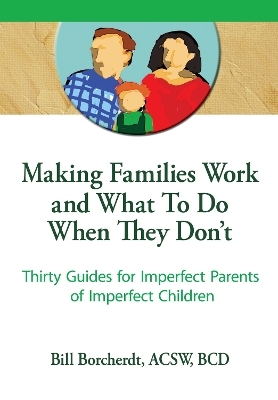
Making Families Work and What To Do When They Don't
Routledge (Verlag)
978-0-7890-0073-6 (ISBN)
- Titel z.Zt. nicht lieferbar
- Versandkostenfrei
- Auch auf Rechnung
- Artikel merken
individuals are active participants in creating their own emotional problems and disturbances
people exaggerate the significance of past family disturbances
emotional slack and fewer unrealistic demands of self and others leads to a happier family
family members often disturb themselves unnecessarily by escalating family values into sacred demands
families don't shape character, they reveal itUnlike other books about family living, Making Families Work and What To Do When They Don't analyzes the dysfunctional ideas that family members hold about themselves and others rather than the dysfunctional relationships that naturally exist between fallible human beings. In this guidebook, readers learn creative, new ways of approaching old family problems,and they gain succinct explanations of how they can help their own and other families do things differently and do different things to improve emotional and behavioral well-being within the family.
Terry S Trepper, Bill Borcherdt
Contents Introduction
Say It Ain’t So: Forty-One Irrational Beliefs of Family Living, with Rational Counters and Commentary
Examining Your Child's AQ (Appreciation Quotient): Facing and Accepting Ingratitude
The Role Model Fallacy: De-Sacredizing the Copycat Philosophy
Communicating Better and Getting Along Worse: When and Why It's Better for Family Communication to Draw a Blank
When It's Cruel to Be Kind: The Mistake of Linking Favorable Regard for Your Child to Human Worth
Never Deprive a Child of the Right to Go Without
The Door Swings Both Ways: When Children Double Bind Their Parents
Fifteen Unmannerly Actions tThat Represent Responsible Parenting
Minding Less When Your Child Doesn't Mind
The Merits of Extracting Emotional Dependency from the Parental Equation
With Kids Like That, You Don't Need Enemies
Eating Humble Pie: Guaranteeing Your Child Opportunity Without a Guarantee of Success
Why Treat Children the Same Way When They Are All Different? Individualism Reconsidered
Aspire and Inspire: Do It Yourself, Hire Someone Else to Do It, Forbid Your Child to Do It
The Real ME-Coy: Implications of Fraudulently Living Your Life Through Your Child
Doing to Your Child vs. Failing to Accept What Can't Be Done for Your Child
Is Behavior Gone Unnoticed Really Less Likely to Occur? What the Behavior Modifiers Fail to Tell You
Nature vs. Nurture in Children
Is Blood Really Thicker than Water? Loyalty, Love, Obligation and (Dis)Agreement in Family Relationships
Having a Sense of Humor in Proportion to What Ails You as a Parent
Questioning the Advisability of Unconditional Parental Love
You Can Lead a Child to Water But You Can't Make Him Drink: Thirty-Four Guidelines for Effective and Efficient Parenting
The Ugly Duckling Syndrome: How to Duck Around and Over It
When Baby Makes Three: Children as Intrusion
The Ultimate Childhood Daydream: Being Able to Order Parents on a Silver Platter
When It's Good to Set a Bad Example: Learning Manners from Those Who Have Few
Parenting as a Nice Place to Visit, But Inadvisable to Stay: Working Yourself Out of a Job While Retaining Its Joys
Haven on Earth: Protecting Yourself From the Oppositional-Acting Child
The Only Golden Rule of Parenting
Wiles of My Own Parenting to Date
Index
| Erscheint lt. Verlag | 8.11.1996 |
|---|---|
| Verlagsort | New York |
| Sprache | englisch |
| Maße | 152 x 229 mm |
| Gewicht | 521 g |
| Themenwelt | Sachbuch/Ratgeber ► Gesundheit / Leben / Psychologie ► Familie / Erziehung |
| Sozialwissenschaften ► Soziologie ► Mikrosoziologie | |
| ISBN-10 | 0-7890-0073-3 / 0789000733 |
| ISBN-13 | 978-0-7890-0073-6 / 9780789000736 |
| Zustand | Neuware |
| Informationen gemäß Produktsicherheitsverordnung (GPSR) | |
| Haben Sie eine Frage zum Produkt? |
aus dem Bereich