


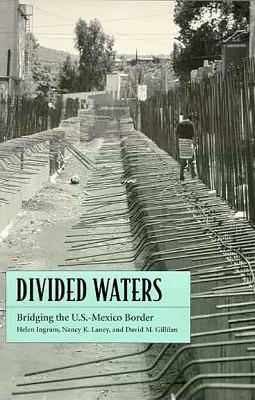
Divided Waters
Bridging the U.S.-Mexico Border
Seiten
1995
University of Arizona Press (Verlag)
978-0-8165-1564-6 (ISBN)
University of Arizona Press (Verlag)
978-0-8165-1564-6 (ISBN)
Analyses the politics of water management along the US-Mexico border. The authors review the prevailing confusion of laws, administrative practices, and political incentives, and recommend the design elements they believe must be included before successful improvements can occur at both the institutional and the resource management levels.
Among all natural resource and environmental problems between the United States and Mexico, water has been the most troublesome, with ongoing historic contests over water supply becoming superseded by new controversies over water quality. Divided Waters analyzes the politics of water management along the U.S.-Mexico border, using the case of Nogales, Arizona and Nogales, Sonora as a window on the problems and possibilities involved. The authors explore the water problems that Ambos Nogales shares with larger border communities surface and groundwater contamination, inadequate and insecure supplies, inequitable distribution of resources, flooding, and endangered riparian habitats considering both the physical characteristics of the water supply and the coping mechanisms of the people who make use of it. They review the prevailing confusion of laws, administrative practices, and political incentives, then recommend the design elements they believe must be included before successful improvements can occur at both the institutional and the resource management levels.
Among all natural resource and environmental problems between the United States and Mexico, water has been the most troublesome, with ongoing historic contests over water supply becoming superseded by new controversies over water quality. Divided Waters analyzes the politics of water management along the U.S.-Mexico border, using the case of Nogales, Arizona and Nogales, Sonora as a window on the problems and possibilities involved. The authors explore the water problems that Ambos Nogales shares with larger border communities surface and groundwater contamination, inadequate and insecure supplies, inequitable distribution of resources, flooding, and endangered riparian habitats considering both the physical characteristics of the water supply and the coping mechanisms of the people who make use of it. They review the prevailing confusion of laws, administrative practices, and political incentives, then recommend the design elements they believe must be included before successful improvements can occur at both the institutional and the resource management levels.
Helen Ingram is the director of the Udall Center at the University of Arizona and coauthor of Water and Poverty in the Southwest. Nancy K. Laney is the deputy director of the Arizona-Sonora Desert Museum in Tucson. David M. Gillilan is a research associate in the Department o Earth Resources at Colorado State University in Fort Collins.
| Zusatzinfo | illustrations |
|---|---|
| Verlagsort | Tucson |
| Sprache | englisch |
| Maße | 153 x 229 mm |
| Gewicht | 465 g |
| Themenwelt | Sachbuch/Ratgeber ► Natur / Technik ► Natur / Ökologie |
| ISBN-10 | 0-8165-1564-6 / 0816515646 |
| ISBN-13 | 978-0-8165-1564-6 / 9780816515646 |
| Zustand | Neuware |
| Informationen gemäß Produktsicherheitsverordnung (GPSR) | |
| Haben Sie eine Frage zum Produkt? |
Mehr entdecken
aus dem Bereich



aus dem Bereich
die Geschichte einer außergewöhnlichen Begegnung
Buch | Hardcover (2025)
Klett-Cotta (Verlag)
CHF 34,90
eine Geschichte der letzten 500 Jahre
Buch | Hardcover (2025)
C.H.Beck (Verlag)
CHF 47,60
die Corona-Protokolle des Robert-Koch-Instituts
Buch | Softcover (2025)
massel Verlag
CHF 31,95


