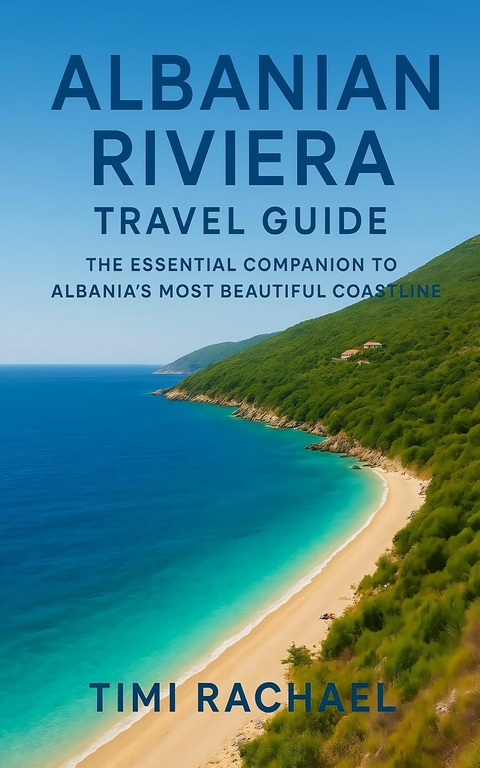
Albanian Riviera Travel Guide (eBook)
206 Seiten
Publishdrive (Verlag)
978-0-00-104909-3 (ISBN)
The Albanian Riviera Travel Guide is your clear, no-nonsense resource for exploring one of Europe's most underrated coastlines. Discover the lively port city of Sarandë, the turquoise waters of Ksamil, the hillside charm of Himarë, and the wide, golden beaches of Dhermi.
Inside you'll get:
2
WELCOME TO THE ALBANIAN RIVIERA
Quick History and Cultural Snapshot
The Albanian Riviera, like the rest of Albania, has a long and layered history that stretches back thousands of years. What makes it particularly interesting is the blend of civilizations that have left their mark on this coastal region. From ancient Greeks and Romans to Byzantines and Ottomans, the Riviera has seen many empires come and go, and their legacies still shape the region today.
The earliest evidence of human activity in the area dates back to prehistoric times, but things really started to take form around the 7th century BC when the Greeks established colonies along the Ionian coast. One of the most important ancient sites near the Riviera is Butrint, a UNESCO World Heritage Site just south of Sarandë. Butrint was first a Greek colony, then a Roman city, and later a bishopric during the Byzantine period. Walking through its ruins today gives visitors a direct connection to the ancient world.
During Roman times, the region became a key part of the empire’s coastal trade network. Roman villas, roads, and baths have been discovered in several locations, showing just how integrated this area was into Roman life. Christianity took root early here as well, which is why you’ll find many small, old churches tucked away in mountain villages or coastal hills.
After the fall of the Western Roman Empire, the Byzantine Empire controlled the area for several centuries. The Byzantines fortified coastal cities and built churches and monasteries, many of which still stand in ruins or have been restored. Their influence shaped the religious architecture and art traditions of the Riviera.
Then came the Ottoman Empire, which ruled Albania for over 400 years, starting in the late 15th century. This period deeply influenced Albanian culture, especially in terms of language, religion, and customs. The Ottomans brought Islam to the region, which still plays a role in the cultural mix today, although the Riviera remains more culturally diverse and religiously relaxed than some inland regions. Ottoman-style architecture can still be seen in towns like Himarë and Vlorë, where stone houses, old mosques, and narrow cobbled streets give insight into life during that era.
Albania declared independence from the Ottoman Empire in 1912, but the 20th century brought instability. The country was occupied by Italian and German forces during World War II. After the war, Albania fell under a strict communist regime led by Enver Hoxha, who ruled from 1944 to 1985. During his time, Albania was isolated from both the West and the Soviet bloc. Tourism was banned, religion was outlawed, and the coastline was heavily militarized with bunkers and naval defenses. Many of those concrete bunkers still dot the landscape and are a visual reminder of this period.
It wasn’t until the early 1990s, after the fall of communism, that Albania reopened to the world. Since then, the country has been working to rebuild its economy and infrastructure, with tourism now playing a significant role, especially along the Riviera. The once-forgotten stretch of coastline is now gaining recognition for its natural beauty, affordable travel options, and unspoiled charm.
Culturally, the Albanian Riviera reflects the country’s complex past. The population here is mostly ethnic Albanian, but there are also Greek communities, especially in villages close to the southern border. You’ll find churches and mosques side by side, local celebrations that mix pagan and religious traditions, and a strong oral culture passed down through music and storytelling.
One of the standout elements of the culture is Albanian hospitality. Locals are known for their warmth and generosity. Guests are treated with deep respect, and it’s common to be offered coffee, raki (a local liquor), or a meal even if you’re a stranger. This sense of honor in welcoming outsiders is deeply rooted in the Albanian code of conduct called “Besa”, which places a high value on trust, loyalty, and protection of guests.
Music and dance also play a major role in Riviera life. Traditional polyphonic singing, especially from the Labëria region inland from the coast, is recognized by UNESCO as an intangible cultural heritage. These multipart harmonies are haunting and beautiful, often performed at weddings and village gatherings.
The Albanian Riviera is not just about pretty beaches. It’s a region shaped by layers of history, a crossroads of civilizations, and a living culture that has survived both ancient empires and modern dictatorships. Understanding its past helps travelers better appreciate the unique atmosphere of the place — where ruins meet modern beach bars, where tradition sits alongside change, and where the old world is never far from view.
What Makes the Riviera Special
The Albanian Riviera stands out in the Mediterranean for several reasons, and none of them rely on hype or overdevelopment. This is a stretch of coastline that delivers the views and atmosphere of southern Italy or the Greek islands, but without the crowds, inflated prices, or excessive commercialism. What makes it special is a rare mix of natural beauty, authentic culture, and unpolished charm that is getting harder to find in modern Europe.
The first and most obvious asset is the coastline itself. Running roughly from Vlorë in the north to Ksamil in the south, the Riviera hugs the Ionian Sea with a combination of long pebbled beaches, dramatic cliffs, hidden coves, and turquoise waters. Unlike other parts of the Albanian coast, the Riviera sits on the Ionian side, meaning deeper blue water, a more rugged terrain, and better snorkeling and swimming conditions. Places like Drymades, Livadhi, and Pasqyrat beaches have become low-key favorites among travelers who want natural scenery without overbuilt resorts.
Another major feature is the lack of mass tourism infrastructure. While some towns like Sarandë have started to grow with modern apartment blocks and hotels, much of the Riviera is still made up of small, family-run guesthouses, beach bars built from wood and stone, and villages where life moves slowly. This gives the entire coast a sense of authenticity, where visitors can see what Mediterranean destinations looked like before package tourism took over. Towns like Himarë, Qeparo, and Borsh still retain a lived-in local feel, where you might see goats crossing the road or fishermen repairing nets by hand.
Affordability is another reason the Riviera stands out. Compared to nearby countries like Greece, Italy, or Croatia, Albania remains budget-friendly. Accommodation, food, transport, and activities are often a fraction of the price — especially outside the peak summer season. This makes it attractive to younger travelers, long-term nomads, and families who want a European coastal experience without draining their savings.
But the Riviera is more than just a beach destination. What makes it really special is the way it combines coastline with mountains, often in the same view. The Llogara Pass, for example, takes you from pine forest highlands to sea-level beaches in a single dramatic drive. Inland from the coast, villages climb up steep hillsides, and there are opportunities for hiking, cycling, and exploring. The contrast between sea and mountain is constant, and it gives the Riviera a visual depth that few coastal regions can offer.
Cultural contrast is another strong point. In one village, you might see Greek Orthodox churches and traditional stone houses; in the next, a mosque and Ottoman-influenced architecture. The Riviera is home to both Christian and Muslim communities, and it’s common to find families that blend traditions from both. This religious and cultural diversity adds depth to the traveler experience, particularly when it comes to festivals, food, and music.
Speaking of food, the local cuisine is a highlight that many visitors don’t expect. Fresh seafood is abundant and affordable, with daily catches served grilled and simple. Olive oil, local cheeses, and mountain herbs make their way into nearly every dish. And because many guesthouses serve homemade meals, travelers often get access to truly home-cooked Albanian food — not just what’s on the tourist menu. Local drinks like raki and regional wines are often produced in small batches and served with pride.
One more reason the Riviera feels unique is the sense of freedom. There’s an unregulated, open vibe to many parts of the coast. You can camp by the beach, swim almost anywhere, or discover an unmarked trail that leads to a hidden cove. While this lack of strict tourism control does come with challenges (like patchy waste management or inconsistent signage), it also creates opportunities for spontaneous exploration and personal connection to the land.
For travelers looking to escape over-curated destinations, the Albanian Riviera is a breath of fresh air. It doesn’t pretend to be perfect. You might have to deal with bumpy roads, power cuts, or a language barrier here and there. But the reward is an experience that feels real, rooted in place, and still evolving.
Finally, there’s the people. Albanians, especially along the Riviera, are known for being warm, open, and welcoming. Many speak basic English or Italian, especially younger locals and those working in hospitality. There’s a genuine sense of curiosity and hospitality that makes visitors feel at ease, whether you’re staying at a guesthouse or buying fruit at a roadside stall. The atmosphere is laid-back, and many...
| Erscheint lt. Verlag | 4.9.2025 |
|---|---|
| Sprache | englisch |
| Themenwelt | Reisen ► Reiseführer ► Europa |
| ISBN-10 | 0-00-104909-7 / 0001049097 |
| ISBN-13 | 978-0-00-104909-3 / 9780001049093 |
| Informationen gemäß Produktsicherheitsverordnung (GPSR) | |
| Haben Sie eine Frage zum Produkt? |
 EPUB (Adobe DRM)
Größe: 2,2 MB
Kopierschutz: Adobe-DRM
Adobe-DRM ist ein Kopierschutz, der das eBook vor Mißbrauch schützen soll. Dabei wird das eBook bereits beim Download auf Ihre persönliche Adobe-ID autorisiert. Lesen können Sie das eBook dann nur auf den Geräten, welche ebenfalls auf Ihre Adobe-ID registriert sind.
Details zum Adobe-DRM
Dateiformat: EPUB (Electronic Publication)
EPUB ist ein offener Standard für eBooks und eignet sich besonders zur Darstellung von Belletristik und Sachbüchern. Der Fließtext wird dynamisch an die Display- und Schriftgröße angepasst. Auch für mobile Lesegeräte ist EPUB daher gut geeignet.
Systemvoraussetzungen:
PC/Mac: Mit einem PC oder Mac können Sie dieses eBook lesen. Sie benötigen eine
eReader: Dieses eBook kann mit (fast) allen eBook-Readern gelesen werden. Mit dem amazon-Kindle ist es aber nicht kompatibel.
Smartphone/Tablet: Egal ob Apple oder Android, dieses eBook können Sie lesen. Sie benötigen eine
Geräteliste und zusätzliche Hinweise
Buying eBooks from abroad
For tax law reasons we can sell eBooks just within Germany and Switzerland. Regrettably we cannot fulfill eBook-orders from other countries.
aus dem Bereich