


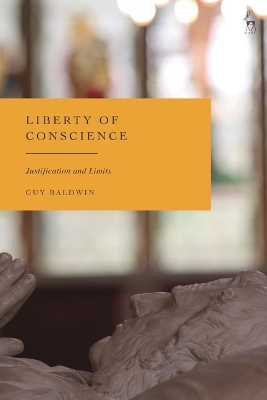
Liberty of Conscience
Justification and Limits
Seiten
2026
Hart Publishing (Verlag)
978-1-5099-8527-2 (ISBN)
Hart Publishing (Verlag)
978-1-5099-8527-2 (ISBN)
- Noch nicht erschienen (ca. September 2026)
- Versandkostenfrei
- Auch auf Rechnung
- Artikel merken
Presents a novel account of the conceptual foundations of liberty of conscience based on John Rawls’s concept of moral personality.
This book sets out a novel account of the conceptual foundations of liberty of conscience based on John Rawls’s concept of moral personality.
Liberty of conscience (often called religious freedom) is a notoriously broad right. As understood in many legal systems, it can extend to virtually any action or inaction, ranging from dietary choices to objections to military service, and potentially provide protection against the application of a state’s laws in respect of that action or inaction. To understand the proper limits of this right, it is necessary to inquire into its conceptual foundations.
The book shows that protection of liberty of conscience is warranted because of its importance to the exercise and development of the two moral powers of individuals that comprise their moral personality: the power to judge right and justice, and the power to form and pursue a conception of the good. However, some possible limitations for the right relating to the rights of others and the common interest flow from this rationale.
Utilising this theoretical account, the book analyses two case studies at the limits of religious freedom in the law of the UK and USA: pandemic lockdown restrictions on religious gatherings, and non-discrimination laws in their application to same-sex couples.
This book sets out a novel account of the conceptual foundations of liberty of conscience based on John Rawls’s concept of moral personality.
Liberty of conscience (often called religious freedom) is a notoriously broad right. As understood in many legal systems, it can extend to virtually any action or inaction, ranging from dietary choices to objections to military service, and potentially provide protection against the application of a state’s laws in respect of that action or inaction. To understand the proper limits of this right, it is necessary to inquire into its conceptual foundations.
The book shows that protection of liberty of conscience is warranted because of its importance to the exercise and development of the two moral powers of individuals that comprise their moral personality: the power to judge right and justice, and the power to form and pursue a conception of the good. However, some possible limitations for the right relating to the rights of others and the common interest flow from this rationale.
Utilising this theoretical account, the book analyses two case studies at the limits of religious freedom in the law of the UK and USA: pandemic lockdown restrictions on religious gatherings, and non-discrimination laws in their application to same-sex couples.
Guy Baldwin is Lecturer in Public Law and Human Rights at the University of Manchester, UK.
1. Introduction
2. The Rationale of Liberty of Conscience
3. The Limits of Liberty of Conscience
4. Liberty of Conscience and Neutrality
5. Coronavirus Pandemic
6. Discrimination towards Same-Sex Couples
7. Conclusion
| Erscheint lt. Verlag | 3.9.2026 |
|---|---|
| Verlagsort | Oxford |
| Sprache | englisch |
| Maße | 156 x 234 mm |
| Themenwelt | Recht / Steuern ► Allgemeines / Lexika |
| Recht / Steuern ► EU / Internationales Recht | |
| Recht / Steuern ► Öffentliches Recht ► Verfassungsrecht | |
| ISBN-10 | 1-5099-8527-1 / 1509985271 |
| ISBN-13 | 978-1-5099-8527-2 / 9781509985272 |
| Zustand | Neuware |
| Informationen gemäß Produktsicherheitsverordnung (GPSR) | |
| Haben Sie eine Frage zum Produkt? |
Mehr entdecken
aus dem Bereich


aus dem Bereich
Staatsrecht, Verwaltungsrecht, Verwaltungsprozessrecht und …
Buch | Softcover (2025)
Vahlen (Verlag)
CHF 51,65
Buch | Softcover (2025)
Alpmann und Schmidt (Verlag)
CHF 17,95


