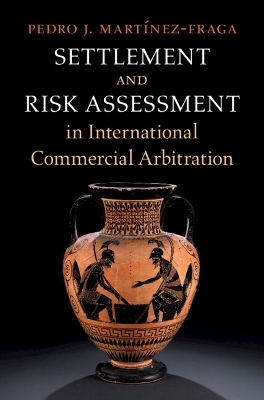
Settlement and Risk Assessment in International Commercial Arbitration
Cambridge University Press (Verlag)
978-1-009-75649-5 (ISBN)
- Noch nicht erschienen (ca. Juni 2026)
- Versandkostenfrei
- Auch auf Rechnung
- Artikel merken
International commercial arbitration has failed to redeem its promise to be efficient. Approximately 27% of all international commercial arbitral proceedings are settled before issuance of a merits-based award. This book asserts that legacy international commercial arbitration is based on the economic efficiencies arising from a zero-sum-game approach to dispute resolution pursuant to which the most efficient result is one that yields a prevailing (winning) and non-prevailing (losing) party. This emphasis on process efficiency has caused international commercial arbitration to lose its standing as the premier dispute resolution methodology for cross-border commercial conflicts. Historically, settlement has not been perceived as an element of international commercial arbitration's culture. Only recently has a consensus arisen acknowledging that arbitrators have an obligation to facilitate settlement. This book explains that, through timely risk assessment, voluntary settlement of arbitral proceedings will become the rule, not the exception, leading to optimal efficiency.
Pedro Julio Martínez-Fraga is Global Co-Leader of the International Arbitration Practice for Bryan Cave Leighton Paisner LLP (BCLP). He is both a distinguished visiting practitioner of international law and an adjunct professor of law at New York University Law School. He has represented eleven sovereign states as lead counsel, and published over fifty academic articles and eleven books on public and private international law.
Introduction; 1. Structuring the framework for the identification of a problem: international commercial arbitration cases settle only in a minority of instances; 2. Statistical analyses establishing the percentage of disputes that settle in judicial proceedings in the US: exploring an analogy; 3. Engaging in a thought experiment: international commercial arbitrations do not settle and maximize inefficiencies; 4. Defining standards to render risk assessment and settlement possible; 5. Revisiting rules and principles of evidence in ICA; 6. The 'Prague Rules' and moving beyond formal concerns with evidence taking and closer to maximizing the likelihood of settlement; 7. Towards a qualitative evidentiary approach and not rigid categorical exclusionary rules of evidence; 8. A new framework for a modern conception of ICA; 9. Conclusion.
| Erscheint lt. Verlag | 30.6.2026 |
|---|---|
| Zusatzinfo | Worked examples or Exercises |
| Verlagsort | Cambridge |
| Sprache | englisch |
| Gewicht | 500 g |
| Themenwelt | Recht / Steuern ► EU / Internationales Recht |
| Recht / Steuern ► Privatrecht / Bürgerliches Recht ► Zivilverfahrensrecht | |
| ISBN-10 | 1-009-75649-4 / 1009756494 |
| ISBN-13 | 978-1-009-75649-5 / 9781009756495 |
| Zustand | Neuware |
| Informationen gemäß Produktsicherheitsverordnung (GPSR) | |
| Haben Sie eine Frage zum Produkt? |
aus dem Bereich