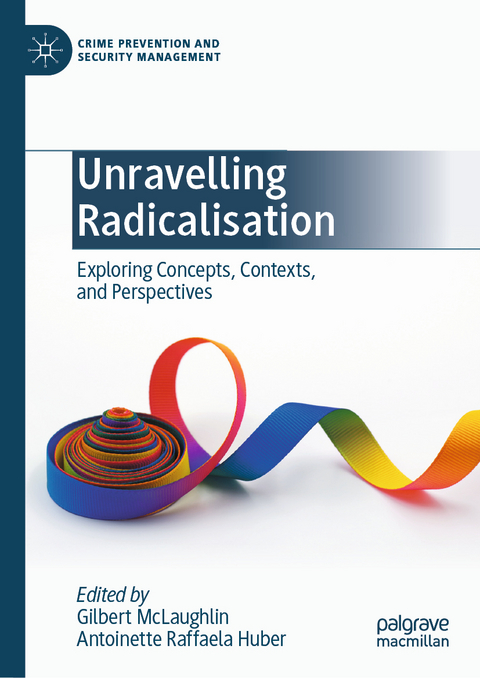
Unravelling Radicalisation
Springer International Publishing (Verlag)
978-3-031-91886-5 (ISBN)
The term radicalisation is being used by politicians, activist groups, the media, governmental organisations, and many other groups, although it lacks conceptual clarity and insufficient consideration is given to its historical context. This edited book offers a reflective overview of the state of the research by addressing questions such as 'what is radicalisation?' and 'does the concept help us to understand political violence differently?' across the social sciences. From a global selection of scholars, it explores the definition and the utilisation of the concept of radicalisation, pathway modelling, and the impact of gender, religion, and ideologies on radicalisation. It combines theoretical and historical analysis, providing a good introduction for any scholar and student starting in that field.
Gilbert McLaughlin joined Liverpool Hope University in 2022 as a Lecturer in Criminology, UK. He completed his PhD in sociology and an MPhil in political thought at the University of Ottawa. His doctoral thesis is an analysis of the concept of "radicalization leading toward extremism". He completed his postdoctoral work at the Centre of Hate, Bias and Extremism at Ontario Tech University in Oshawa and works now on the prevention of radicalisation and violent extremism.
Antoinette Raffaela Huber is Senior Lecturer in Criminology at the University of Liverpool, UK. Her research focuses on gendered-based violence, image-based sexual abuse, misogynistic extremism, pornography, digital policing, and digital criminology. Antoinette works closely with domestic violence organisations, the Revenge Porn Helpline and Victims of Image Crime (VOIC). She has also worked with UK and EU Commissions contributing to legislative and regulatory change around digital abuse.
Chapter 1: Unravelling Radicalisation.- Chapter 2: Is radicalisation a good concept.- Chapter 3: How and Why They Radicalise A Psychosocial Perspective.- Chapter 4: Rationalist Directions in Radicalisation Studies.- Chapter 5: Is it Really Radicalisation Predatory aggression Across Contexts.- Chapter 6: Affective polarisation Dehumanisation of the Adversary and Political violence.- Chapter 7: The Emotional Logics of Violent Radicalisation.- Chapter 8: Misplaced Retribution Revenge Nihilism and Radicalisation Against the State.- Chapter 9: Hindutva Radicalisation of the Indian Youth and its Impact on Freedom of Religion.- Chapter 10: Radicalisation in Kenya: Understanding Political violence and Extremism in a Complex Socio-Political Landscape.- Chapter 11: Examining the Radicalisation Processes of Sectarian identities in Pakistan.- Chapter 12: Gender Misogyny and the internet The Radicalisation of Young Men in the Involuntary celibate Incel Community.- Chapter 13: Breaking the Binary: Mixed Extremism and the Contemporary UK Landscape of Radicalisation.- Chapter 14: Radicalisation A concept used in the Courtroom.
| Erscheinungsdatum | 13.08.2025 |
|---|---|
| Reihe/Serie | Crime Prevention and Security Management |
| Zusatzinfo | XV, 326 p. 2 illus. |
| Verlagsort | Cham |
| Sprache | englisch |
| Maße | 148 x 210 mm |
| Themenwelt | Recht / Steuern ► Strafrecht ► Kriminologie |
| Schlagworte | alt-right • crime prevention • De-radicalisation • Extremism • Incel • Political violence • terrorism • Theorising radicalisation • Violent Extremism |
| ISBN-10 | 3-031-91886-X / 303191886X |
| ISBN-13 | 978-3-031-91886-5 / 9783031918865 |
| Zustand | Neuware |
| Informationen gemäß Produktsicherheitsverordnung (GPSR) | |
| Haben Sie eine Frage zum Produkt? |
aus dem Bereich