


Copyright Reversion
Reclaiming Lost Culture and Getting Creators Paid
Seiten
2025
Cambridge University Press (Verlag)
978-1-009-33482-2 (ISBN)
Cambridge University Press (Verlag)
978-1-009-33482-2 (ISBN)
Copyright is criticised for doing a poor job of rewarding creators and promoting ongoing access to knowledge and culture. This empirically-grounded book shows how we can use copyright reversion (mechanisms for returning copyrights to their creators) to do a better job of both, weakening excessive corporate power along the way.
Copyright is meant to promote access to knowledge and culture and reward creators. But around the world, publishers, record labels and other investors continue to hoover up the rights and rewards due to creators and leave masses of creativity locked away from the public. This book shows why this bargain is broken, and how reverting copyright to creators can help redress it – allowing them to revitalise old works, turbocharged by technological advances that are providing more opportunities to do so than ever before. With cutting-edge empirical and doctrinal analysis of dominant reversion models from the United States, the Commonwealth and the EU, the book provides policymakers and academics with best-practice principles for designing reversion mechanisms that can help copyright laws do a better job of supporting the public interest in access while helping artists get paid. This title is also available as open access on Cambridge Core.
Copyright is meant to promote access to knowledge and culture and reward creators. But around the world, publishers, record labels and other investors continue to hoover up the rights and rewards due to creators and leave masses of creativity locked away from the public. This book shows why this bargain is broken, and how reverting copyright to creators can help redress it – allowing them to revitalise old works, turbocharged by technological advances that are providing more opportunities to do so than ever before. With cutting-edge empirical and doctrinal analysis of dominant reversion models from the United States, the Commonwealth and the EU, the book provides policymakers and academics with best-practice principles for designing reversion mechanisms that can help copyright laws do a better job of supporting the public interest in access while helping artists get paid. This title is also available as open access on Cambridge Core.
Joshua Yuvaraj is a Senior Lecturer in the Faculty of Law at the University of Auckland. In 2021 he won the Mollie Holman Award for best law doctoral thesis at Monash University. Rebecca Giblin is a Professor and ARC Future Fellow at Melbourne Law School. She is the author of Chokepoint Capitalism (with Cory Doctorow, 2022).
1. Reversion's potential; 2. Statutory reversion rights in the British commonwealth; 3. US termination rights; 4. Statutory reversion rights in Europe; 5. Contractual reversion rights; 6. Best-practice principles for copyright reversion mechanisms.
| Erscheinungsdatum | 30.09.2025 |
|---|---|
| Reihe/Serie | Cambridge Intellectual Property and Information Law |
| Zusatzinfo | Worked examples or Exercises |
| Verlagsort | Cambridge |
| Sprache | englisch |
| Maße | 152 x 229 mm |
| Gewicht | 438 g |
| Themenwelt | Recht / Steuern ► EU / Internationales Recht |
| Recht / Steuern ► Wirtschaftsrecht ► Urheberrecht | |
| ISBN-10 | 1-009-33482-4 / 1009334824 |
| ISBN-13 | 978-1-009-33482-2 / 9781009334822 |
| Zustand | Neuware |
| Informationen gemäß Produktsicherheitsverordnung (GPSR) | |
| Haben Sie eine Frage zum Produkt? |
Mehr entdecken
aus dem Bereich

aus dem Bereich
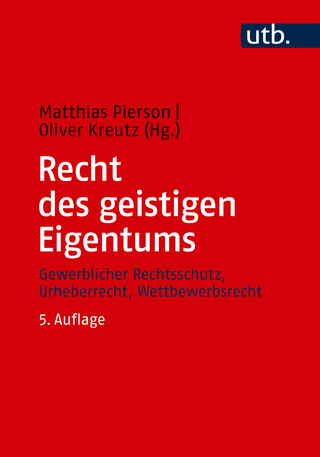
gewerblicher Rechtsschutz, Urheberrecht, Wettbewerbsrecht
Buch | Softcover (2025)
UTB (Verlag)
CHF 82,55
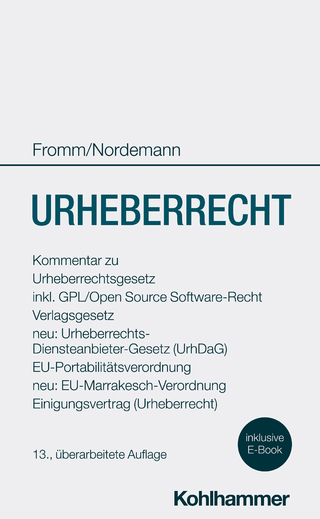
Kommentar zu Urheberrechtsgesetz, Verlagsgesetz, Neu: …
Buch | Hardcover (2024)
Kohlhammer (Verlag)
CHF 479,95


