


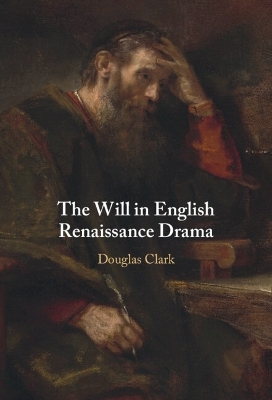
The Will in English Renaissance Drama
Seiten
2025
Cambridge University Press (Verlag)
978-1-009-39094-1 (ISBN)
Cambridge University Press (Verlag)
978-1-009-39094-1 (ISBN)
Shedding light on a relatively neglected yet demonstrably crucial concern for dramatists in Elizabethan and Jacobean England, this is the first monograph to explain the central role that the performance of the will – as both faculty of the soul and legal document – took in English Renaissance drama.
Douglas Clark reveals how moments of willing and will-making pervade English Renaissance drama and play a crucial role in the depiction of selfhood, sin, sociality, and succession. This wide-ranging study synthesizes concepts from historical, legal, philosophical, and theological studies to examine the dramatic performance of the will as both an internal faculty and a legal document. Clark establishes the diverse connections that Shakespeare, Jonson, Middleton, and a range of overlooked playwrights of the early Elizabethan era made between different types and understandings of the will. By doing so, he reveals the little-understood ethical issues to which they gave rise in relation to the mind, emotions, and soul. Understanding the purpose of the will in its multiple forms was a central concern for writers of the time, and Clark shows how this concern profoundly shaped the depiction of life and death in both Elizabethan and Jacobean drama. This title is part of the Flip It Open programme and may also be available as open access. Check our website Cambridge Core for details.
Douglas Clark reveals how moments of willing and will-making pervade English Renaissance drama and play a crucial role in the depiction of selfhood, sin, sociality, and succession. This wide-ranging study synthesizes concepts from historical, legal, philosophical, and theological studies to examine the dramatic performance of the will as both an internal faculty and a legal document. Clark establishes the diverse connections that Shakespeare, Jonson, Middleton, and a range of overlooked playwrights of the early Elizabethan era made between different types and understandings of the will. By doing so, he reveals the little-understood ethical issues to which they gave rise in relation to the mind, emotions, and soul. Understanding the purpose of the will in its multiple forms was a central concern for writers of the time, and Clark shows how this concern profoundly shaped the depiction of life and death in both Elizabethan and Jacobean drama. This title is part of the Flip It Open programme and may also be available as open access. Check our website Cambridge Core for details.
Douglas Clark is a tutor in English Literature at the University of Oxford. He has published widely on English Renaissance drama and poetry. His scholarship has been supported through awards and fellowships at the Folger Shakespeare Library, the John Rylands Research Institute, the Newberry Library and the Rare Book School.
Introduction: where there is a will; 1. The personified will; 2. Punishing the transgressive will; 3. Testamentary drama; 4. Last wills and remembrance; Conclusion: no end?; Bibliography; Index.
| Erscheinungsdatum | 09.09.2025 |
|---|---|
| Zusatzinfo | Worked examples or Exercises |
| Verlagsort | Cambridge |
| Sprache | englisch |
| Maße | 160 x 235 mm |
| Gewicht | 450 g |
| Themenwelt | Geisteswissenschaften ► Religion / Theologie |
| Geisteswissenschaften ► Sprach- / Literaturwissenschaft ► Anglistik / Amerikanistik | |
| Geisteswissenschaften ► Sprach- / Literaturwissenschaft ► Literaturwissenschaft | |
| Recht / Steuern ► EU / Internationales Recht | |
| Recht / Steuern ► Privatrecht / Bürgerliches Recht ► Besonderes Schuldrecht | |
| ISBN-10 | 1-009-39094-5 / 1009390945 |
| ISBN-13 | 978-1-009-39094-1 / 9781009390941 |
| Zustand | Neuware |
| Informationen gemäß Produktsicherheitsverordnung (GPSR) | |
| Haben Sie eine Frage zum Produkt? |
Mehr entdecken
aus dem Bereich

aus dem Bereich
Poetik eines sozialen Urteils
Buch | Hardcover (2023)
De Gruyter (Verlag)
CHF 83,90


