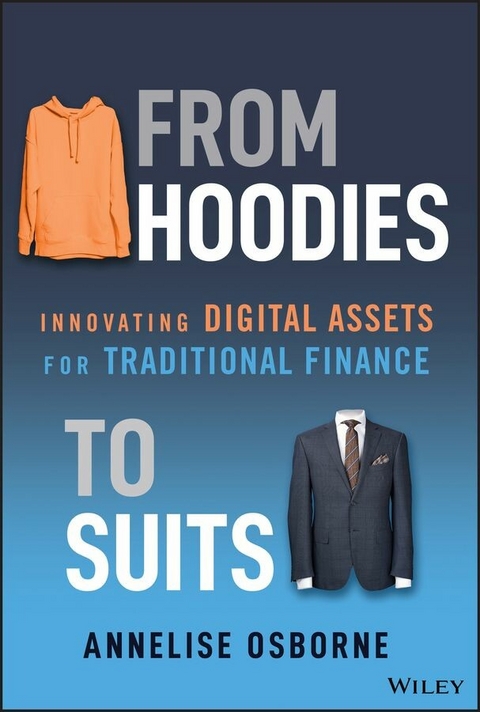
From Hoodies to Suits (eBook)
373 Seiten
John Wiley & Sons (Verlag)
978-1-394-23183-6 (ISBN)
Learn how digital asset technologies can be applied to the regulated, traditional finance industry for improved performance and returns
In From Hoodies to Suits: Innovating Digital Assets for Traditional Finance, leading finance innovator Annelise Osborne bridges the gap between the 'hoodies' who invented the technology behind digital assets and the 'suits' who run traditional financial markets, in an entertaining and insightful guide for implementing digital assets in an institutional environment.
You'll discover the possibilities unlocked by new technological advancements, including alternative investments, new marketplaces, interoperability between counterparties, and even improved forms of diversification. You'll also find:
- Discussions of why the adoption of digital assets is so critical for the future of finance and the ways the industry's largest players are implementing its technologies and concepts now
- Explorations of what we can learn from some of the crypto industry's most infamous and well-known wins and losses, including the collapse of FTX
- Strategies for implementing institutional digital assets to realize opportunities in private markets, funds, debt, repo, alternative assets and back office transactions in this evolving and dynamic financial environment
A fascinating new take on the future of finance, From Hoodies to Suits is a must-read guide for aspiring and practicing finance professionals, technology developers, fintech participants, and anyone else with an interest in the intersection of finance and technology.
ANNELISE OSBORNE is a seasoned executive on Wall Street and within the digital asset ecosystem. After over 15 years in traditional finance, she moved to the tech startup world once she recognized the benefits of blockchain for traditional capital markets. Annelise is a thought leader that sits on company boards, is an angel investor, lectures at universities, and is a frequent speaker. She holds an MBA from Columbia Business School and a BA from the College of William & Mary. Annelise lives in Westport, CT with her three boys and rescue pups.
Learn how digital asset technologies can be applied to the regulated, traditional finance industry for improved performance and returns In From Hoodies to Suits: Innovating Digital Assets for Traditional Finance, leading finance innovator Annelise Osborne bridges the gap between the hoodies who invented the technology behind digital assets and the suits who run traditional financial markets, in an entertaining and insightful guide for implementing digital assets in an institutional environment. You ll discover the possibilities unlocked by new technological advancements, including alternative investments, new marketplaces, interoperability between counterparties, and even improved forms of diversification. You ll also find: Discussions of why the adoption of digital assets is so critical for the future of finance and the ways the industry s largest players are implementing its technologies and concepts now Explorations of what we can learn from some of the crypto industry s most infamous and well-known wins and losses, including the collapse of FTX Strategies for implementing institutional digital assets to realize opportunities in private markets, funds, debt, repo, alternative assets and back office transactions in this evolving and dynamic financial environmentA fascinating new take on the future of finance, From Hoodies to Suits is a must-read guide for aspiring and practicing finance professionals, technology developers, fintech participants, and anyone else with an interest in the intersection of finance and technology.
Introduction
When Facebook's Mark Zuckerberg testified before Congress in 2018, he did something remarkable: He wore a suit. A navy blue suit with a matching solid blue tie and a crisp white shirt. It was a noteworthy shift for the hoodie-wearing CEO of the tech giant that would eventually rename itself Meta, as in “metaverse.” As one journalist put it at the time, “When men want to look like adults, they suit up.”
The New York Times called it his “I'm Sorry Suit,” a strategically effective symbolic gesture that he was going to accept responsibility and defer to the rules set by people who wear suits to work every day.1
Disgraced FTX CEO Sam Bankman-Fried, too, wore a suit, at his 2023 federal trial for what's been called “one of the largest financial frauds in history,” even though he'd once insisted that T-shirts were crucial to his “brand.”2 His lawyers argued that he was just a young guy who got in over his head3 – while he allegedly misappropriated billions of dollars of his clients' money through his trading firm and cryptocurrency exchange, both of which had attracted plenty of grown-ups to the investment table.
Even Ethereum founder, wunderkind Vitalik Buterin, has occasionally ditched his T-shirts depicting unicorns and even a “bufficorn” (buffalo plus unicorn) costume he wore to a conference to throw on a collared dress shirt and appear on stage. This from a (very) young man who reportedly launched what would become the second most popular cryptocurrency4 after a change in the video game World of Warcraft made him cry himself to sleep.5
Shifting from hoodies to suits is exactly where the digital assets industry is right now. While blockchain was originally created as an alternative to banking and traditional finance by tech start-ups filled with hoodie-wearing entrepreneurs, it can actually enhance the established financial industry by bringing additional efficiency, transparency, and liquidity to capital markets. To make that shift, a different skill set is required – a skill set that the innovators of blockchain and cryptocurrencies don't have. The “Suits” of Wall Street and Main Street can build on what the “Hoodies” of tech start-ups created when they come to understand how to innovate using digital assets in traditional financial markets. That's when Hoodies and Suits can combine their talents and expertise to create the next generation of finance together.
What I Found in the Boardroom
Just before Zuckerberg was knotting his tie for Congress, I left my corporate life in traditional finance at Moody's. I was invited to join the board of a regulatory task force focused on cryptocurrencies and blockchain. Only, I knew nearly nothing about crypto, blockchain, or the initial coin offerings (ICOs), when blockchain based “coins” are sold to raise funds for a cryptocurrency project. It needed regulation. I told them, “You're talking to the wrong person. This isn't my expertise.” But they were young, persistent, idealistic attorneys.
So, I watched YouTube videos about bitcoin and blockchain to understand what they were about and why the lawyers were so passionate. When I understood the basics of the technology, I recognized that the potential upgrades to traditional finance were mind-blowing. But back then, the tech-savvy Hoodies were attempting to upgrade finance without finance experience, leading to false starts and bad publicity.
When you're dealing with traditional finance, you're dealing with securities, structure, and regulation – and possible jail time for any violations. After all, finance is one of the oldest professions in the world, dating back to Mesopotamian bankers offering credit contracts. And if it's not broken, why fix it? But it can run more efficiently, and blockchain and digital assets are paving the way. It's going to take recognized structures and “responsible innovation” regulation to make them mainstream.
I had made the assumption that the industry was already deep into the process of applying the Hoodies' technologies to traditional finance, but I was wrong. Hoodies couldn't do it alone, because they lacked the experience and understanding of the intricacies of the industry, and Suits didn't understand the technology.
So, I found a partner and together we worked to create digital assets – discoverable digital representations of value that establish ownership – as smart securities, eliminating frictions and developing a more automated process, while using his broker-dealer. Together with a great team, we focused on efficiencies and programmable securities and worked to create tokenized real-world assets before the term RWA was cool. We even created securities offering to pay interest in stablecoin, a cryptocurrency that provides a stable price by being pegged to a currency or commodity, which was a first. We structured non-fungible tokens (NFTs), unique tokenized assets on the blockchain that can't be replicated, for investments in land plots, before NFTs became known for art.
I understood that digital assets would become important because the next generation of investors, who grew up with supercomputers in their pockets, will demand a different way of handling their finances and identifying their investments. For them, the speed, efficiency, transparency, and potential interoperability of the systems built by Hoodies won't be a nice-to-have. They will be a must-have. But in my first venture, we were too early for real adoption. So much had yet to be built and integrated and still does.
I recognized that it would take people with finance experience to apply the technology in a practical and usable way, and I wanted to be a part of it. I had a clear vision of what could be built. I had been that kid who wondered why I had to take cash for babysitting when I wanted my clients to transfer the money right into my bank account. This was back when ATMs were finally becoming ubiquitous at bank branches nationwide, and my mother still used checks – and checks aren't real money. They're just access. Even as a teenager, I saw the value in a cashless economy.
Recently, at a farmer's market in rural Alaska, I noticed that the vendors all took credit cards on mobile readers attached to their iPhones. Imagine if that had been an option for my babysitting job. Technology is changing finance. We must change with it.
Today, the market is ripe for blockchain technology in traditional finance, on Wall Street, and in corporate America. There are a lot of frictions that digital assets and blockchain can solve. The market is ready for the Suits to work with the Hoodies to make it happen, but they need to first catch up on understanding the technology and its potential applications.
We also have to create the current regulatory and interoperability landscapes. Too many banks operate on old systems written in COBOL that cannot talk to one another. There's a reason for that: There are regulations that require financial institutions to keep records, and it takes a long time to upgrade systems. So, they just kept building on old technologies, and by the time they upgrade it, it becomes irrelevant.
While the Suits tried to put Band-Aids on their antiquated systems, the Hoodies continued to build new advances in technology. They began launching ICOs in 2017, introducing more crypto coins similar to bitcoin. Their investors, located across the globe, were passionate about crypto, but they weren't accredited investors. It was what US Securities and Exchange Chairman Gary Gensler would later call “the Wild West,” with unregulated exchanges, possible insider trading, and companies with obvious conflicts of interest.
In the early days, one of my attorney colleagues wrote a white paper on crypto regulation and it went viral – and nothing ever goes viral in finance. Usually, if people know your name in finance, you've done something wrong to end up in headlines of the Wall Street Journal. That's exactly what's happened in recent years to some of the founders of crypto. Left unchecked by the regulations that govern traditional finance, some of them went rogue and defrauded investors. Unfortunately, that's typically much of what the Suits know about digital assets. But blockchain is not bitcoin, and the technology is sound.
Today there are over one thousand blockchains worldwide, and a lot of digital assets may be unregistered securities. While it took a long time for bitcoin to take off – as of this writing, it's trading at $47,000 – it laid the foundation for the changing face of finance today. Some very large players in traditional finance have launched their own blockchains and digital assets, and investors continue to demand changes that bring traditional finance closer to instant settlement, known as T+0.
Now Is the Time for Digital Assets and Web3
Now more than ever, finance professionals, traders, asset managers, investment bankers, and corporate treasurers must understand how to apply digital assets to today's financial markets. Only then will the traditional finance industry be able to innovate and adapt to the inevitable technological changes of the near future, when Web3, which is phase three of the internet marked by...
| Erscheint lt. Verlag | 11.6.2024 |
|---|---|
| Sprache | englisch |
| Themenwelt | Recht / Steuern ► Wirtschaftsrecht |
| Wirtschaft ► Betriebswirtschaft / Management | |
| Schlagworte | Blockchain • Cryptocurrency • Decentralized Finance • Defi • digital assets • Digital Finance • digital securities • Finance & Investments • Finance & Investments Special Topics • finance and technology • finance regulations • financial tech • Financial Technology • Finanz- u. Anlagewesen • Finanzwesen • FinTech • fintech adoption • future of finance • Investments & Securities • Kapitalanlage • Kapitalanlagen u. Wertpapiere • nft • real world asset tokenization • regulated digital assets • RWA • Security Token • Spezialthemen Finanz- u. Anlagewesen • Tokenization • tradfi • traditional finance • Web3 |
| ISBN-10 | 1-394-23183-0 / 1394231830 |
| ISBN-13 | 978-1-394-23183-6 / 9781394231836 |
| Informationen gemäß Produktsicherheitsverordnung (GPSR) | |
| Haben Sie eine Frage zum Produkt? |
 EPUB (Adobe DRM)
Kopierschutz: Adobe-DRM
Adobe-DRM ist ein Kopierschutz, der das eBook vor Mißbrauch schützen soll. Dabei wird das eBook bereits beim Download auf Ihre persönliche Adobe-ID autorisiert. Lesen können Sie das eBook dann nur auf den Geräten, welche ebenfalls auf Ihre Adobe-ID registriert sind.
Details zum Adobe-DRM
Dateiformat: EPUB (Electronic Publication)
EPUB ist ein offener Standard für eBooks und eignet sich besonders zur Darstellung von Belletristik und Sachbüchern. Der Fließtext wird dynamisch an die Display- und Schriftgröße angepasst. Auch für mobile Lesegeräte ist EPUB daher gut geeignet.
Systemvoraussetzungen:
PC/Mac: Mit einem PC oder Mac können Sie dieses eBook lesen. Sie benötigen eine
eReader: Dieses eBook kann mit (fast) allen eBook-Readern gelesen werden. Mit dem amazon-Kindle ist es aber nicht kompatibel.
Smartphone/Tablet: Egal ob Apple oder Android, dieses eBook können Sie lesen. Sie benötigen eine
Geräteliste und zusätzliche Hinweise
Buying eBooks from abroad
For tax law reasons we can sell eBooks just within Germany and Switzerland. Regrettably we cannot fulfill eBook-orders from other countries.
aus dem Bereich