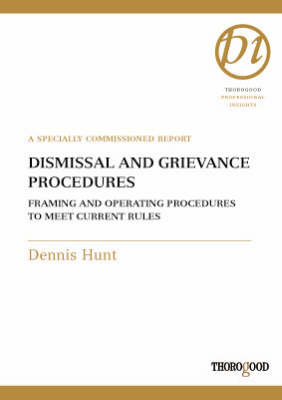
Dismissal and Grievance Procedures
Thorogood (Verlag)
978-1-85418-376-7 (ISBN)
- Titel ist leider vergriffen;
keine Neuauflage - Artikel merken
If you thought the rules were weighted unfairly before, think again...Life is getting tougher for employers: the Dispute Resolution Procedures which have now come into force have made things much tougher for employers; there are now minimum procedures relating to discipline and dismissal that must be followed to the letter; failure to do so will automatically mean that your action is considered to be unfair; this will mean that awards can be increased as much as 50 per cent; the rules are wide-ranging and it's not always clear how and where they apply; but you can avoid the risks and penalties. This new report explains what all the regulations say and what steps you need to take to operate effective dismissal, disciplinary and grievance procedures. It covers all the requirements of the new Disputes Resolution Procedures that came into effect in October 2004. It tells you where, and when the regulations apply - and what you need to do.
Hard facts include: new tougher rules in force since October 2004; failure to follow the rules automatically mean your action is 'unfair'; you could face awards up to 50 per cent higher; employment Tribunal applications increased by 300 per cent between 1990-2001; small businesses are much more liable to claims; you must follow the new rules when dealing with any type of disciplinary procedure; and, it's not just an HR issue - it affects every manager. If it was touch before, it's a potential minefield now. The risk of falling foul of the new regulations has significantly increased - and with it the risk of severe penalties. This expert report will take you step by step through the regulations and procedures and will show you exactly where and how they apply.
9 ways in which this report will help you avoid serious problems and severe penalties: how to draft disciplinary rules that suit your particular type of business; the precise disciplinary procedures to follow; the new ACAS Code of Practice on discipline; how to protect yourself from claims of unfair dismissal; the importance of warnings, verbal and written; how to avoid claims for Constructive and Wrongful Dismissal; model procedures for handling grievances; management training in defending discrimination claims; and, how employers can use the regulations to their advantage. Did you know, this report has CPD hours accredited to it! Thorogood legal reports are accredited by The Solicitors Regulation Authority (CPD reference DVQ/THPU) for continuing professional development as distance learning education. Don't miss out on this chance to collect your hours! NB: Solicitors may claim up to 75 per cent (12 hours) of their annual CPD requirement by undertaking distance learning education
Dennis Hunt is a specialist in Employment Law. He has represented companies at Employment Tribunals since 1977 in cases covering the whole spectrum of employment law and is the author of several successful books including Successfully defending employment tribunals (also published by Thorogood).
The Legislation; A brief history of unfair dismissal legislation and employment tribunals; Summary of changes introduced by the Employment Act 2002; The standard three step disciplinary disputes procedures; THe modified disciplinary procedure; Default judgments; Case management; ACAS conciliation; Directions hearings; Costs; Contracts of Employment; Contracts of employment; The tests of employment; Forming the contract; Formalities; Contracts: the four elements; The Employment Rights Act S1 - written statement of particulars; Changing the terms of a contract of employment; Disciplinary Rules; Disciplinary rules; Drafting the rules; Health and safety rules; Communicating the disciplinary rules; Disciplinary Procedures; Disciplinary procedures and the law; Modified disciplinary procedures and gross misconduct; The ACAS guide to disciplinary procedures; Special situations; Disciplinary Procedures Step-by-Step; Investigation; Informal disciplinary action; Formal disciplinary action; Invitations to meeting; Provision of evidence; The right to be accompanied; The disciplinary meeting; Handling disciplinary meetings; Records of disciplinary meetings; Disciplinary Sanctions. Disciplinary sanctions and warnings; Poor performance issues - capability; Sickness, lateness and absence; Misconduct and gross misconduct; Ending Employment; Ending employment; Resignation; Termination by mutual agreement; Compromise agreements; Requirements of a compromise agreement; Independence of adviser; The conclusion of a fixed term contract; Dismissals with notice and summary dismissals; Capability dismissals; Grievances; Grievances; The standard 'three step' grievance procedure; Definition of grievance; The 'modified' two step grievance procedure; Overlapping disputes; Grievance procedures and their impact on employment tribunal applications; Appeals; The right of appeal.
| Erscheint lt. Verlag | 15.6.2005 |
|---|---|
| Reihe/Serie | Thorogood Professional Insights S. |
| Verlagsort | London |
| Sprache | englisch |
| Maße | 230 x 290 mm |
| Themenwelt | Recht / Steuern ► Arbeits- / Sozialrecht ► Arbeitsrecht |
| Recht / Steuern ► EU / Internationales Recht | |
| Wirtschaft ► Betriebswirtschaft / Management ► Personalwesen | |
| ISBN-10 | 1-85418-376-1 / 1854183761 |
| ISBN-13 | 978-1-85418-376-7 / 9781854183767 |
| Zustand | Neuware |
| Informationen gemäß Produktsicherheitsverordnung (GPSR) | |
| Haben Sie eine Frage zum Produkt? |
aus dem Bereich