


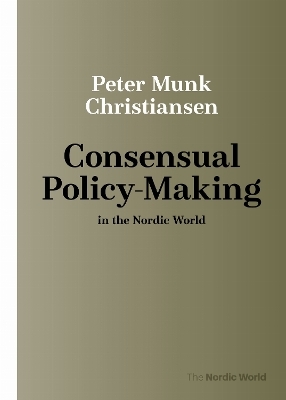
Consensual Policy-Making in the Nordic World
Seiten
2024
Aarhus Universitetsforlag (Verlag)
978-87-7597-004-9 (ISBN)
Aarhus Universitetsforlag (Verlag)
978-87-7597-004-9 (ISBN)
How the Nordic model mediates disputes between workers, businesses, and the state.
This book examines the model developed in the Nordic countries for handling labor market relations between employers and employees - a model that has secured flexible and well-functioning labor market relations with comparatively high remuneration in case of sickness or unemployment. Consensual - and comparatively efficient - policies have likewise been pursued in agricultural and industrial policies, in environmental policies, and in many policies related to public services.
The preconditions for these policies are strong civil societies, i.e. strong capacities for collective mobilization and collective action among groups, relatively strong unitary states, and high levels of generalised trust. The institutional apparatus of these consensual policies has been labelled corporatism. Nordic corporatism has implied consent to a norm of affected interests. Groups that are supposedly affected by state policies have access to the processes leading up to political decision-making, and are involved in the implementation of policies.
This access has often public commissions or committees charged with preparing political decisions and delivering advice, as well as policy implementation committees.
This book examines the model developed in the Nordic countries for handling labor market relations between employers and employees - a model that has secured flexible and well-functioning labor market relations with comparatively high remuneration in case of sickness or unemployment. Consensual - and comparatively efficient - policies have likewise been pursued in agricultural and industrial policies, in environmental policies, and in many policies related to public services.
The preconditions for these policies are strong civil societies, i.e. strong capacities for collective mobilization and collective action among groups, relatively strong unitary states, and high levels of generalised trust. The institutional apparatus of these consensual policies has been labelled corporatism. Nordic corporatism has implied consent to a norm of affected interests. Groups that are supposedly affected by state policies have access to the processes leading up to political decision-making, and are involved in the implementation of policies.
This access has often public commissions or committees charged with preparing political decisions and delivering advice, as well as policy implementation committees.
Peter Munk Christiansen is a professor in the Department of Political Science at Aarhus University.
| Erscheinungsdatum | 01.08.2023 |
|---|---|
| Sprache | englisch |
| Maße | 140 x 220 mm |
| Themenwelt | Recht / Steuern ► Arbeits- / Sozialrecht ► Arbeitsrecht |
| Recht / Steuern ► EU / Internationales Recht | |
| Sozialwissenschaften ► Soziologie ► Mikrosoziologie | |
| Wirtschaft | |
| ISBN-10 | 87-7597-004-X / 877597004X |
| ISBN-13 | 978-87-7597-004-9 / 9788775970049 |
| Zustand | Neuware |
| Informationen gemäß Produktsicherheitsverordnung (GPSR) | |
| Haben Sie eine Frage zum Produkt? |
Mehr entdecken
aus dem Bereich

aus dem Bereich
mit den wichtigsten Bestimmungen zum Arbeitsverhältnis, …
Buch | Softcover (2025)
dtv Verlagsgesellschaft
CHF 20,85
mit Wahlordnung | Handkommentar
Buch | Hardcover (2024)
Franz Vahlen (Verlag)
CHF 132,95
Durchführung, Inhalte, Mitbestimmung
Buch (2024)
Franz Vahlen (Verlag)
CHF 24,95


