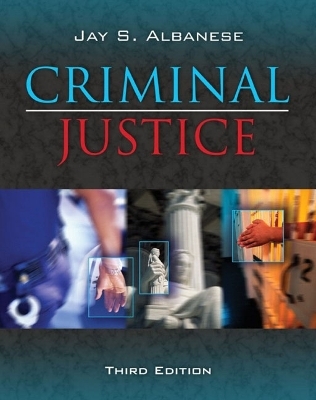
Criminal Justice (Book Alone)
Pearson (Verlag)
978-0-205-42202-9 (ISBN)
- Titel ist leider vergriffen;
keine Neuauflage - Artikel merken
JAY S. ALBANESE is Chief of the International Center at the National Institute of Justice (NIJ). NIJ is the research and evaluation arm of the U.S. Department of Justice. He is on leave from his position as Professor of Government & Public Policy at Virginia Commonwealth University. Jay received the Ph.D. and M.A. degrees from Rutgers University and B.A. from Niagara University. He was the first Ph.D. recipient from the Rutgers School of Criminal Justice. Dr. Albanese is author of seven books that include Criminal Justice (3rd ed., Allyn & Bacon, 2005), Organized Crime in Our Times (4th ed., Lexis/Nexis/Anderson, 2004), and contributor to Comparative Criminal Justice Systems (3rd ed., Wadsworth, 2006). Dr. Albanese is Executive Director of the International Association for the Study of Organized Crime (www.iasoc.net). He is a past president of the Academy of Criminal Justice Sciences (ACJS), the White Collar Crime Research Consortium, and the Northeastern Association of Criminal Justice Sciences. Dr. Albanese is recipient of the Teaching Excellence Award from the Sears Foundation (1990), and the Elske Smith Distinguished Lecturer Award from Virginia Commonwealth University (2001).
1. Perspectives on Criminal Justice.
Perspectives on Crime.
What Is Crime?
Origins of the Criminal Justice System.
2. The Nature and Causes of Crime.
Defining Deviance.
Thinking versus Acting.
Mala in se, Mala Prohibita, and Criminal Harm.
Criminalization of Behavior.
How Can Crime Be Explained?
Guns, Drugs, and Crime.
3. Defining and Measuring Crime.
What Are the Types of Crime?
How Are Violent Crimes and Property Crimes Classified?
Homicide.
Sexual Assault.
Assault.
Robbery.
Burglary.
Larceny.
Arson.
How Are Crime Rates Determined?
4. Perpetrators and Victims of Crime.
Who Are the Victims and Perpetrators of Crime?
Age.
Gender.
Race and Ethnicity.
Socioeconomic Status.
Crime Profiling.
5. Economic and Political Crime.
What Is Meant by Economic and Political Crimes?
How Can White Collar Crimes Be Defined?
Why Is Computer Crime a Growing Threat?
How Does Organized Crime Operate?
What are the Impacts of Terrorism and Hate Crime?
6. Criminal Law.
What Is Criminal Law?
Four Sources of Criminal Law.
Limits on Criminal Law.
How Did the American System of Law and Justice Develop?
How Does the Law Define the Three Elements of a Crime?
Characteristics of Criminal Acts.
What Defenses Against Criminal Charges Does the Law Recognize?
What Are Some Concerns About Applying Criminal Law?
7. The Criminal Justice System.
What Are the Agencies of Criminal Justice?
What Is Procedural Law?
What Is Involved in Criminal Court Procedure?
What Are Some Concerns About the Criminal Justice System?
8. Criminal Procedure and the Police.
What Is the Role of Police in Criminal Procedure?
Reasonable Suspicion and Stop and Frisk.
The Exclusionary Rule.
The Good Faith Exception.
Searches Without Warrants.
Searches with Voluntary Consent.
Plain View Searches.
Searches of Automobiles and Their Contents.
The Fifth Amendment and The Miranda Warning.
The Public Safety Exception.
Interrogations and Confessions.
Impacts of Procedural Law on Law Enforcement.
9. Origins and Organization of Law Enforcement.
How Did Policing Evolve?
What Is the Organization of Law Enforcement?
Local Police.
Who Are the Police?
What Are Some Concerns about Policing in the U.S.?
10. Issues in Law Enforcement and Police Behavior.
Is There Such a Thing as a Police Personality?
Myths and Stereotypes About Police.
Three Styles of Policing.
Current Research on Police Attitudes Toward their Jobs.
Current Research on Police Attitudes Toward the Public They Serve.
How Should Police Performance Be Evaluated?
Police Pursuits.
Crime Response and Clearance Rates.
Arrest and Conviction Rates.
Community Service.
What Are Some Forms on Police Corruption?
What Is Legitimate Use of Deadly Force?
“Fleeing Felon” and “Prowler Inside” Laws.
Police Brutality.
11. Origins and Organization of the Courts.
How Were Criminal Courts Similar and Different in the Past?
How Did the State and Federal Court Systems Develop?
State Court Systems.
The Federal Court System.
Who Are the Participants in the Judicial Process?
Prosecutors.
Defense Counsel.
Judges.
Victims and Witnesses.
Juries.
The Courtroom Work Group.
How Are Specialized Courts Changing the Court System?
Felony Drug Courts.
12. Trial Defense and Prosecution.
What Are the Rights of the Accused?
How Are Cases Settled Without Trial?
Diversion of Cases.
Plea-Bargaining.
What Are Some Problems of the Court System?
13. Trials and Sentencing.
What Happens at Trial?
How Do Judges Decide on a Sentence?
How Do Sentencing Options Differ?
How Does the Eighth Amendment Restrict Sentencing?
14. Origins and Organization of Jails and Prisons.
How Are Correctional Institutions in the United States Organized?
How Do Correctional Institutions Operate?
Who Is in Prison?
What Is Inmate Life Like?
What Are Prisoners' Rights and Responsibilities?
15. Probation and Community Corrections.
What Are the Alternatives to Incarceration?
How Can Ex-Offenders Return to the Community After Prison?
What Are Forms of Authentic and Restorative Justice?
16. Justice and Punishment in the 21st Century.
What Are New Ways of Administering Justice and Punishment?
How Can Offenders with Mental Health and Drug Problems be Handled in the Criminal Justice System?
What Is the Future of Corrections?
17. Juvenile Justice.
Juvenile Justice versus Criminal Justice.
The Nature and Extent of Delinquency.
Victimization Surveys.
Foundations of Juvenile Justice.
The Law and Procedure of Juvenile Justice.
Lawyers and Self-Incrimination.
The Burden of Proof.
Searches and the Fourth Amendment.
Juveniles in the System: Police, Courts, Corrections.
Police Disposition of Juveniles Taken into Custody.
Juvenile Dispositions.
Trends in Legislation.
The Outlook for Juvenile Justice.
18. Transnational Crime and Justice.
The Risk of Crime Around the World.
Transnational Crimes.
Transnational Law Enforcement.
| Erscheint lt. Verlag | 11.8.2004 |
|---|---|
| Sprache | englisch |
| Gewicht | 1479 g |
| Themenwelt | Recht / Steuern ► EU / Internationales Recht |
| Recht / Steuern ► Strafrecht ► Kriminologie | |
| ISBN-10 | 0-205-42202-0 / 0205422020 |
| ISBN-13 | 978-0-205-42202-9 / 9780205422029 |
| Zustand | Neuware |
| Informationen gemäß Produktsicherheitsverordnung (GPSR) | |
| Haben Sie eine Frage zum Produkt? |
aus dem Bereich