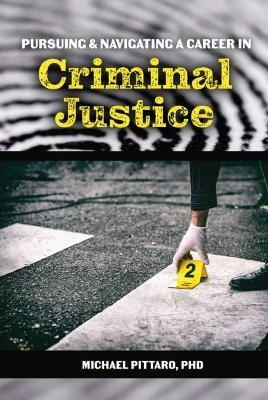
Pursuing and Navigating a Career in Criminal Justice
Kendall/Hunt Publishing Co ,U.S. (Verlag)
978-1-7924-8409-4 (ISBN)
- Titel ist leider vergriffen;
keine Neuauflage - Artikel merken
Pursuing and Navigating a Career in Criminal Justice is a practical, "must-have" book for those considering a career in criminal justice as well as providing helpful advice and guidance to those already working in the profession who may be confronted with the widely unaddressed realities associated with burnout, suicidal thoughts, posttraumatic stress disorder, poor coping mechanisms, and a withering ability to continue effectively safeguarding our physical and emotional wellbeing. More specifically, this book provides "real-life" guidance and insight into pursuing a career in criminal justice along with successfully navigating the foreseen and unforeseen challenges of working with today's criminal offenders, crime victims, citizens, colleagues, administrators, and the media. It is undeniably one of the most comprehensive books available authored by Dr. Michael Pittaro, a highly respected criminal justice professor with nearly 40 years of field, supervisory, teaching, and training experience, including serving internationally as a highly sought after out subject matter expert.
Dr. Pittaro takes readers on an insightful journey working alongside criminal offenders with extensive histories of addiction, mental illness, sexual deviance, and a host of reprehensible acts of violence. Having always been fascinated with understanding the "why" to so many questions about crime, criminality, and victimization, Dr. Pittaro chose to pursue a career in higher education to provide answers to those questions. He has helped thousands of undergraduate students pursue their dream careers by taking on a no holds-barred approach to teaching by "keeping it real" in explaining the pros and cons of working within this profession. Dr. Pittaro strongly believes that teaching and training should not rely exclusively on research but also augmented with real-life experiences from those who work or have worked in criminal justice. This book is intended provide you with what you need to enter the criminal justice workforce with an emphasis on the so-called "soft skills" to not only excel and move up through the ranks, but also help in understanding and explaining what you must do to survive (literally and metaphorically) in a profession that can quite demanding and dangerous.
Each chapter includes valuable input from Dr. Pittaro along with advice and guidance from well-respected criminal justice professionals working in law enforcement, corrections, probation, parole, and other public safety professions based on the lessons they learned in their careers. The passages within each chapter are filled with "real-talk" from those who have "walked the walk" working the frontlines along with indispensable constructive advice and guidance from today's criminal justice leaders.
Chapter 1 – Everyone has a story, so here's my story
Chapter 2 – Advice and guidance when searching for a career in criminal justice
Criminal justice career opportunitiesLocal government
State government
Federal government
Nonprofit sector
Private, for-profit sector
How to find a position in criminal justice
Professional organizations / Networking
Social media
Using social media to your advantage
Linked
Volunteering
Professional References
Variety / diversity of professional references
Consider the source before requesting a recommendation letter
Schooling and employment histories matter
ALL Past Employers could become references
High school teachers could become references
College professors could become references
Recommendation letters
Who should you contact?
What you should have them include in the letter
Resumes
What to include and exclude on a resume
Chapter 3 – Experience and Education: Why they matter
Education beyond a high school degreeAssociate vs. bachelor's degree
Choosing a major or dual-major
Do you also need a minor and/or a concentration? If so, in what?
University accreditation: National v. regional and why it matters
Tolerance / multiculturalism
Open-mindedness, critical thinking, improved interpersonal communication skills
Lateral transfers / promotions
Work ExperienceWhy you shouldn't dismiss prior / current employment unrelated to criminal justice
How to leverage prior / current employment related to criminal justice to future career goals
Stepping-stone positions
Military experienceAdvantages
Honorable vs. dishonorable discharge
DD214
Chapter 4 – The long, drawn-out, exhaustive pre-employment process
Now that you've found a position that interests you, it's time to apply for the position
The application
Paper v. online
The written exam
Study guides / courses
Passing score: Why your ranking score is important
The oral interview(s) – What do you bring to the table?
Panel interviews
Multiple interviews
What to wear and not wear
What to say and not say
Nervousness is normal but keep your composure and exude confidence
Know the job you're applying for, know the organization, and know your interviewer(s)
Background investigation
Collecting and storing important documents commonly requested by background investigators
Be prepared to disclose everything.
Unearthing and acknowledging the skeletons in the closet
Privacy – does not exist during the background investigation stage.
Polygraph evaluation
Common areas of interest
Lying / omitting can and will have a detrimental impact on future career opportunities.
Psychological evaluation
Current state of mind
Overanalyzing each question
Medical evaluation
Pre-existing conditions
Correctable
Psychiatric / psychological diagnosis / medication disclosure
Drug screening
Hair, blood, and/or urine testing
Alcohol usage
Illicit v licit substances
Misusing prescriptions
Physical fitness assessment
Do not wait - Start getting ready now
Strive to exceed all minimum qualifications
Driving record
Financial records
Social media scrutinization
Red flags concerning what you post / like on social media / groups
Suggested taboo topics to avoid
Pictures – subject to interpretation by background investigators
Acceptable v nonacceptable pictures
Conditional employment letter
Don't quit your day job, just yet
Chapter 5 – The academy and probationary period – what to do and not do
Hone your interpersonal communication skillsWriting and communicating are skills that are improved with practice.
Your personal life is no longer personal.
Everything you say and do can be used against you
Follow the Chain of Command
Rely on Your Training
When in doubt, ask questions.
De-escalation – use your words
Rely on your training
If it doesn't seem right, it's likely not.Your intuition
Ethical boundaries / moral compass
Interpreting body language
The importance of self-regulationAlways remain in control of your words, behaviors, and actions
Continuing education – keeping up with changes
Whining and complaining – don't be that person
Stay away from and out of drama
Report early – not on time
The importance of documentationSpecific
Factual
Choice of words
Physical dangers
Communicable diseases
Chapter 6 - Complacency, morality, and ethics
Complacency – The bad "C" word
Morality
Ethics
Confidence
Mindful of manipulation, deception, and trickery
Avoid toxic relationships
Professionalism on and off the job
Chapter 7 – Emotional Intelligence – Why it's Important.
The five components Self-awareness
Self-regulation
Social kills
Empathy
Motivation
Embracing the soft skills
Chapter 8 – Stress / Burnout: They may seem relentless but they're controllable
Burnout Signs / symptoms
Importance of mental self-care
StressAcute, eustress, and chronic stress
Physical impact
Emotional impact
Social / Relational impact
Chapter 9 – Depression / posttraumatic stress disorder (PTSD)
Signs / SymptomsEmotional
Physical
Minimizing BurnoutEmotional
Physical
Therapy / Medication
Chapter 10 – Self-Destructive, Negative Coping Strategies
Excessive / problem-drinking
Prescription drug misuse
Illicit drug use
Projected aggression
Suicidal ideations
Corruption
Chapter 11 - Positive Physical Coping Mechanisms
Physical exercise
Diet / nutrition
Hobbies
Chapter 12 – Positive Psychological / Emotional Coping Mechanisms
Resiliency strategies Change the narrative
Face your fears
Practice self-compassion
Meditate
Emotion-focused coping skills
Mindfulness
Humor
Spirituality
Communication
Hobbies
Chapter 13 – Transformational Leadership Practices
Intellectual stimulation
Individualized consideration
Inspirational motivation
Idealized influence
Transformational leadership using emotional intelligence
Why mentors are important
Chapter 14 – Concluding Chapter
| Erscheinungsdatum | 31.08.2021 |
|---|---|
| Verlagsort | Iowa |
| Sprache | englisch |
| Gewicht | 259 g |
| Themenwelt | Recht / Steuern ► EU / Internationales Recht |
| Recht / Steuern ► Strafrecht ► Kriminologie | |
| Recht / Steuern ► Strafrecht ► Strafverfahrensrecht | |
| ISBN-10 | 1-7924-8409-7 / 1792484097 |
| ISBN-13 | 978-1-7924-8409-4 / 9781792484094 |
| Zustand | Neuware |
| Informationen gemäß Produktsicherheitsverordnung (GPSR) | |
| Haben Sie eine Frage zum Produkt? |
aus dem Bereich