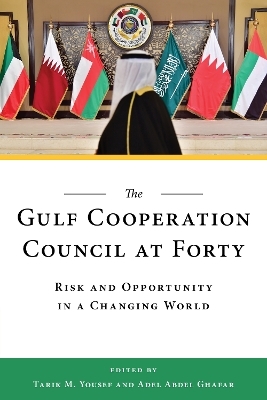
The Gulf Cooperation Council at Forty
Brookings Institution (Verlag)
978-0-8157-3953-1 (ISBN)
All of the GCC countries—Bahrain, Kuwait, Oman, Qatar, Saudi Arabia, and the United Arab Emirates—are undergoing historic socio-economic transitions. They are facing enormous strains on public finances and challenging economic outlooks, due to fluctuating oil prices, demographic pressures, high unemployment rates, and a lack of economic diversification. These countries also are likely to feel the rising impact of climate change, and global policies to deal with it, over the coming decades. In addition, seemingly unstoppable shifts in the long-standing international order, notably the rise of China and uncertainties about U.S. leadership, have potentially serious implications for the Middle East and beyond.
This by noted scholars and experts considers the key trends shaping Gulf Cooperation Council (GCC) countries--Bahrain, Kuwait, Oman, Qatar, Saudi Arabia, and the United Arab Emirate-- ranging from the COVID-19 pandemic, to climate change, economic disruptions, demographics and other domestic concerns, and shifts in the global order.
The book’s chapters address such questions as: How will global megatrends impact the GCC? How can GCC states adjust and diversify their economies to meet the dual challenges of fluctuating oil prices and climate change? How can these states adjust their labor markets to absorb and support women and youth? How will inter GCC disagreements impact the region moving forward? And how will GCC relations with international actors shift in the coming years?
This timely book, with its comprehensive analyses and policy recommendations, will be of interest to a wide range of readers interested in the GCC region, including policymakers, academics, and researchers at think tanks and nongovernmental organizations.
Tarik M. Yousef was a nonresident senior fellow in the Foreign Policy program at Brookings, and was director of the Brookings Doha Center. His professional career has spanned the academic world at Georgetown University and the Harvard Kennedy School; the public policy arena at the IMF, the World Bank, and the U.N.; and more recently the NGO space at Silatech. He has served on the advisory boards of development organizations and boards of directors of financial institutions Adel Abdel Ghafar was a nonresident fellow in the Foreign Policy program at Brookings, and was a fellow at the Brookings Doha Center, where he was previously acting director of research. He is also an adjunct professor at Georgetown University’s School of Foreign Service in Qatar. He specializes in political economy and his research interests include state-society relations, socio-economic development and foreign policy in the MENA region.
Acknowledgments
1 Introduction: The GCC In Transition
TARIK M. YOUSEF | ADEL ABDEL GHAFAR
PART 1: Global Trends And Their Impact On The GCC
2 The Global Economy And The GCC
AIDYN BIBOLOV | TIM CALLEN | TIAN ZHANG
3 US Leadership And Gulf Security In A Multipolar World
RORY MILLER
4 Changing Patterns Of Global Energy Markets
STEVEN WRIGHT
5 An Integrated Approach To Climate Change And Economic Diversification
SAMANTHA GROSS
6 Sino-GCC Relations: Past, Present, And Future Trajectories
ADEL ABDEL GHAFAR
7 The COVID-19 Pandemic in the Gulf: Impact, Response, and Implications 51
TARIK M. YOUSEF
PART 2: Economic Transition
8 GCC Economic Integration in the Aftermath of the Qatar Crisis
NADER HABIBI
9 The GCC’s Evolving Financial Markets
JEAN-FRANÇOIS SEZNEC
10 Economic Diversification in GCC Countries
MARTIN HVIDT
11 The Governance of Fiscal and Economic Policy within the GCC
ROBERT P. BESCHEL JR.
12 The Response of Gulf Sovereign Wealth Funds to Fluctuating Oil Prices
SARA BAZOOBANDI | THEODOSIA ROSSI
13 Structural Reforms, Fiscal Sustainability, and Intergenerational Wealth as the GCC Transitions to a Post-Oil Future
IRFAN ALEEM
PART 3: LaborMarkets
14 Labor Market Dynamics and Policy Responses in the Gulf
SAMER KHERFI
15 Human Capital Development in the GCC
MARVIN ERFURTH | NATASHA RIDGE
16 Women in the Workforce Across the GCC
KAREN E. YOUNG
17 Tackling Youth Unemployment in the GCC
NADER KABBANI
18 Gulf Labor Migration: Between Structural Constraints and Political Choices
IMCO BROUWER
19 Migrant Laborers in the Gulf
NOHA ABOUELDAHAB
PART 4: State-SocietyRelations
20 The Politics of Economic Reform
KRISTIAN COATES ULRICHSEN
21 Revisiting Late Rentierism
MATTHEW GRAY
22 Why the GCC’s Economic Diversification Challenges Are Unique
STEFFEN HERTOG
23 Gulf Representation and Parliaments in the Face of Austerity Measures
COURTNEY FREER
24 The True Jihad: Art and Social Change in Saudi Arabia
SEAN FOLEY
25 Sectarianism in the Gulf
GENEIVE ABDO
PART 5: Geostrategic Concerns
26 A New Chapter for Intraregional Relations? Cohesion, Crises, and Clashes in the GCC
YASMINA ABOUZZOHOUR
27 Rivalry for Export: The Gulf Crisis Goes to Africa
ZACH VERTIN
28 Is the Iran-Saudi Conflict Resolvable?
IBRAHIM FRAIHAT
29 GCC-Arab Relations
RAMI GEORGE KHOURI
30 EU-GCC Relations
PERLA SROUR-GANDON
31 The Emergence of GCC-Israel Relations Is a Fixture of the New Middle East
OMAR H. RAHMAN
32 Conclusion: The GCC Looks to the Future
TARIK M. YOUSEF | ADEL ABDEL GHAFAR
Contributors
Index
| Erscheinungsdatum | 01.07.2022 |
|---|---|
| Zusatzinfo | 1 Maps |
| Sprache | englisch |
| Maße | 151 x 225 mm |
| Gewicht | 408 g |
| Themenwelt | Recht / Steuern ► EU / Internationales Recht |
| Sozialwissenschaften ► Politik / Verwaltung ► Europäische / Internationale Politik | |
| Sozialwissenschaften ► Politik / Verwaltung ► Politische Theorie | |
| Wirtschaft ► Volkswirtschaftslehre ► Makroökonomie | |
| ISBN-10 | 0-8157-3953-2 / 0815739532 |
| ISBN-13 | 978-0-8157-3953-1 / 9780815739531 |
| Zustand | Neuware |
| Informationen gemäß Produktsicherheitsverordnung (GPSR) | |
| Haben Sie eine Frage zum Produkt? |
aus dem Bereich