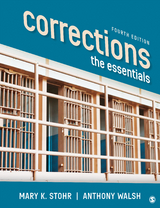
Corrections (eBook)
464 Seiten
Sage Publications (Verlag)
978-1-5443-9879-2 (ISBN)
Preface
About the Authors
Chapter 1: The Philosophical and Ideological Underpinnings of Corrections
Introduction: What Is Corrections?
From Arrest to Punishment
The Major Punishment Justifications
The Due Process and Crime Control Models and Cultural Comparisons
Summary
Key Terms
Discussion Questions
Chapter 2: Early Corrections: From Ancient Times to Correctional Institutions
Introduction: The Evolving Practice of Corrections and the Grand Reforms
Early Punishments in Westernized Countries
Enlightenment—Paradigm Shift
Colonial Jails and Prisons
Early Modern Prisons
Early Prisons and Jails Not Reformed
The Renewed Promise of Reform
American Corrections in the 20th and 21st Centuries
Themes That Prevail in Correctional History
Summary
Key Terms
Discussion Questions
Chapter 3: Ethics and Corrections
Introduction: To Do the Right Thing!
Ethical Foundation for Professional Practice
Why People Behave Unethically
How to Prevent Unethical Behavior and Promote Ethical Work Practices
War on Drugs = Attack on Ethics?
Summary
Key Terms
Discussion Questions
Chapter 4: Sentencing: The Application of Punishment
Introduction: What Is Sentencing?
Types of Sentences: Indeterminate, Determinate, and Mandatory
Other Types of Sentences: Shock, Split, and Noncustodial Sentences
Problem-Solving Courts
Sentencing Disparity, Legitimate and Illegitimate
Structuring Sentencing: The Presentence Investigation Report
Structured Sentencing: Sentencing Guidelines
The Future of Sentencing Guidelines
Summary
Key Terms
Discussion Questions
Chapter 5: Jails and Detention Centers
Introduction: The Community Institution
Jail Inmates and Their Processing
Trends in Jail Populations
Medical Problems
Suicides, Gangs, and Sexual Violence in Jails
Innovations in Jails
Summary
Key Terms
Discussion Questions
Chapter 6: Community Corrections: Probation and Intermediary Sanctions
Introduction: The Origins of Probation
Number and Demographic Characteristics of Offenders on Probation
Why Do We Need Community Corrections?
The Probation Officer Role and Models of Probation Supervision
Probation Violations and Graduated Sanctions
Probation Officer Stress
Engaging the Community to Prevent Recidivism
Intermediate Sanctions
Summary
Key Terms
Discussion Questions
Chapter 7: Prisons and the Correctional Client
Introduction: The State of Prisons
Prison Organizations
Prison Value?
Attributes of a Prison That Shape the Experience
The Prison Subculture
Violence
Older People and People with Physical and Mental Illnesses
LGBTQ+ Inmates
Immigration Prisons
Summary
Key Terms
Discussion Questions
Chapter 8: The Corrections Experience for Staff
Introduction: What Is a Profession?
The State of the Work in Correctional Institutions and Programs
Why Require More Education and Training?
Individual-Level Factors That Affect the Correctional Workplace
Correctional Roles
The Subculture and Socialization
Staff Interactions With Inmates
Summary
Key Terms
Discussion Questions
Chapter 9: Community Corrections: Parole and Prisoner Reentry
Introduction: What Is Parole?
The Modern Parole System
Parole Boards
What Goes In Must Come Out: Prisoner Reentry Into the Community
Parole Violations and Graduated Sanctions
Legal Issues in Parole
Summary
Key Terms
Discussion Questions
Chapter 10: Women and Corrections
Introduction: Women and Corrections
Current Figures on the Number of Women and Girls in Corrections
Females in Corrections: Needs, Programming, Abuse, and Adjustment
Female Correctional Officers
Summary
Key Terms
Discussion Questions
Chapter 11: People of Color and Corrections
Introduction: People of Color and Corrections
A Legacy of Racism
The Connection Between Class and Race or Ethnicity
People of Color: Policies and Practices That Have Resulted in Increased Incarceration
People of Color: Adjustment to Incarceration
People of Color Working in Corrections
Summary
Key Terms
Discussion Questions
Chapter 12: Juveniles and Corrections
Introduction: Delinquency and Status Offending
The Juvenile Brain and Juvenile Behavior
History and Philosophy of Juvenile Justice
Processing Juvenile Offenders
Juvenile Community Corrections
Intensive Probation
Residential and Institutional Juvenile Corrections
Summary
Key Terms
Discussion Questions
Chapter 13: Legal Issues in Corrections and the Death Penalty
Introduction: The History of Law in Corrections
Application of the Amendments to the Constitution to Convicted Felons
Curtailing Prisoner Petitions
The Death Penalty and Public Opinion
Does the Death Penalty Deter?
Financial Costs and the Death Penalty
Disparity in Death Sentences
The Innocence Revolution
Summary
Key Terms
Discussion Questions
Chapter 14: Correctional Programming and Treatment
Introduction: The Rise and Fall (and Rise Again) of Rehabilitation
Evidence-Based Practices
Cognitive-Behavioral Therapy
Substance Abuse Programming
Anger Management
Sex Offenders and Their Treatment
Offenders with Mental Illnesses
Summary
Key Terms
Discussion Questions
Chapter 15: Corrections in the 21st Century
Introduction: Learning From the Past So That We Have
Decarceration
Professionalization
Corrections Is a Relationship Business
Privatization
Concluding Thoughts
Summary
Key Terms
Discussion Questions
Answers to Test Your Knowledge
Glossary
References
Index
| Erscheint lt. Verlag | 5.1.2021 |
|---|---|
| Verlagsort | Thousand Oaks |
| Sprache | englisch |
| Themenwelt | Recht / Steuern ► Strafrecht ► Kriminologie |
| Sozialwissenschaften ► Pädagogik | |
| Schlagworte | Anthony Walsh • correctional institutions • Corrections • Corrections: The Essentials, Fourth Edition • Courseware • critical thinking • Distance Learning • Engagement • Introduction to Corrections • Mary K. Stohr • Online teaching • Penology • platform • Remote teaching • SAGE vantage • Vantage |
| ISBN-10 | 1-5443-9879-4 / 1544398794 |
| ISBN-13 | 978-1-5443-9879-2 / 9781544398792 |
| Informationen gemäß Produktsicherheitsverordnung (GPSR) | |
| Haben Sie eine Frage zum Produkt? |
 PDF (Adobe DRM)
Kopierschutz: Adobe-DRM
Adobe-DRM ist ein Kopierschutz, der das eBook vor Mißbrauch schützen soll. Dabei wird das eBook bereits beim Download auf Ihre persönliche Adobe-ID autorisiert. Lesen können Sie das eBook dann nur auf den Geräten, welche ebenfalls auf Ihre Adobe-ID registriert sind.
Details zum Adobe-DRM
Dateiformat: PDF (Portable Document Format)
Mit einem festen Seitenlayout eignet sich die PDF besonders für Fachbücher mit Spalten, Tabellen und Abbildungen. Eine PDF kann auf fast allen Geräten angezeigt werden, ist aber für kleine Displays (Smartphone, eReader) nur eingeschränkt geeignet.
Systemvoraussetzungen:
PC/Mac: Mit einem PC oder Mac können Sie dieses eBook lesen. Sie benötigen eine
eReader: Dieses eBook kann mit (fast) allen eBook-Readern gelesen werden. Mit dem amazon-Kindle ist es aber nicht kompatibel.
Smartphone/Tablet: Egal ob Apple oder Android, dieses eBook können Sie lesen. Sie benötigen eine
Geräteliste und zusätzliche Hinweise
Buying eBooks from abroad
For tax law reasons we can sell eBooks just within Germany and Switzerland. Regrettably we cannot fulfill eBook-orders from other countries.
aus dem Bereich