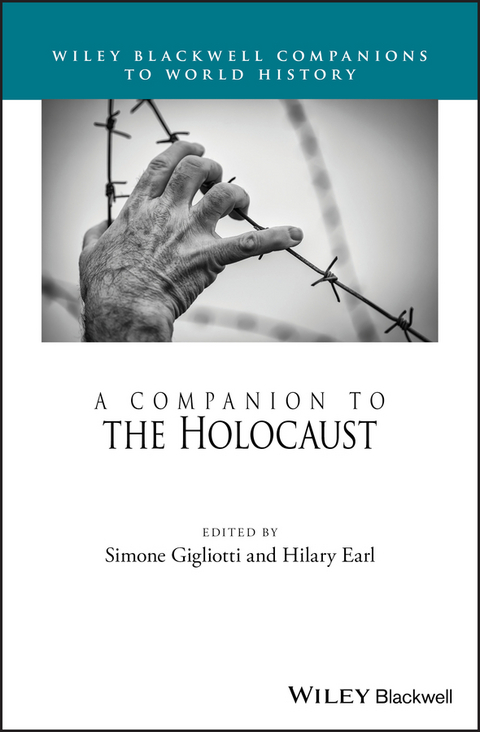
A Companion to the Holocaust (eBook)
John Wiley & Sons (Verlag)
978-1-118-97050-8 (ISBN)
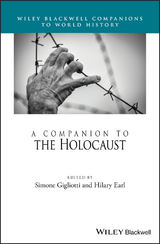
Provides a cutting-edge, nuanced, and multi-disciplinary picture of the Holocaust from local, transnational, continental, and global perspectives
Holocaust Studies is a dynamic field that encompasses discussions on human behavior, extremity, and moral action. A diverse range of disciplines - history, philosophy, literature, social psychology, anthropology, geography, amongst others - continue to make important contributions to its scholarship.
A Companion to the Holocaust provides exciting commentaries on current and emerging debates and identifies new connections for research. The text incorporates new language, geographies, and approaches to address the precursors of the Holocaust and examine its global consequences. A team of international contributors provides insightful and sophisticated analyses of current trends in Holocaust research that go far beyond common conceptions of the Holocaust's causes, unfolding and impact.
Scholars draw on their original research to interpret current, agenda-setting historical and historiographical debates on the Holocaust. Six broad sections cover wide-ranging topics such as new debates about Nazi perpetrators, arguments about the causes and places of persecution of Jews in Germany and Europe, and Jewish and non-Jewish responses to it, the use of forced labor in the German war economy, representations of the Holocaust witness, and many others. A masterful framing chapter sets the direction and tone of each section's themes. Comprising over thirty essays, this important addition to Holocaust studies:
- Offers a remarkable compendium of systematic, comparative, and precise analyses
- Covers areas and topics not included in any other companion of its type
- Examines the ongoing cultural, social, and political legacies of the Holocaust
- Includes discussions on non-European and non-Western geographies, inter-ethnic tensions, and violence
A Companion to the Holocaust is an essential resource for students and scholars of European, German, genocide, colonial and Jewish history, as well as those in the general humanities.
Simone Gigliotti is a Senior Lecturer/Reader in Holocaust Studies in the Department of History, Royal Holloway, University of London.
Hilary Earl is a Professor of European History at Nipissing University, North Bay, Ontario, Canada. She is the author of the award-winning book, The Nuremberg SS-Einsatzgruppen Trial, 1945-1958: Atrocity, Law, and History.
Provides a cutting-edge, nuanced, and multi-disciplinary picture of the Holocaust from local, transnational, continental, and global perspectives Holocaust Studies is a dynamic field that encompasses discussions on human behavior, extremity, and moral action. A diverse range of disciplines history, philosophy, literature, social psychology, anthropology, geography, amongst others continue to make important contributions to its scholarship. A Companion to the Holocaust provides exciting commentaries on current and emerging debates and identifies new connections for research. The text incorporates new language, geographies, and approaches to address the precursors of the Holocaust and examine its global consequences. A team of international contributors provides insightful and sophisticated analyses of current trends in Holocaust research that go far beyond common conceptions of the Holocaust s causes, unfolding and impact. Scholars draw on their original research to interpret current, agenda-setting historical and historiographical debates on the Holocaust. Six broad sections cover wide-ranging topics such as new debates about Nazi perpetrators, arguments about the causes and places of persecution of Jews in Germany and Europe, and Jewish and non-Jewish responses to it, the use of forced labor in the German war economy, representations of the Holocaust witness, and many others. A masterful framing chapter sets the direction and tone of each section s themes. Comprising over thirty essays, this important addition to Holocaust studies: Offers a remarkable compendium of systematic, comparative, and precise analyses Covers areas and topics not included in any other companion of its type Examines the ongoing cultural, social, and political legacies of the Holocaust Includes discussions on non-European and non-Western geographies, inter-ethnic tensions, and violence A Companion to the Holocaust is an essential resource for students and scholars of European, German, genocide, colonial and Jewish history, as well as those in the general humanities.
Simone Gigliotti is a Senior Lecturer/Reader in Holocaust Studies in the Department of History, Royal Holloway, University of London. Hilary Earl is a Professor of European History at Nipissing University, North Bay, Ontario, Canada. She is the author of the award-winning book, The Nuremberg SS-Einsatzgruppen Trial, 1945-1958: Atrocity, Law, and History.
Notes on Editors and Contributors
Co‐editors
Simone Gigliotti teaches Holocaust studies in the Department of History, Royal Holloway, University of London, United Kingdom. She is the author or co‐editor of five books, including The Train Journey: Transit, Captivity and Witnessing in the Holocaust (2009), and has published articles and chapters on the representation of spatial concepts and journeys in a range of Jewish refugee and Holocaust survivor texts. In‐progress works include a monograph on the Holocaust and the cinema of the displaced.
Hilary Earl is professor of European history and genocide studies at Nipissing University, North Bay, Ontario, Canada. Her research and teaching interests include war crimes trials, perpetrator testimony and behavior, the reintegration of Nazi perpetrators into German society, and the cultural impact of the Holocaust and genocide in the twenty‐first century. She has published in a variety of journals and essay collections and is the author of The Nuremberg SS‐Einsatzgruppen Trial, 1945–1958: Atrocity, Law, and History, published by Cambridge University Press, which won the Hans Rosenberg book prize for best book in Central European history. In 2014 she co‐edited with Karl Schleunes Lessons and Legacies XI: Expanding Perspectives on the Holocaust in a Changing World published by Northwestern University Press. In‐progress work includes a documentary film on Nazi perpetrators and a Social Sciences and Humanities Research Council funded project that examines the 1941 massacre in Liepaja, Latvia that uses film, photographs, and testimony.
Contributors
Avril Alba is a senior lecturer in Holocaust studies and Jewish civilization in the Department of Hebrew, Biblical and Jewish Studies at the University of Sydney, Australia. She publishes in the areas of Holocaust memory and representation and has also curated several major exhibitions on these topics. Her most recent publication is a co‐edited collection with Shirli Gilbert, Holocaust Memory and Racism in the Postwar World (2019).
Natalia Aleksiun is professor of Modern Jewish History at Touro College, Graduate School of Jewish Studies in New York. She published Where to? Zionist Movement in Poland (1944–1950) (2002) and co‐edited volumes 20 and 29 of Polin. Studies in Polish Jewry. Her book Communal History. Polish Jewish Historians before the Holocaust is being published by Littman in 2020. She is completing a monograph on the Jews in hiding in Eastern Galicia during the Holocaust.
Alejandro Baer is associate professor of sociology, and director and Stephen C. Feinstein Chair of the Center for Holocaust and Genocide Studies at the University of Minnesota. He is the coauthor (with Natan Sznaider) of Memory and Forgetting in the Post‐Holocaust Era: The Ethics of Never Again (2017) and articles and chapters on Holocaust memory in Spain, visual sociology and memory, and Holocaust testimony.
Waitman Wade Beorn is a senior lecturer in history at Northumbria University in Newcastle. He is a scholar of the Holocaust and genocide as well as a digital humanist. His books include Marching into Darkness: The Wehrmacht and the Holocaust in Belarus and The Holocaust in Eastern Europe: At the Epicenter of the Final Solution. His next project explores the Janowska concentration camp outside of L'viv, Ukraine.
Daniel Blatman is the Max and Rita Haber Professor in Contemporary Jewry and Holocaust Studies at the department of Jewish History and Contemporary Jewry at the Hebrew University of Jerusalem. He is the head of the Research Institute of Contemporary Jewry and the chief historian of the Warsaw Ghetto Museum in Warsaw. He has published articles and books on the Holocaust of Polish Jewry, the Jewish labour movement in Eastern Europe, Polish Jewish‐relations, Nazi extermination policy, the death marches, and Holocaust historiography.
Aomar Boum is an associate professor in the Department of Anthropology at the University of California, Los Angeles. He is interested in the place of religious minorities such as Jews, Baha’is, Shias, and Christians in post‐independence Middle Eastern and North African nation states. He is the author of Memories of Absence: How Muslims Remember Jews in Morocco (2013) and coauthor of The Holocaust and North Africa (2019).
Cathie Carmichael is professor of European history at the University of East Anglia, Norwich and is the author of Ethnic Cleansing in the Balkans (2002) and Genocide before the Holocaust (2009) and co‐edited the Routledge History of Genocide (2015). Her current research focuses on borders, boundaries, national identity, and violence in South East Europe.
Nicholas Chare is associate professor in the Department of History of Art and Film Studies at the University of Montreal, Canada. In 2018 he was the Diane and Howard Wohl Fellow in the Jack, Joseph and Morton Mandel Center for Advanced Holocaust Studies at the United States Holocaust Memorial Museum, in Washington, DC. He is the author of Auschwitz and Afterimages (2011) and The Auschwitz‐Sonderkommando (2019) and coauthor (with Dominic Williams) of Matters of Testimony (2016).
Tim Cole is professor of social history and director of the Brigstow Institute at the University of Bristol, United Kingdom. His publications include Traces of the Holocaust (2011), Holocaust Geographies (co‐edited, 2014), and Holocaust Landscapes (2016).
Pedro Correa Martín‐Arroyo is currently a Leverhulme Trust Early Career Fellow at the Holocaust Research Institute, Royal Holloway, University of London, United Kingdom. He is the author of several publications on World War II refugees and humanitarianism in Southwestern Europe.
Martin C. Dean received a PhD in European history from Queens’ College, Cambridge. He has worked for the Australian Special Investigations Unit and London’s Metropolitan Police War Crimes Unit. He was an applied research scholar at the United States Holocaust Memorial Museum and was a volume editor for The Encyclopedia of Camps and Ghettos. His publications include Collaboration in the Holocaust and Robbing the Jews, which won a National Jewish Book Award. Currently he works as a historical consultant for the Babi Yar Holocaust Memorial Center.
Jonathan Druker is professor of Italian at Illinois State University. In 2014, he was a fellow at the United States Holocaust Memorial Museum, Washington, DC, where he began research on his current book project, an analysis of Holocaust literature focusing on trauma, history, memory, and time. With Scott Lerner, he edited The New Italy and the Jews: From Massimo D’Azeglio to Primo Levi (2018).
David Engel is Greenberg Professor of Holocaust studies, professor of Hebrew and Judaic studies, and professor of history at New York University. A member of the Academic Committee of the United States Holocaust Memorial Museum, he is the author of seven books and upwards of one hundred articles on aspects of the Holocaust and modern Jewish history.
Monika J. Flaschka is a visiting lecturer at Georgia State University, Atlanta. Her research focuses primarily on sex crimes committed by German soldiers during World War II, and she has published analyses of rape in German‐run concentration camps and rape as a weapon of war and genocide.
Elisabeth Gallas is senior research associate at the Leibniz Institute for Jewish History and Culture – Simon Dubnow in Leipzig, Germany. From 2012 to 2015 she held postdoctoral research fellowships at the Hebrew University in Jerusalem and the Vienna Wiesenthal Institute of Holocaust‐Studies after receiving her PhD in modern history from the Universität Leipzig in 2011. Her research focuses on Holocaust studies, Aftermath studies, and Jewish legal history.
Bianca Gaudenzi is research fellow at the German Historical Institute, Rome, and at the Zukunftskolleg, University of Konstanz, as well as research associate at Wolfson College, Cambridge. Her publications include a study of consumer culture in Fascist Italy, Comprare per credere (second printing, 2016) and a special section of the Journal of Contemporary History titled The Restitution of Looted Art in the Twentieth Century: Transnational and Global Perspectives (2017).
Amanda F. Grzyb is associate professor of information and media studies at Western University, Canada. Her research focuses on genocide and state violence, including the Holocaust, Rwanda, Sudan, and El Salvador. She is currently the coordinator of “Surviving Memory in Postwar El Salvador,” an international collaborative research network of survivors, scholars, architects, and artists focused on the documentation and commemoration of massacres during the Salvadoran Civil War.
Valerie Hébert is associate professor of history and interdisciplinary studies at Lakehead University Orillia in Ontario, Canada. She is the author of Hitler’s Generals on Trial: The Last War Crimes Tribunal at Nuremberg (2010), as well as essays and articles on Rwanda’s Gacaca Tribunals, the resistance figure Kurt Gerstein, teaching the Holocaust with postwar trials, and Holocaust photography.
Susanne Heim is the principal editor of the sixteen‐volume document edition, The Persecution...
| Erscheint lt. Verlag | 24.4.2020 |
|---|---|
| Reihe/Serie | Blackwell Companions to World History |
| Blackwell Companions to World History | Wiley Blackwell Companions to World History |
| Sprache | englisch |
| Themenwelt | Geschichte ► Allgemeine Geschichte ► 1918 bis 1945 |
| Geisteswissenschaften ► Geschichte ► Regional- / Ländergeschichte | |
| Recht / Steuern ► EU / Internationales Recht | |
| Sozialwissenschaften ► Politik / Verwaltung | |
| Schlagworte | 20th Century & Contemporary European History • Antisemitism • Geschichte • History • Holocaust • Holocaust companion • Holocaust compendium • Holocaust Debates • Holocaust essays • Holocaust historiography • Holocaust reader • holocaust research • Holocaust scholarship • Holocaust studies • Holocaust textbook</p> • Internationales Recht • International Law • Law • <p>Holocaust history • Political Science • Political Science Special Topics • Politikwissenschaft • Rechtswissenschaft • Schoa • Schoah • Shoa • Shoah • Spezialthemen Politikwissenschaft • Zeitgeschichte Europas im 20./21. Jhd. |
| ISBN-10 | 1-118-97050-0 / 1118970500 |
| ISBN-13 | 978-1-118-97050-8 / 9781118970508 |
| Informationen gemäß Produktsicherheitsverordnung (GPSR) | |
| Haben Sie eine Frage zum Produkt? |
 EPUB (Adobe DRM)
Kopierschutz: Adobe-DRM
Adobe-DRM ist ein Kopierschutz, der das eBook vor Mißbrauch schützen soll. Dabei wird das eBook bereits beim Download auf Ihre persönliche Adobe-ID autorisiert. Lesen können Sie das eBook dann nur auf den Geräten, welche ebenfalls auf Ihre Adobe-ID registriert sind.
Details zum Adobe-DRM
Dateiformat: EPUB (Electronic Publication)
EPUB ist ein offener Standard für eBooks und eignet sich besonders zur Darstellung von Belletristik und Sachbüchern. Der Fließtext wird dynamisch an die Display- und Schriftgröße angepasst. Auch für mobile Lesegeräte ist EPUB daher gut geeignet.
Systemvoraussetzungen:
PC/Mac: Mit einem PC oder Mac können Sie dieses eBook lesen. Sie benötigen eine
eReader: Dieses eBook kann mit (fast) allen eBook-Readern gelesen werden. Mit dem amazon-Kindle ist es aber nicht kompatibel.
Smartphone/Tablet: Egal ob Apple oder Android, dieses eBook können Sie lesen. Sie benötigen eine
Geräteliste und zusätzliche Hinweise
Buying eBooks from abroad
For tax law reasons we can sell eBooks just within Germany and Switzerland. Regrettably we cannot fulfill eBook-orders from other countries.
aus dem Bereich