


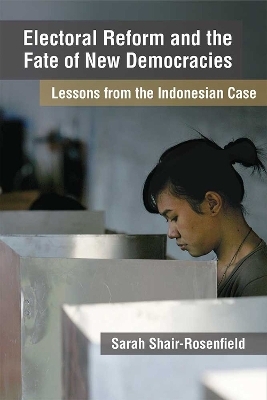
Electoral Reform and the Fate of New Democracies
Lessons from the Indonesian Case
Seiten
2019
The University of Michigan Press (Verlag)
978-0-472-13150-1 (ISBN)
The University of Michigan Press (Verlag)
978-0-472-13150-1 (ISBN)
How elites influenced major electoral reform in the emerging democracy of Indonesia
When and why do democratic political actors change the electoral rules, particularly regarding who is included in a country’s political representation? The incidences of these major electoral reforms have been on the rise since 1980.
Electoral Reform and the Fate of New Democracies argues that elite inexperience may constrain self-interest and lead elites to undertake incremental approaches to reform, aiding the process of democratic consolidation. Using a multimethods approach, the book examines three consecutive periods of reform in Indonesia, the world’s largest Muslim majority country and third largest democracy, between 1999 and 2014. Each case study provides an in-depth process tracing of the negotiations leading to new reforms, including key actors in the legislature, domestic civil society, international experts, and government bureaucrats. A series of counterfactual analyses assess the impact the reforms had on actual election outcomes, versus the possible alternative outcomes of different reform options discussed during negotiations. With a comparative analysis of nine cases of iterated reform processes in other new democracies, the book confirms the lessons from the Indonesian case and highlights key lessons for scholars and electoral engineers.
When and why do democratic political actors change the electoral rules, particularly regarding who is included in a country’s political representation? The incidences of these major electoral reforms have been on the rise since 1980.
Electoral Reform and the Fate of New Democracies argues that elite inexperience may constrain self-interest and lead elites to undertake incremental approaches to reform, aiding the process of democratic consolidation. Using a multimethods approach, the book examines three consecutive periods of reform in Indonesia, the world’s largest Muslim majority country and third largest democracy, between 1999 and 2014. Each case study provides an in-depth process tracing of the negotiations leading to new reforms, including key actors in the legislature, domestic civil society, international experts, and government bureaucrats. A series of counterfactual analyses assess the impact the reforms had on actual election outcomes, versus the possible alternative outcomes of different reform options discussed during negotiations. With a comparative analysis of nine cases of iterated reform processes in other new democracies, the book confirms the lessons from the Indonesian case and highlights key lessons for scholars and electoral engineers.
Sarah Shair-Rosenfield is Assistant Professor of Comparative Politics at Arizona State University.
| Erscheinungsdatum | 10.08.2019 |
|---|---|
| Reihe/Serie | Emerging Democracies |
| Zusatzinfo | 1 map, 26 B&W charts, 25 tables |
| Verlagsort | Ann Arbor |
| Sprache | englisch |
| Maße | 152 x 229 mm |
| Themenwelt | Recht / Steuern ► Allgemeines / Lexika |
| Recht / Steuern ► EU / Internationales Recht | |
| Sozialwissenschaften ► Politik / Verwaltung ► Europäische / Internationale Politik | |
| Sozialwissenschaften ► Politik / Verwaltung ► Staat / Verwaltung | |
| ISBN-10 | 0-472-13150-8 / 0472131508 |
| ISBN-13 | 978-0-472-13150-1 / 9780472131501 |
| Zustand | Neuware |
| Informationen gemäß Produktsicherheitsverordnung (GPSR) | |
| Haben Sie eine Frage zum Produkt? |
Mehr entdecken
aus dem Bereich



aus dem Bereich
Amerikas Strategie der Vorherrschaft und der Kampf um Eurasien
Buch | Softcover (2024)
NOMEN Verlag
CHF 27,95
kurze Geschichte einer langen Beziehung
Buch | Hardcover (2025)
Suhrkamp (Verlag)
CHF 36,40
erfolgreiche Interessenvertretung durch Prozesskompetenz im komplexen …
Buch | Hardcover (2023)
Wiley-VCH (Verlag)
CHF 58,75


