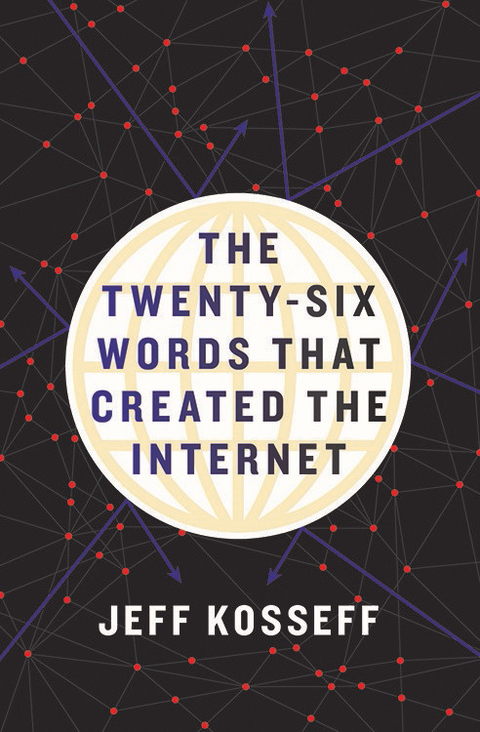
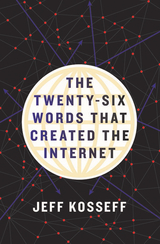
The Twenty-Six Words That Created the Internet (eBook)
328 Seiten
Cornell University Press (Verlag)
978-1-5017-3579-0 (ISBN)
As seen on CBS 60 minutes
"No provider or user of an interactive computer service shall be treated as the publisher or speaker of any information provided by another information content provider."
Did you know that these twenty-six words are responsible for much of America's multibillion-dollar online industry? What we can and cannot write, say, and do online is based on just one law—a law that protects online services from lawsuits based on user content. Jeff Kosseff exposes the workings of Section 230 of the Communications Decency Act, which has lived mostly in the shadows since its enshrinement in 1996. Because many segments of American society now exist largely online, Kosseff argues that we need to understand and pay attention to what Section 230 really means and how it affects what we like, share, and comment upon every day.
The Twenty-Six Words That Created the Internet tells the story of the institutions that flourished as a result of this powerful statute. It introduces us to those who created the law, those who advocated for it, and those involved in some of the most prominent cases decided under the law. Kosseff assesses the law that has facilitated freedom of online speech, trolling, and much more. His keen eye for the law, combined with his background as an award-winning journalist, demystifies a statute that affects all our lives –for good and for ill. While Section 230 may be imperfect and in need of refinement, Kosseff maintains that it is necessary to foster free speech and innovation.
For filings from many of the cases discussed in the book and updates about Section 230, visit jeffkosseff.com
Jeff Kosseff is Assistant Professor in the US Naval Academy's Cyber Science department, where he teaches cybersecurity law. He has practiced technology and First Amendment law, and clerked for Judges Milan D. Smith, Jr. of the US Court of Appeals for the Ninth Circuit, and Leonie M. Brinkema of the US District Court for the Eastern District Court of Virginia. He was a finalist for the Pulitzer Prize for National Reporting and the recipient of the George Polk Award in National Reporting.
Acknowledgments
Introduction
Part I.: The Creation of Section 230
1. Eleazar Smith's Bookstore
2. The Prodigy Exception
3. Chris and Ron Do Lunch
Part II.: The Rise of Section 230
4. Ask for Ken
5. Himmler's Granddaughter and the Bajoran Dabo Girl
6. The Flower Child and a Trillion-Dollar Industry
7. American Exceptionalism
Part III.: The Gradual Erosion of Section 230
8. A Lawless No-Man's Land?
9. Hacking 230
Part IV.: The Future of Section 230
10. Sarah versus the Dirty Army
11. Kill. Kill. Kill. Kill.
12. Moderation Inc.
13. Exceptional Exceptions
Conclusion
Notes
Index
| Erscheint lt. Verlag | 15.4.2019 |
|---|---|
| Verlagsort | Ithaca |
| Sprache | englisch |
| Maße | 150 x 150 mm |
| Themenwelt | Mathematik / Informatik ► Informatik ► Web / Internet |
| Recht / Steuern ► EU / Internationales Recht | |
| Recht / Steuern ► Privatrecht / Bürgerliches Recht ► IT-Recht | |
| Schlagworte | Cloud Computing • Cloud computing regulations • Coding • Communication • Computer hacking laws • Computer Networks • Computers • Cyber Bullying • cyberlaw • Cyber Law • cybersecurity • Cybersecurity regulations • Data Analysis • data privacy • Digital Culture • Digital Media • Digital privacy • Digital Revolution • doxxing • E-Commerce • freedom of speech • Free Speech • free speech, internet, privacy, online abuse, trolling, internet law • free speech,internet,privacy,online abuse,trolling,internet law • free speech,internet,privacy,online abuse,trolling,internet law,section 230 • Information Superhighway • Internet • internet law • Internet of Things (IoT) • Media Law • online abuse • Online Communication • Online connectivity • online education • online speech • privacy • Search Engines • Section 230 • Section 230 of the Communications Decency Act • Social Media • Trolling • Web browsing • World Wide Web |
| ISBN-10 | 1-5017-3579-9 / 1501735799 |
| ISBN-13 | 978-1-5017-3579-0 / 9781501735790 |
| Informationen gemäß Produktsicherheitsverordnung (GPSR) | |
| Haben Sie eine Frage zum Produkt? |
 EPUB (Adobe DRM)
Kopierschutz: Adobe-DRM
Adobe-DRM ist ein Kopierschutz, der das eBook vor Mißbrauch schützen soll. Dabei wird das eBook bereits beim Download auf Ihre persönliche Adobe-ID autorisiert. Lesen können Sie das eBook dann nur auf den Geräten, welche ebenfalls auf Ihre Adobe-ID registriert sind.
Details zum Adobe-DRM
Dateiformat: EPUB (Electronic Publication)
EPUB ist ein offener Standard für eBooks und eignet sich besonders zur Darstellung von Belletristik und Sachbüchern. Der Fließtext wird dynamisch an die Display- und Schriftgröße angepasst. Auch für mobile Lesegeräte ist EPUB daher gut geeignet.
Systemvoraussetzungen:
PC/Mac: Mit einem PC oder Mac können Sie dieses eBook lesen. Sie benötigen eine
eReader: Dieses eBook kann mit (fast) allen eBook-Readern gelesen werden. Mit dem amazon-Kindle ist es aber nicht kompatibel.
Smartphone/Tablet: Egal ob Apple oder Android, dieses eBook können Sie lesen. Sie benötigen eine
Geräteliste und zusätzliche Hinweise
Buying eBooks from abroad
For tax law reasons we can sell eBooks just within Germany and Switzerland. Regrettably we cannot fulfill eBook-orders from other countries.
aus dem Bereich