Zum Hauptinhalt springen
Nicht aus der Schweiz? Besuchen Sie lehmanns.de
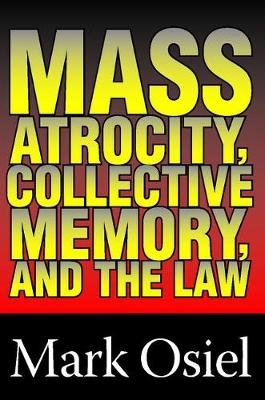
Mass Atrocity, Collective Memory, and the Law -

Mass Atrocity, Collective Memory, and the Law (eBook)

Mark J. Osiel (Herausgeber)

eBook Download: PDF
2017
317 Seiten
Taylor and Francis (Verlag)
978-1-351-50668-7 (ISBN)
Systemvoraussetzungen
58,48 inkl. MwSt
(CHF 57,10)
Der eBook-Verkauf erfolgt durch die Lehmanns Media GmbH (Berlin) zum Preis in Euro inkl. MwSt.
  • Download sofort lieferbar
  • Zahlungsarten anzeigen
Trials of those responsible for large-scale state brutality have captured public imagination in several countries. Prosecutors and judges in such cases, says Osiel, rightly aim to shape collective memory. They can do so hi ways successful as public spectacle and consistent with liberal legality. In defending this interpretation, he examines the Nuremburg and Tokyo trials, the Eicnmann prosecution, and more recent trials in Argentina and France. Such trials can never summon up a "e;collective conscience"e; of moral principles shared by all, he argues. But they can nonetheless contribute to a little-noticed kind of social solidarity.To this end, writes Osiel, we should pay closer attention to the way an experience of administrative massacre is framed within the conventions of competing theatrical genres. Defense counsel will tell the story as a tragedy, while prosecutors will present it as a morality play. The judicial task at such moments is to employ the law to recast the courtroom drama in terms of a "e;theater of ideas,"e; which engages large questions of collective memory and even national identity. Osiel asserts that principles of liberal morality can be most effectively inculcated in a society traumatized by fratricide when proceedings are conducted in this fashion.The approach Osiel advocates requires courts to confront questions of historical interpretation and moral pedagogy generally regarded as beyond their professional competence. It also raises objections that defendants' rights will be sacrificed, historical understanding distorted, and that the law cannot willfully influence collective memory, at least not when lawyers acknowledge this aim. Osiel responds to all these objections, and others. Lawyers, judges, sociologists, historians, and political theorists will find this a compelling contribution to debates on the meaning and consequences of genocide.
PDFPDF (Adobe DRM)

Kopierschutz: Adobe-DRM
Adobe-DRM ist ein Kopierschutz, der das eBook vor Mißbrauch schützen soll. Dabei wird das eBook bereits beim Download auf Ihre persönliche Adobe-ID autorisiert. Lesen können Sie das eBook dann nur auf den Geräten, welche ebenfalls auf Ihre Adobe-ID registriert sind.
Details zum Adobe-DRM

Dateiformat: PDF (Portable Document Format)
Mit einem festen Seiten­layout eignet sich die PDF besonders für Fach­bücher mit Spalten, Tabellen und Abbild­ungen. Eine PDF kann auf fast allen Geräten ange­zeigt werden, ist aber für kleine Displays (Smart­phone, eReader) nur einge­schränkt geeignet.

Systemvoraussetzungen:
PC/Mac: Mit einem PC oder Mac können Sie dieses eBook lesen. Sie benötigen eine Adobe-ID und die Software Adobe Digital Editions (kostenlos). Von der Benutzung der OverDrive Media Console raten wir Ihnen ab. Erfahrungsgemäß treten hier gehäuft Probleme mit dem Adobe DRM auf.
eReader: Dieses eBook kann mit (fast) allen eBook-Readern gelesen werden. Mit dem amazon-Kindle ist es aber nicht kompatibel.
Smartphone/Tablet: Egal ob Apple oder Android, dieses eBook können Sie lesen. Sie benötigen eine Adobe-ID sowie eine kostenlose App.
Geräteliste und zusätzliche Hinweise

Buying eBooks from abroad
For tax law reasons we can sell eBooks just within Germany and Switzerland. Regrettably we cannot fulfill eBook-orders from other countries.

Mehr entdecken
aus dem Bereich
Eine Einführung in globalgeschichtlicher Perspektive

von Alexander Querengässer

eBook Download (2024)
UTB GmbH (Verlag)
CHF 19,50
Women in the Shadow of the U.S. Military Bases in Okinawa

von Akemi Johnson

eBook Download (2025)
The New Press (Verlag)
CHF 22,45