


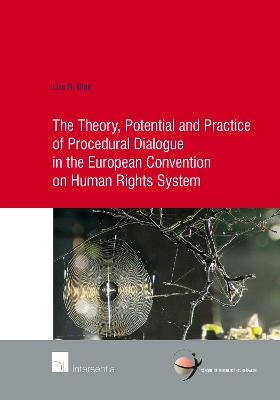
The Theory, Potential and Practice of Procedural Dialogue in the European Convention on Human Rights System
Seiten
2016
Intersentia Ltd (Verlag)
978-1-78068-375-1 (ISBN)
Intersentia Ltd (Verlag)
978-1-78068-375-1 (ISBN)
Dialogue is the new buzzword for the European Convention on Human Rights (Convention) system. Exactly why dialogue can be of added value is not often examined. Nor do those who rely on the notion usually explain how exactly it can be operationalised in a practical sense.
Winner of the 2016 Max van der Stoel Human Rights Award.Dialogue is the new buzzword for the European Convention on Human Rights (Convention) system. Judges throughout Europe have welcomed and encouraged dialogue, and references to the notion have become commonplace at conferences and in academic writing. Yet although the buzz has intensified, exactly why dialogue can be of added value is not often examined. Nor do those who rely on the notion usually explain how exactly it can be operationalised in a practical sense. This volume dissects the common-sense realisation that dialogue adds value to the Convention system, within which the State Parties, the Court, the Committee of Ministers (Committee), the Parliamentary Assembly (Assembly), and the Commissioner for Human Rights (Commissioner) interact. The question of why dialogue should occur is answered through an account of the way the system is established and how it functions, and of the developments and reform it has experienced. The second aim of the volume is to establish whether Convention dialogue does indeed live up to its potential added value. For this purpose, 26 procedures and 'procedural steps' are investigated in the light of 'indicators of dialogue'. The procedures include third-party interventions, the pilot-judgment procedure, and the Committee's Human Rights meetings. Both the procedures' dialogic potential on paper and their 'dialogicness' in practice are assessed, based in part on interviews with inter alia the Court's judges, agents representing the states before the Court, and persons monitoring the execution of the Courts judgments. This volume will be of use to those who are interested in the notion of (Convention) dialogue and its theoretical underpinnings, and those who would like to know more about Convention-related procedures, the execution of the Court's judgments, and the role that the Assembly and the Commissioner can play in the Convention system.
Winner of the 2016 Max van der Stoel Human Rights Award.Dialogue is the new buzzword for the European Convention on Human Rights (Convention) system. Judges throughout Europe have welcomed and encouraged dialogue, and references to the notion have become commonplace at conferences and in academic writing. Yet although the buzz has intensified, exactly why dialogue can be of added value is not often examined. Nor do those who rely on the notion usually explain how exactly it can be operationalised in a practical sense. This volume dissects the common-sense realisation that dialogue adds value to the Convention system, within which the State Parties, the Court, the Committee of Ministers (Committee), the Parliamentary Assembly (Assembly), and the Commissioner for Human Rights (Commissioner) interact. The question of why dialogue should occur is answered through an account of the way the system is established and how it functions, and of the developments and reform it has experienced. The second aim of the volume is to establish whether Convention dialogue does indeed live up to its potential added value. For this purpose, 26 procedures and 'procedural steps' are investigated in the light of 'indicators of dialogue'. The procedures include third-party interventions, the pilot-judgment procedure, and the Committee's Human Rights meetings. Both the procedures' dialogic potential on paper and their 'dialogicness' in practice are assessed, based in part on interviews with inter alia the Court's judges, agents representing the states before the Court, and persons monitoring the execution of the Courts judgments. This volume will be of use to those who are interested in the notion of (Convention) dialogue and its theoretical underpinnings, and those who would like to know more about Convention-related procedures, the execution of the Court's judgments, and the role that the Assembly and the Commissioner can play in the Convention system.
| Erscheinungsdatum | 11.02.2016 |
|---|---|
| Reihe/Serie | Human Rights Research Series ; 77 |
| Verlagsort | Cambridge |
| Sprache | englisch |
| Maße | 170 x 240 mm |
| Gewicht | 1090 g |
| Themenwelt | Recht / Steuern ► EU / Internationales Recht |
| Recht / Steuern ► Öffentliches Recht ► Verfassungsrecht | |
| ISBN-10 | 1-78068-375-8 / 1780683758 |
| ISBN-13 | 978-1-78068-375-1 / 9781780683751 |
| Zustand | Neuware |
| Informationen gemäß Produktsicherheitsverordnung (GPSR) | |
| Haben Sie eine Frage zum Produkt? |
Mehr entdecken
aus dem Bereich


aus dem Bereich
Staatsrecht, Verwaltungsrecht, Verwaltungsprozessrecht und …
Buch | Softcover (2025)
Vahlen (Verlag)
CHF 51,65
Buch | Softcover (2025)
Alpmann und Schmidt (Verlag)
CHF 17,95


