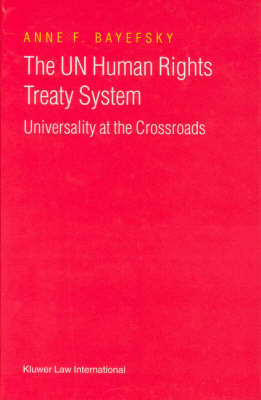
The UN Human Rights Treaty System
Kluwer Law International (Verlag)
978-90-411-1649-9 (ISBN)
Human rights treaties are at the core of the international system for the promotion and protection of human rights. Every UN member state has ratified at least one of these treaties, making them applicable to virtually every child, woman or man in the world - over six billion people. At the same time, human rights violations are rampant. The problem is that the implementation scheme accompanying the core human rights standards was drafted during a period of history when effective international monitoring was neither intended nor achievable.
Today there is a gap between universal right and remedy that is inescapable and inexcusable, threatening the integrity of the international human rights legal regime. There are overwhelming numbers of overdue reports, untenable backlogs, minimal individual complaints from vast numbers of potential victims, and widespread refusal of states to provide remedies when violations of individual rights are found.
This landmark Report prepared by Professor Bayefsky envisions a wide-ranging number of reforms, most of which can be accomplished without formal amendment. The recommendations generally assume a six treaty body regime, and focus primarily on offering concrete suggestions for improvements in working methods of the treaty bodies and procedures at the Office of the High Commissioner for Human Rights (OHCHR). Professor Bayefsky details numerous proposals for bolstering national level partnerships, and for following-up the output of the treaty monitoring system as a key missing component of the implementation regime. One major reform requiring amendment is ultimately recommended, namely, consolidation of the human rights treaty bodies and the creation of two permanent committees, one for the consideration of state reports and one for complaints.
All individuals, agencies, and organizations involved in the promotion, implementation, review, analysis, and study of human rights protection for all peoples will find this Report an indispensable resource for their work. It contains a unique overview of all the working methods of the six human rights treaty bodies, a detailed and thorough statistical analysis of the operation of the human rights treaty system, and a number of additional annexes which together provide a thorough and comprehensive understanding of the treaty system.
The international human rights legal system is at a crossroads, with the ideal of universality threatened by the fundamental shortfalls in effective implementation. This Report offers a clear and substantive path to moving universality beyond rhetoric and towards a treaty regime meaningful and effective in the lives of everyday people.
I: Background.
II: Report.
1. Introduction.
2. Overdue Reports.
3. The Consideration of a State Party's Record in the Absence of a Report.
4. Periodicity of Reports.
5. Focussed and Consolidated Reporting.
6. Inadequate Reports.
7. Special Reports.
8. Order of Considering Reports.
9. The Timing of the Consideration of Individual Communications.
10. Considering Individual Communications.
11. Working Groups.
12. The Special Rapporteur on New Communications.
13. The Special Rapporteur on Follow-up to Individual Communications.
14. Country Rapporteurs.
15. List of Issues.
16. Country Information within OHCHR.
17. CORE Documents.
18. Non-governmental Organizations (NGOs).
19. UN Agencies, Bodies and Programmes.
20. The Special Procedures/Mechanisms.
21. The Dialogue.
22. Concluding Observations.
23. Reservations.
24. Follow-up on State Reporting or Operationalizing the Human.
25. Treaty body Visits or Missions to State Parties.
26. General Comments and Recommendations.
27. Media.
28. Meetings of Chairpersons of the Treaty Bodies.
29. Treaty Body Members' Performance.
30. Languages.
31. Streaming Complaints.
32. Documentation.
33. The Venue for CEDAW.
34. Servicing and Resources.
35. Amendment.
III: List of Recommendations.
Annexes.
| Erscheint lt. Verlag | 1.11.2001 |
|---|---|
| Verlagsort | Zuidpoolsingel |
| Sprache | englisch |
| Maße | 155 x 235 mm |
| Gewicht | 1415 g |
| Einbandart | gebunden |
| Themenwelt | Recht / Steuern ► EU / Internationales Recht |
| Recht / Steuern ► Öffentliches Recht ► Völkerrecht | |
| ISBN-10 | 90-411-1649-4 / 9041116494 |
| ISBN-13 | 978-90-411-1649-9 / 9789041116499 |
| Zustand | Neuware |
| Informationen gemäß Produktsicherheitsverordnung (GPSR) | |
| Haben Sie eine Frage zum Produkt? |
aus dem Bereich